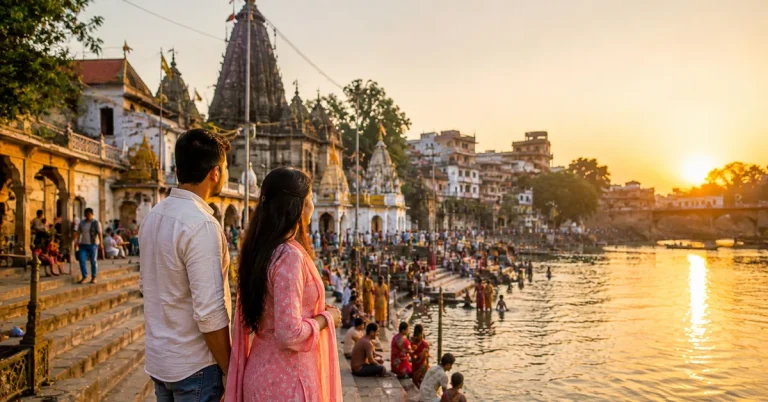
Chittorgarh Trip: Complete Travel Guide, 4-Day Itinerary, Chittorgarh Fort, Budget, Hotels, Food and Travel Tips
A Chittorgarh trip is less about a conventional holiday and more about stepping into one of the most remarkable historical landscapes in Rajasthan. Few destinations allow you to move so quickly from towering gateways and ruined palaces to ancient temples, enormous reservoirs, intricately carved monuments and quiet viewpoints overlooking the plains.
At the centre of everything is Chittorgarh Fort, an enormous hilltop citadel associated with the Mewar kingdom and recognised as part of the UNESCO World Heritage property known as the Hill Forts of Rajasthan. The fort rises high above the modern city and occupies roughly 240 hectares, with a remarkable concentration of palaces, temples, towers, memorials and water structures inside its walls.
What makes Chittorgarh particularly interesting is that the history here is not preserved in one palace behind a ticket counter. It is spread across an entire fortified landscape. You move through gateways that once controlled entry, walk past ruined royal buildings, stand beneath the Victory Tower, visit temples linked with Meera Bai, look down into Gaumukh Reservoir and then end the day watching the fort landscape change colour in the evening.
The city is therefore especially rewarding for travellers who enjoy history, architecture, photography, spirituality and cultural travel.
It is also a very practical stop on a wider Rajasthan itinerary. Udaipur is about 115–117 km away according to Rajasthan Tourism, and Chittorgarh is well connected by road and rail to major cities including Udaipur, Jaipur, Ajmer, Delhi, Kota and Ratlam.
A well-planned Chittorgarh trip does not need a week. Three nights and four days is enough for a relaxed visit, while travellers in a hurry can see the main highlights in two full sightseeing days. The important part is not trying to race through the fort.
Destination at a Glance
| Travel Detail | Information |
|---|---|
| Country / State | India / Rajasthan |
| Destination | Chittorgarh |
| Main attraction | Chittorgarh Fort |
| Ideal trip duration | 3–4 days |
| Best time to visit | October to March |
| Currency | Indian Rupee (₹ / INR) |
| Language | Hindi, Mewari and English in tourist-facing establishments |
| Time difference | None for travellers from India |
| Visa requirement | Not applicable to Indian citizens; foreign travellers need a valid Indian visa or eligible e-Visa |
| Suitable travellers | Solo travellers, couples, families, senior travellers and groups |
| Suggested daily budget | About ₹1,500–₹3,000 budget; ₹3,000–₹6,000 comfortable |
| Nearest airport | Maharana Pratap Airport, Udaipur, about 90–105 km depending on route/reference |
| Main railway station | Chittaurgarh Junction |
| Best base | Chittorgarh city near the railway station, Fort Road or central market |
| Recommended sightseeing pace | 5–7 hours for the fort, with vehicle movement between monuments |
Rajasthan Tourism currently identifies Maharana Pratap Airport at Udaipur as the nearest airport and describes Chittorgarh as well connected by rail and road.
Why Tourists Should Visit Chittorgarh
1. Chittorgarh Fort Is an Entire Historical City
The most important reason to visit is the fort itself.
This is not a compact fort where everything can be covered by walking from one courtyard to another in an hour. The hilltop complex contains dozens of significant structures and requires several hours to explore properly. Government tourism material describes approximately 65 historic structures within the wider complex, including temples, palaces, towers and memorials.
2. The Mewar Story Is Written Into the Landscape
Chittorgarh was a major seat of Mewar and witnessed repeated conflicts over centuries. Rajasthan Tourism records three major attacks on the fort, including the sieges associated with Alauddin Khilji, Bahadur Shah of Gujarat and Akbar.
That history is why monuments such as Vijay Stambh, Jaimal and Patta memorials, Rana Kumbha Palace and Padmini Palace are meaningful even when some structures survive only as ruins.
3. The Architecture Is Exceptionally Diverse
Within one fort complex you can see:
- Rajput palace ruins
- Hindu temples
- Jain temples
- Victory towers
- Reservoirs and water systems
- Memorial structures
- Museum collections
- Fortification gates
The presence of both Hindu and Jain monuments within the fort adds another dimension to the architecture and cultural history. Rajasthan Tourism specifically highlights the Jain temple group and the Jain Kirti Stambh.
4. It Is Excellent for Photography
Morning light on the fort walls, the vertical mass of Vijay Stambh, reflections around Padmini Palace and wide views from the hill all offer very different photographic opportunities.
5. It Works Well as Part of a Rajasthan Circuit
Chittorgarh can be combined comfortably with:
Udaipur → Chittorgarh → Bundi
or
Jaipur → Ajmer → Chittorgarh → Udaipur
It also works well as a heritage stop between western and southern Rajasthan.
Best Time to Visit Chittorgarh
For most travellers, October to March is the most comfortable period for a Chittorgarh trip.
Rajasthan Tourism describes winter as the most suitable season for sightseeing because temperatures are considerably more manageable than during the hot months. Statewide winter conditions are commonly around 10°C to 30°C, although morning and night temperatures can become much colder in some areas.
October and November
This is a particularly attractive period for a fort-focused trip.
The worst summer heat has passed, the landscape can still retain some post-monsoon freshness and daytime exploration becomes more comfortable.
December and January
These months are excellent for walking around the fort.
Mornings can be cool, while afternoons can be pleasantly sunny. Carry a light jacket, especially if your sightseeing begins early.
February and March
The weather begins warming up, but the conditions are still much more comfortable than April and May.
April to June
This is the difficult season for extensive fort sightseeing.
Rajasthan can experience very high summer temperatures, and the state tourism department notes that temperatures can rise dramatically during April–June.
If you travel during this period, begin the fort visit as early as possible.
July to September
The monsoon can make Rajasthan more pleasant in some areas and may reduce tourist crowds. However, rain and humidity can affect outdoor sightseeing.
Chittorgarh can still be visited, but weather-sensitive travellers may prefer October onward.
Chittorgarh Weather: What to Expect
| Season | Practical Weather for Travellers |
|---|---|
| Winter | Cool mornings, pleasant afternoons and chilly evenings |
| Summer | Very hot afternoons; early-morning sightseeing is essential |
| Monsoon | Warm to humid, occasional rain, greener surroundings |
| Post-monsoon | Comfortable daytime weather with improving conditions |
| October–March | Generally the easiest period for full-day fort exploration |
The important issue is not just the temperature. The fort is enormous, much of the sightseeing is outdoors and several attractions involve walking over uneven stone paths.
That makes comfortable weather almost as important as historical interest when choosing your travel dates.
How Many Days Are Enough for a Chittorgarh Trip?
2 Days
A two-day visit covers the essentials:
Day 1: Chittorgarh Fort
Day 2: Remaining fort monuments, museum, temples and local market
3 Days
Three days provide a much more relaxed experience.
You can divide the fort across two sessions and still have time for the evening light-and-sound show or nearby sightseeing.
4 Days
Four days are ideal for first-time visitors who do not want to rush.
You can dedicate a full day to the principal fort monuments, return for less-visited sections and use another day for nearby sightseeing or a relaxed Udaipur connection.
For this guide, the recommended plan is 3 nights and 4 days.
How to Reach Chittorgarh
By Air
The nearest airport is Maharana Pratap Airport in Udaipur (UDR).
Rajasthan Tourism currently places the airport approximately 90 km from Chittorgarh, while another state tourism page uses about 105 km depending on the reference point and route.
From the airport, you can continue by:
- Private cab
- Rental car
- Pre-arranged hotel transfer
A road transfer normally takes around 2–3 hours depending on traffic and the exact pickup/drop location.
Current Flight Options from Indian Cities
Udaipur has current scheduled connections from major Indian cities. Current published schedules show non-stop services involving Delhi and Mumbai, with additional scheduled services involving cities such as Bengaluru and Hyderabad depending on the airline and date.
For example, current airline schedules show direct Udaipur–Delhi sectors of around 1 hour 25 minutes and Udaipur–Mumbai sectors of around 1 hour 40 minutes.
For travellers beginning in Delhi, Mumbai, Bengaluru or Hyderabad, flying to Udaipur and continuing by road is often the simplest air-based route.
By Train
Chittaurgarh Junction is one of the biggest advantages of the destination.
Rajasthan Tourism describes Chittorgarh as well connected by rail with Udaipur, Jaipur, Ajmer, Ratlam, Delhi and Kota.
For budget-conscious travellers, the train is often the most practical way to reach the city.
By Road
Regular buses connect Chittorgarh to major cities in Rajasthan. The city is also well connected by highways with Udaipur and other regional destinations.
From Udaipur, allow approximately 2.5–3 hours by car depending on road and traffic conditions.
Visa Information for Foreign Travellers
Indian citizens do not need a visa to visit Chittorgarh.
Foreign nationals need the appropriate Indian visa or an eligible e-Visa according to nationality and travel purpose. The Government of India currently states that eligible travellers can use e-Tourist Visa categories and that visa eligibility is nationality-specific.
Travellers should also distinguish between a visa and an arrival card: the Indian government currently requires foreign nationals and OCI holders to complete an e-Arrival Card within the specified period before arrival.
For an international itinerary, confirm current immigration requirements before booking flights because visa conditions can change.
Currency, Cash and Payments
The official currency is the Indian Rupee (INR).
Chittorgarh is a functioning city rather than a remote tourist settlement, so digital payments are widely used. However, carrying some cash remains sensible for:
- Small food stalls
- Local transport
- Tips
- Small purchases
- Temple donations
- Unexpected expenses
A practical cash reserve is around ₹2,000–₹5,000 per person, depending on travel style.
Mobile SIM and Internet in Chittorgarh
Major Indian telecom operators can be considered in Chittorgarh, including Jio and Airtel.
Jio currently offers broadband and connectivity services in Chittaurgarh, while Airtel provides network and 5G/4G coverage information for the city. Both operators caution that actual coverage can vary by location and physical conditions.
For travellers using an Indian SIM:
- Keep mobile data active.
- Download offline maps.
- Save hotel phone numbers offline.
- Keep UPI apps updated.
- Carry a power bank.
Foreign travellers should obtain a tourist SIM/eSIM through an authorised provider and ensure their phone supports the relevant bands.
Safety Tips for Chittorgarh
Chittorgarh is a major heritage destination, but the principal safety concern is usually not crime. It is the physical nature of the fort.
The site involves:
- Uneven stone surfaces
- Stairs
- Sloping paths
- Exposed edges
- Long distances
- Strong sunlight
- Monkeys in some areas
Wear proper footwear, drink water regularly and do not climb barriers for photographs.
Senior travellers should use a vehicle inside the fort wherever possible instead of walking every kilometre.
Chittorgarh Trip Budget
Budget Travel
A solo traveller staying in a basic hotel, eating local meals and using shared transport can expect roughly:
₹1,500–₹2,500 per day
excluding the cost of getting to Chittorgarh.
Comfortable Travel
A traveller using a private vehicle for sightseeing and staying in a comfortable hotel should budget:
₹3,000–₹5,500 per day
Premium Travel
For larger rooms, higher-end accommodation, private transport and more restaurant meals:
₹5,500–₹9,000+ per person per day
Estimated Chittorgarh Trip Cost by Traveller Type
| Traveller Type | Approximate 3-Night / 4-Day Cost |
|---|---|
| Solo budget | ₹8,000–₹13,000 |
| Solo comfortable | ₹14,000–₹22,000 |
| Couple | ₹22,000–₹35,000 |
| Family of four | ₹35,000–₹55,000 |
| Group of four to six | ₹30,000–₹50,000 |
These figures are designed for local planning and exclude long-distance flights or train fares from the traveller’s home city.
The largest variable is usually transportation.
Complete 4-Day Chittorgarh Trip Itinerary
Day 1: Arrive in Chittorgarh, Settle In and Explore the City
Total distance: Around 115 km if arriving from Udaipur; much less for local arrivals
Travel time: Approximately 2.5–3 hours from Udaipur
Mode: Car, taxi or train
Estimated transportation cost: ₹2,000–₹3,500 for Udaipur–Chittorgarh private cab; ₹200–₹500 for local transfers
Approximate daily budget: ₹2,500–₹4,500 per person
Suggested hotel area: Railway Colony, Fort Road or central Chittorgarh
Suggested restaurants: Rajasthan Restaurant or KANHA CAFE & RESTAURANT
Morning
Reach Chittorgarh and check into your hotel.
Do not immediately start the fort if you have travelled several hours.
Afternoon
Have lunch and rest.
Explore the local market or take a relaxed drive along Fort Road.
Evening
Enjoy an early dinner and prepare for a long heritage day.
If your arrival is early enough and the light-and-sound show is operating, you can consider attending the evening presentation. Rajasthan Tourism currently states that the show operates after sunset; timings can vary with the programme and season.
Day 2: Full-Day Chittorgarh Fort Exploration
Total distance inside and around fort: Approximately 10–20 km by vehicle, plus walking
Travel time: 6–8 hours
Mode: Private car/taxi/auto plus walking
Estimated transportation cost: ₹800–₹1,500 for local fort movement
Approximate daily budget: ₹2,500–₹4,500 per person
Suggested hotel area: Fort Road or city centre
Suggested restaurant: Gangour Restaurant
Morning
Enter the fort as early as practical.
Start with:
- Main gates
- Vijay Stambh
- Rana Kumbha Palace
- Fateh Prakash Palace Museum
Afternoon
Continue with:
- Meera Temple
- Kumbha Shyam Temple
- Kirti Stambh
- Jain temples
- Gaumukh Reservoir
Have lunch inside or near the fort. Shri Barbarik Restaurant is one current dining option inside the fort area and is listed with a broad Indian menu and typical meal pricing in the ₹200–₹600 range.
Evening
Finish with:
- Rani Padmini’s Palace
- Ratan Singh Palace
- Sunset viewpoints
Return to your hotel and rest.
Day 3: Complete the Fort’s Less-Visited Sections and Enjoy the Local Food
Total distance: Approximately 15–25 km
Travel time: 5–6 hours
Mode: Local car/auto + walking
Estimated transport cost: ₹700–₹1,500
Approximate daily budget: ₹2,000–₹4,000 per person
Suggested hotel area: Same city-centre hotel to avoid repacking
Suggested restaurants: Rajbhog Thal & Family Restaurant or Radhe bhojnalay (जोशी बंदू)
Morning
Return to the fort for sections you may have rushed through on Day 2.
Spend additional time around:
- Jaimal and Patta memorial area
- Smaller Jain temples
- Ancient gateways
- Water structures
- Quiet viewpoints
Afternoon
Have a proper Rajasthani lunch.
Current food listings in Chittorgarh show dal-baati, Rajasthani thalis and vegetarian meals commonly available, with sample thali prices often around ₹150–₹320 depending on restaurant and size.
Evening
Return to the city.
Spend the evening at a local restaurant, shop for souvenirs and take a relaxed walk.
Day 4: Chittorgarh Morning and Departure
Total distance: Depends on onward destination
Travel time: 2.5–3 hours to Udaipur, longer for Jaipur or Kota
Mode: Car, taxi or train
Estimated transportation cost: ₹250–₹3,500 depending on destination and vehicle
Approximate daily budget: ₹1,500–₹3,000
Morning
Have breakfast.
Visit one final nearby point or take a relaxed drive past the fort before departure.
Afternoon
Begin your onward journey.
A Chittorgarh–Udaipur combination is particularly convenient because the road distance is only about 115 km according to Rajasthan Tourism.
Chittorgarh Fort: Complete Visitor Guide
Chittorgarh Fort
4.6•Fortress•OpenWebsite
•Directions
•0141 282 2863
Attraction Information
| Detail | Information |
|---|---|
| Location | Chittorgarh, Rajasthan; hilltop above the modern city |
| Google Rating | Approximately 4.6/5 |
| Approx. Google Reviews | 55,000+ at the time of checking |
| Entry Fee | Commonly listed at ₹40 for Indian visitors and ₹600 for foreign visitors |
| Children | Current ticket listings vary; some list free or separate child categories, so confirm at booking |
| Opening & Closing | Approximately 9:00 AM–6:00 PM |
| Recommended Visit Duration | 5–7 hours for a meaningful visit |
| Best Time to Visit | October to March; early morning is best for summer |
| How to Reach | Taxi, auto or private vehicle from Chittorgarh city |
| Approx. Transport Cost | ₹400–₹1,500 for local transport depending on vehicle and duration |
| Practical Travel Tip | Hire a knowledgeable guide or use a detailed route plan because the fort is too large for a casual walk-through |
Current local and travel listings broadly agree on a ₹40 Indian and ₹600 foreign-adult entry structure and approximately 9 AM–6 PM operating hours, while Google currently shows the fort at roughly 4.6/5 with more than 55,000 reviews. Because ticketing and categories can change, confirm the final price at the time of purchase.
Why Chittorgarh Fort Is Famous
The fort is the heart of Chittorgarh’s identity.
Rajasthan Tourism describes it as occupying about 240 hectares on a 180-metre-high hill, while Incredible India describes the complex as about 700 acres. The difference comes largely from how the broader area is measured, but either figure makes the same point: this is a vast fortified landscape.
The fort was the major stronghold of Mewar and witnessed repeated military conflicts. UNESCO included Chittorgarh as one component of the Hill Forts of Rajasthan, inscribed in 2013.
What Should You Experience?
Do not think of the fort as one attraction.
Think of it as a full-day heritage route.
Walk through its gateways.
Study the stonework.
Look at the relationship between the palaces and temples.
Pause at water structures.
Stand beneath the towers rather than simply photographing them.
Is It Worth Visiting?
For almost every first-time traveller to Chittorgarh, the fort is the central experience.
Its scale alone makes it different from most other Rajasthan forts.
Vijay Stambh
Vijay Stambh
Building
Attraction Information
| Detail | Information |
|---|---|
| Location | Inside Chittorgarh Fort |
| Google Rating | Approximately 4.7/5 |
| Approx. Google Reviews | Approximately 500–600 |
| Entry Fee | Generally covered by fort admission; no separate monument ticket commonly listed |
| Opening & Closing | Commonly listed around 8:00 AM–6:00 PM |
| Recommended Visit Duration | 30–60 minutes |
| Best Time to Visit | Early morning or late afternoon |
| How to Reach | Vehicle inside fort + short walk |
| Approx. Transport Cost | Included in fort sightseeing vehicle cost |
| Practical Travel Tip | Check current access restrictions before planning to climb the internal staircase |
Rajasthan Tourism identifies Vijay Stambh as a nine-storey tower built by Maharana Kumbha between 1440 and 1448, while current visitor reports indicate that internal access can be restricted.
Why Vijay Stambh Is Famous
Vijay Stambh, or the Tower of Victory, is one of the unmistakable symbols of Chittorgarh.
It was commissioned by Maharana Kumbha to commemorate victory over forces associated with the rulers of Malwa and Gujarat. The tower is richly decorated with figures, inscriptions and religious imagery. Rajasthan Tourism specifically describes its nine-storey structure and intricate sculptures of Hindu deities.
The tower rises about 37 metres and is covered with an extraordinary amount of carved detail.
The monument is not visually impressive because it is simply tall. It is impressive because nearly every surface carries information.
What Should You Experience?
Stand close enough to see the individual carvings.
Then step back.
The tower’s scale becomes more apparent from a distance.
If internal climbing is permitted during your visit, the staircase and upper views add another dimension; however, access should never be assumed.
Is It Worth Visiting?
Yes.
For architecture and photography, it is one of the most important stops inside the fort.
Kirti Stambh
Jain Kirti Stambh
4.6•Historical landmark
Attraction Information
| Detail | Information |
|---|---|
| Location | Jain temple area inside Chittorgarh Fort |
| Google Rating | Approximately 4.6/5 |
| Approx. Google Reviews | Approximately 130 |
| Entry Fee | No separate tower fee commonly listed; fort admission applies |
| Opening & Closing | Commonly around 10:00 AM–5:00 PM |
| Recommended Visit Duration | 30–45 minutes |
| Best Time to Visit | Morning or late afternoon |
| How to Reach | Vehicle inside fort |
| Approx. Transport Cost | Included with local fort vehicle |
| Practical Travel Tip | Do not confuse it with the much taller Vijay Stambh |
Rajasthan Tourism describes Kirti Stambh as a seven-storey tower dedicated to Adinath, the first Jain Tirthankara, built by a wealthy Jain merchant in the 12th century.
Why Kirti Stambh Is Famous
The Tower of Fame is considerably smaller than Vijay Stambh but is extremely rich in Jain iconography.
Its carvings reflect the importance of Jain communities in the region and add religious diversity to the fort complex.
The tower is associated with Adinath and is surrounded by important Jain temples.
What Should You Experience?
Look closely at the external carvings.
The monument rewards detail-oriented visitors more than hurried sightseeing.
Is It Worth Visiting?
Yes, especially if architecture, sculpture or religious history interests you.
Rana Kumbha Palace
Rana Kumbha Palace
4.5•Historical landmark•OpenWebsite
•Directions
•01472 240 944
Attraction Information
| Detail | Information |
|---|---|
| Location | Central area of Chittorgarh Fort |
| Google Rating | Approximately 4.5/5 |
| Approx. Google Reviews | 1,300+ |
| Entry Fee | Included with fort access |
| Opening & Closing | Google currently lists approximately 9:00 AM–5:00 PM |
| Recommended Visit Duration | 45–75 minutes |
| Best Time to Visit | Morning or before late afternoon |
| How to Reach | Vehicle within fort + walking |
| Approx. Transport Cost | Included in fort sightseeing transport |
| Practical Travel Tip | Focus on understanding the layout rather than expecting an intact palace |
Rajasthan Tourism describes Rana Kumbha Palace as one of the largest monuments inside the fort and notes that the current complex is largely ruined.
Why Rana Kumbha Palace Is Famous
The palace is important precisely because of what remains.
It gives visitors a sense of the scale of the royal establishment that once occupied this part of the fort.
The complex includes courtyards, palace areas and underground spaces. Historical interpretations connect parts of the palace complex with the story of Jauhar, although the details of those traditions belong to a mixture of historical records and later memory. Rajasthan Tourism notes that historians have associated the underground chambers with Jauhar traditions.
What Should You Experience?
Do not try to photograph only the most recognisable wall.
Observe the overall layout.
Imagine how courtyards, residential areas and ceremonial spaces would have functioned together.
Is It Worth Visiting?
Yes, especially when paired with a guide who can explain the surviving structures.
Rani Padmini’s Palace
Maharani Padmini Palace
4.5•Historical landmark•OpenWebsite
•Directions
•0141 282 2863
Attraction Information
| Detail | Information |
|---|---|
| Location | Southern part of Chittorgarh Fort |
| Google Rating | Approximately 4.5/5 |
| Approx. Google Reviews | Around 1,800–1,900 |
| Entry Fee | Generally covered by fort admission |
| Opening & Closing | Current Google listing approximately 9:30 AM–6:00 PM |
| Recommended Visit Duration | 30–60 minutes |
| Best Time to Visit | Morning or late afternoon |
| How to Reach | Private vehicle, taxi or auto inside fort |
| Approx. Transport Cost | Included in fort sightseeing |
| Practical Travel Tip | Treat the Padmini story carefully as a mix of history, legend and later literary tradition |
Current Google information lists the attraction around 4.5/5 with nearly 1,900 reviews, while government heritage documentation identifies the palace as an important structure within the fort and describes its reservoir, courtyards and architectural arrangement.
Why Padmini Palace Is Famous
Padmini Palace is perhaps the fort’s most famous monument outside Vijay Stambh because it is tied to the enduring story of Rani Padmini and the siege of 1303.
There is an important historical distinction here.
The palace itself is historical, and its existence is documented. The famous story that Alauddin Khilji saw Padmini’s reflection through a mirror is a later tradition rather than a securely established contemporary historical event.
In fact, the Archaeological Survey-related documentation describes the present building as dating to around the 18th century and separately records the mirror story as a legend.
This distinction makes the site even more interesting for a thoughtful traveller.
What Should You Experience?
Look at the palace in relation to the water.
Its setting beside the reservoir is one of the reasons the monument remains visually distinctive.
Is It Worth Visiting?
Yes.
Visit it for the architecture, setting and cultural memory, but avoid treating every popular legend as an undisputed historical fact.
Meera Temple
Meera Temple Chittorgarh Fort Rajasthan
4.6•Hindu temple•OpenDirections
•01472 241 089
Attraction Information
| Detail | Information |
|---|---|
| Location | Inside Chittorgarh Fort near Kumbha Shyam Temple |
| Google Rating | Approximately 4.6/5 |
| Approx. Google Reviews | 1,300+ |
| Entry Fee | No standard separate fee commonly listed |
| Opening & Closing | Google currently lists approximately 6:00 AM–7:00 PM |
| Recommended Visit Duration | 30–45 minutes |
| Best Time to Visit | Early morning or late afternoon |
| How to Reach | Vehicle inside fort + short walk |
| Approx. Transport Cost | Included in local fort transport |
| Practical Travel Tip | Dress respectfully and keep the temple area quiet |
Rajasthan Tourism identifies the Meera Bai Temple as the place associated with Meera Bai’s worship of Lord Krishna and describes its North Indian temple form with a raised plinth and four corner pavilions.
Why Meera Temple Is Famous
Meera Bai is one of the best-known figures associated with the Bhakti tradition.
The temple is therefore important not simply as an old structure, but as a place connected with devotional poetry and religious history.
Government tourism material describes Meera as an ardent devotee of Krishna and the temple as a classic North Indian temple structure. Incredible India also presents the site as an important pilgrimage destination linked with the Bhakti movement.
What Should You Experience?
The temple rewards a quiet visit.
Look at the carvings, shrine layout and the relationship between Meera Temple and the nearby Kumbha Shyam Temple.
Is It Worth Visiting?
Yes, especially for anyone interested in Indian devotional traditions, literature or temple architecture.
Kalika Mata Temple
Kalika Mata Temple
4.7•Hindu templeWebsite
•Directions
Attraction Information
| Detail | Information |
|---|---|
| Location | Inside Chittorgarh Fort |
| Google Rating | Approximately 4.7/5 |
| Approx. Google Reviews | More than 3,100 |
| Entry Fee | No standard tourist entry fee commonly listed |
| Opening & Closing | Temple hours can vary with worship schedules |
| Recommended Visit Duration | 30–45 minutes |
| Best Time to Visit | Morning or during less crowded periods |
| How to Reach | Vehicle inside fort + walking |
| Approx. Transport Cost | Included in local sightseeing |
| Practical Travel Tip | Respect worship customs; avoid photography where prohibited |
The current Google listing shows the temple at approximately 4.7/5 with more than 3,000 reviews.
Rajasthan Tourism says the structure was originally built in the 8th century as a Sun Temple and was rebuilt under Rana Hammir in the 14th century before being dedicated to Goddess Kali.
Why Kalika Mata Temple Is Famous
This is a particularly interesting monument because it represents architectural continuity through changing religious use.
The original association with solar worship and the later dedication to Kali demonstrate how sacred places can evolve through time.
What Should You Experience?
Observe the external architecture and the elevated setting.
On quieter days, the temple can feel much more contemplative than the fort’s larger attractions.
Is It Worth Visiting?
Yes, particularly for travellers interested in the religious history of Rajasthan.
Gaumukh Reservoir
Gaumukh Kund Shivling
4.6•Tourist attraction•OpenDirections
•1800 11 1363
Attraction Information
| Detail | Information |
|---|---|
| Location | Inside Chittorgarh Fort near the Samiddheshwar area |
| Google Rating | Approximately 4.6/5 |
| Approx. Google Reviews | Around 400 |
| Entry Fee | No standard separate fee |
| Opening & Closing | Generally accessible during fort hours |
| Recommended Visit Duration | 20–40 minutes |
| Best Time to Visit | Morning or afternoon |
| How to Reach | Vehicle inside fort + stairs |
| Approx. Transport Cost | Included in fort sightseeing |
| Practical Travel Tip | Be careful on the steps and do not lean over edges |
Rajasthan Tourism describes Gaumukh Reservoir as a deep tank fed by a spring emerging from a rock formation resembling a cow’s mouth. The site is considered sacred locally.
Why Gaumukh Is Famous
The value of Gaumukh is both practical and spiritual.
Water has always been critical to the survival of hill forts, especially during sieges. The reservoir therefore helps visitors understand that Chittorgarh was not simply a collection of palaces and walls; it required its own water infrastructure.
The spring continues to flow and the water is regarded as sacred.
What Should You Experience?
Spend a few minutes looking at the water system and the surrounding stonework.
Then notice how dramatically the landscape falls away from the fort.
Is It Worth Visiting?
Yes.
It is quieter than the headline monuments and provides an important insight into the fort’s practical design.
Fateh Prakash Palace Government Museum
Fateh Prakash Palace
4.5•Historical place museum•Closed
Attraction Information
| Detail | Information |
|---|---|
| Location | Inside Chittorgarh Fort |
| Google Rating | Approximately 4.5/5 |
| Approx. Google Reviews | 800+ |
| Entry Fee for Indian Adult | ₹20 |
| Indian Student / Child | ₹10 where applicable |
| Foreign Adult | ₹100 |
| Foreign Student / Child | ₹50 |
| Timings | Approximately 9:45 AM–4:45 PM/5:15 PM depending on the current listing |
| Weekly Closure | Monday according to current museum information |
| Recommended Visit Duration | 45–75 minutes |
| Best Time to Visit | Before mid-afternoon |
| How to Reach | Vehicle inside fort |
| Approx. Transport Cost | Included in fort sightseeing |
| Practical Travel Tip | Visit before the fort’s later hours because the museum closes earlier |
Rajasthan Tourism currently lists ₹20 for Indian adults, ₹10 for children, ₹100 for foreign adults and ₹50 for foreign children, with museum hours beginning around 9:45 AM and ending before 5 PM. The Museums of India directory lists the museum as closed on Monday and gives detailed ticket categories.
Why the Museum Is Famous
Fateh Prakash Palace turns the fort visit from a landscape experience into a more detailed look at objects and material culture.
The museum collection includes:
- Weapons
- Shields
- Sculptures
- Paintings
- Woodcraft
- Models
- Archaeological pieces
- Regional cultural material
The Rajasthan Tourism description specifically mentions woodcraft from Bassi, post-medieval sculptures, weapons, tribal costume models, paintings and crystal objects.
What Should You Experience?
Spend time examining the smaller objects.
A sword or sculpture viewed in a museum can explain everyday life far better than another photograph of a wall.
Is It Worth Visiting?
Yes, particularly for travellers who want context rather than only architecture.
Ratan Singh Palace
RatanSingh Palace
4.5•Historical landmark•OpenDirections
•0145 262 7426
Attraction Information
| Detail | Information |
|---|---|
| Location | Northern section of Chittorgarh Fort |
| Google Rating | Approximately 4.5/5 |
| Approx. Google Reviews | Around 650 |
| Entry Fee | Included within fort access; separate internal access arrangements can vary |
| Opening & Closing | Current Google listing approximately 9:00 AM–6:00 PM |
| Recommended Visit Duration | 30–45 minutes |
| Best Time to Visit | Morning or late afternoon |
| How to Reach | Vehicle inside fort |
| Approx. Transport Cost | Included in fort sightseeing |
| Practical Travel Tip | Carry water because facilities are more limited here than near the main monuments |
Rajasthan Tourism describes Ratan Singh Palace as the winter palace of the royal family overlooking a small lake.
Why Ratan Singh Palace Is Famous
Compared with the grander monuments, this palace feels quieter.
Its partially ruined condition actually makes it useful for understanding the fort as a lived-in royal settlement rather than a collection of ceremonial monuments.
The nearby water body gives the structure a distinctive setting.
What Should You Experience?
Take time to walk through the remains.
This is a good location for architecture enthusiasts because the site’s fragmented condition encourages you to study the plan and proportions.
Is It Worth Visiting?
Yes, especially if you have already committed enough time to explore the fort properly.
Other Important Structures Inside Chittorgarh Fort
The nine attractions above are enough to build a strong itinerary, but the fort contains many additional sites worth noticing.
Seven Historic Gates
The climb toward the upper fort passes through a sequence of major gateways.
Rajasthan Tourism notes that the road from the foothills to the summit passes through seven gates before reaching Rampol, while Surajpol serves as the principal gate.
Do not treat the gates as something you simply drive through.
Look at the defensive design, turns in the road, stone thickness and elevation.
Jaimal and Patta Memorials
These memorials are associated with the defence of Chittorgarh during Akbar’s 1567–68 campaign.
Rajasthan Tourism recounts the role of Jaimal and Patta and notes the cenotaphs commemorating them inside the fort.
Kumbha Shyam Temple
The temple originated in the 8th century as a shrine to Varaha and was later renovated during the reign of Maharana Kumbha.
Jain Temple Complex
The fort contains several Jain temples. Rajasthan Tourism highlights the Bhagawan Adinatha temple and Satbees Deori Jain Temple as important examples of intricate craftsmanship.
Light and Sound Show at Chittorgarh Fort
Rajasthan Tourism currently states that the Chittorgarh Fort light-and-sound show is operating after sunset and presents the story of the fort, its rulers and major conflicts.
What to Know
Do not build your entire travel plan around a single fixed show time unless you have confirmed the schedule for your date.
The current tourism information describes the show broadly as after sunset, which means the programme can be seasonally scheduled.
Should You Watch It?
It can be worthwhile for first-time visitors, particularly when you have already spent the day exploring the fort and want a narrative recap.
Recommended Hotels in Chittorgarh
Chittorgarh does not need to be approached like a luxury-resort destination. Location, cleanliness, hot water, parking and easy access to the railway station or fort are usually more important than elaborate facilities.
Budget Hotels
Hotel Meera
5.0•HotelDirections
•077288 72440
Hotel Meera is positioned near Chittaurgarh Junction, making it practical for rail travellers. Current booking listings show room prices around ₹2,700–₹4,500 per night depending on dates and discounts.
Typical Budget Range
₹1,500–₹2,500 per room
Suitable for travellers who mainly need a clean place to sleep.
Mid-Range
Hotel Pride of Chittor
4.4•HotelWebsite
•Directions
•087647 52025
Hotel Pride of Chittor is a current city option with room types including air-conditioned rooms. Current listings indicate prices can start around the equivalent of ₹2,000–₹4,000 per night depending on dates and room category.
Typical Mid-Range Budget
₹2,500–₹5,000 per room
Premium Stay
For a more comfortable stay, look for upgraded city hotels or heritage-style properties around Fort Road and central Chittorgarh.
Typical Premium Range
₹5,000–₹10,000+ per night
Availability in this segment is considerably smaller than in Udaipur.
What to Check Before Booking
Ask specifically about:
- Air conditioning
- Hot water
- Breakfast timing
- Parking
- Lift access
- Power backup
- Distance from the fort
- Early breakfast if you plan a 9 AM fort entry
Best Areas to Stay in Chittorgarh
Near Railway Station
Best for:
- Train travellers
- Short stays
- Families
- Early departure
Fort Road
Best for:
- Heritage travellers
- Easy fort access
- Travellers with cars
- Early-morning sightseeing
Gandhi Nagar / Central City
Best for:
- Restaurants
- Shopping
- General convenience
- Families looking for broader hotel choices
Best Restaurants and Food Stops in Chittorgarh
Current restaurant listings show a strong mix of vegetarian, North Indian and Rajasthani food in the city.
Gangour Restaurant
4.6•Rajasthani restaurant•OpenWebsite
•Directions
•072979 76971
Located on Fort Road near Padan Pole, this is a convenient option when visiting the fort. Current listings show typical pricing around ₹200–₹400.
Shri Barbarik Restaurant
4.8•Restaurant•OpenWebsite
•Directions
•077339 67117
Located inside the fort near Ratan Singh Palace, this can be practical when you do not want to leave the complex for lunch.
Current listed meal spending is broadly around ₹200–₹600.
Rajbhog Thal & Family Restaurant
4.7•Restaurant•OpenDirections
•096363 31616
A useful option for travellers looking specifically for thali-style food.
Rajasthan Restaurant
4.3•North Indian restaurant•OpenDirections
•082099 66022
Located on Fort Road, it is currently listed as a North Indian restaurant with meal spending commonly around ₹200–₹400.
Radhe bhojnalay (जोशी बंदू)
5.0•Vegetarian restaurant•OpenDirections
•070660 65254
A vegetarian option where current listings show relatively economical pricing.
Must-Try Local Food in Chittorgarh
Dal Baati Churma
This is the dish most visitors associate with traditional Rajasthani food.
The baati is baked wheat dough, served with dal, ghee and churma.
A proper serving can be surprisingly filling.
Gatte Ki Sabzi
Besan-based gram-flour dumplings cooked in a spiced gravy.
A particularly good vegetarian choice.
Ker Sangri
A traditional desert-region preparation made using dried local ingredients.
It is one of the more distinctive dishes to try if you want something beyond standard North Indian food.
Bajre Ki Roti
A robust millet flatbread that pairs well with local vegetables, garlic chutney and ghee.
Mirchi Bada
Best as a snack rather than a complete meal.
Kachori
Chittorgarh has plenty of opportunities for breakfast and snack-style food, including kachori.
Vegetarian Food in Chittorgarh
Vegetarians will have no major difficulty finding meals.
Common options include:
- Dal baati
- Gatte ki sabzi
- Dal tadka
- Paneer
- Aloo dishes
- Ker sangri
- Kadhi
- Rajasthani thali
- South Indian dishes
- Chinese-Indian dishes
Current restaurant listings include several vegetarian-friendly establishments and multiple thali options.
Chittorgarh Shopping Guide
Shopping is not the main reason to visit Chittorgarh, but you can pick up useful Rajasthan-themed items.
What to Buy
- Bandhani textiles
- Traditional dupattas
- Rajasthani handicrafts
- Lac bangles
- Mojari footwear
- Decorative puppets
- Wooden items
- Small religious souvenirs
- Handicraft jewellery
- Local spices
- Traditional snacks and packaged sweets
Where to Shop
The main city market and areas around Fort Road are the easiest places to start.
Bargaining Tips
Bargain when buying handicrafts and textiles, but do it politely.
The practical rule is simple:
Ask the price.
Make a reasonable counteroffer.
Be willing to walk away.
Avoid turning a ₹50–₹100 difference into a prolonged negotiation.
Hidden Gems Around Chittorgarh
Nagari
Nagari is one of the more interesting options for travellers who want to step beyond the famous fort.
Rajasthan Tourism places the village around 18 km north of Chittorgarh, on the Berach River. The ancient settlement was known historically as Majhimika or Madhyamika.
This is a very different experience from visiting a restored palace.
It is about archaeology and the long history of settlement in the region.
Bhamashah Ki Haveli
This lesser-known site is associated with Bhamashah, the celebrated minister and supporter of Maharana Pratap.
Rajasthan Tourism describes the haveli as a comparatively quiet heritage site and notes that it has been maintained by the Archaeological Survey.
For repeat visitors, this is the kind of place that makes a second Chittorgarh trip more interesting.
Menal
Menal is a longer excursion rather than a normal city stop.
The region is known for temple architecture and a dramatic waterfall, particularly attractive during and after the monsoon season. Rajasthan Tourism identifies the waterfall as dropping into a V-shaped valley and recommends July to October for the waterfall experience.
Baroli Temples
Baroli is considerably farther away, around 115 km from the Chittorgarh district according to Rajasthan Tourism.
The temple complex includes Ghateshwar Mahadev and other historic structures and is particularly relevant for travellers who are fascinated by early medieval temple architecture.
Common Tourist Mistakes in Chittorgarh
Mistake 1: Allocating Only One Hour to the Fort
This is the most common planning mistake.
The fort is too large.
Mistake 2: Walking Everywhere in the Afternoon
The distances add up quickly.
Use a vehicle between major sections.
Mistake 3: Visiting Without Any Historical Context
The architecture becomes far more meaningful when you know what you are looking at.
A good guide can make a major difference.
Mistake 4: Starting Too Late
On a winter day, a 9 AM start can give you a much more comfortable experience.
Mistake 5: Treating Legends as Undisputed History
Stories surrounding Padmini, the sieges and Jauhar form an important part of the cultural memory of Chittorgarh. But not every popular version is equally supported by contemporary historical sources.
Mistake 6: Forgetting Water
Carry a bottle even in winter.
Mistake 7: Wearing Fashion Shoes
Stone surfaces and steps are not forgiving.
Wear comfortable footwear.
Mistake 8: Ignoring the Museum
Many visitors spend all their time outside.
The museum adds context through physical objects and artefacts.
Money-Saving Tips
Stay Near the Railway Station
This reduces transport costs if you are arriving by train.
Share a Local Vehicle
A private vehicle for fort sightseeing can become economical when four or more people share.
Eat Local Thali Meals
Current Chittorgarh food listings show vegetarian and thali meals often available in the ₹150–₹300+ range depending on size and establishment.
Visit Udaipur Separately
Instead of hiring a taxi for every leg, use a train or shared road transfer and build Chittorgarh into the route.
Book Accommodation Before Peak Winter Dates
December and January can see higher demand.
Photography Tips for Chittorgarh
Photograph Vijay Stambh from a Distance
The entire structure becomes easier to appreciate when you include the surrounding fort in the frame.
Use Early Morning Light
Stone surfaces respond beautifully to low-angle sunlight.
Photograph Reflections at Padmini Palace
The water around the palace provides opportunities for symmetrical compositions.
Shoot the Gates
Fort gates are particularly good subjects because they communicate scale and defence.
Include People for Scale
The enormous fort walls can look smaller in photographs than they feel in person.
Including a person provides visual scale.
Avoid Climbing Unsafe Areas
No photograph is worth risking a fall from a fort wall.
Local Etiquette
Chittorgarh is simultaneously a heritage site and a living cultural landscape.
At Temples
Dress respectfully.
Remove footwear where required.
Avoid loud conversation.
Do not photograph devotees in an intrusive way.
At Jain Temples
Pay attention to instructions about shoes and photography.
Do not touch religious sculptures.
At Monuments
Do not scratch, write on or climb historic structures.
With Guides and Local Residents
Ask before photographing people closely.
A polite conversation often gives you more insight into the destination than another generic travel fact.
Safety Advice for Families
Chittorgarh is quite manageable for families.
The main challenge is the scale of the fort.
For children:
- Carry water.
- Keep snacks available.
- Use a vehicle between attractions.
- Avoid the hottest afternoon hours.
- Keep children away from exposed edges.
- Do not let them climb damaged structures.
A slower itinerary works particularly well for grandparents travelling with children.
Is Chittorgarh Suitable for Senior Citizens?
Yes, with planning.
Senior travellers should not attempt to walk the whole fort.
A private vehicle allows you to move between monuments and reduces unnecessary exertion.
Start early.
Carry water.
Wear cushioned shoes.
Take breaks.
The museum and temples also provide good opportunities to alternate walking with seated or slower sightseeing.
Is Chittorgarh Good for Couples?
Yes, especially for couples who enjoy heritage and photography.
This is not primarily a luxury-resort destination.
The appeal lies in:
- Historical exploration
- Quiet temple visits
- Sunset views
- Photography
- Long conversations over local food
- Exploring the fort together
A couple can make a three-night itinerary feel relaxed rather than rushed.
Is Chittorgarh Good for a Solo Traveller?
Yes.
It is relatively easy to navigate, and the main challenge is understanding the fort’s scale rather than getting around the city.
A solo traveller should consider:
- Hiring a guide
- Booking a central hotel
- Using registered transport
- Carrying water
- Keeping a phone charged
- Avoiding isolated areas after dark
A More Efficient Way to Explore Chittorgarh Fort
A useful sightseeing sequence is:
Main Gate → Vijay Stambh → Rana Kumbha Palace → Fateh Prakash Museum → Kumbha Shyam Temple → Meera Temple → Kirti Stambh → Jain Temples → Gaumukh Reservoir → Padmini Palace → Ratan Singh Palace → Jaimal and Patta Memorials → viewpoint
This avoids repeatedly crossing the same sections of the fort.
The exact order can be adjusted depending on the day’s crowd, vehicle route and monument opening hours.
Chittorgarh Trip Planning Tips That Make a Real Difference
Start Early
Even in winter, the fort becomes more tiring once you have spent several hours walking.
Carry Water and Snacks
Do not assume every monument will have food nearby.
Hire a Guide
The architecture is impressive on its own, but the historical context transforms the experience.
Keep One Extra Hour
Do not create a train or bus connection that leaves you with a 15-minute buffer after fort sightseeing.
Confirm Museum Timing
The Government Museum closes earlier than the main fort visiting period.
Wear Comfortable Clothes
Rajasthan sightseeing combines sunshine, walking and uneven surfaces.
Carry Sunglasses
Even winter sunlight can be surprisingly strong.
Do Not Rush the Temples
The temples reveal details that are easy to miss.
Suggested Packing Checklist
Clothing
- Cotton shirts
- Comfortable trousers
- Light jacket
- Sweater for winter
- Comfortable walking shoes
- Socks
- Hat or cap
Sun Protection
- Sunglasses
- Sunscreen
- Lip balm
- Light scarf
Travel Essentials
- Government ID
- Phone
- Power bank
- Charging cable
- Small backpack
- Water bottle
- Basic medicines
- Cash
- UPI-enabled phone
Photography
- Camera
- Spare battery
- Memory card
- Lens-cleaning cloth
Nearby Destinations You Can Combine with Chittorgarh
Udaipur
Udaipur is roughly 115–117 km away and is the easiest extension.
Combine:
Chittorgarh Fort + Udaipur Lakes and Palaces
The two destinations complement each other extremely well.
Bundi
Bundi is an excellent choice for travellers who want another historic Rajasthan town with a more intimate atmosphere.
Kumbhalgarh
Kumbhalgarh Fort lies within the broader Mewar landscape and can be combined into a longer heritage circuit.
Rajasthan Tourism currently places Kumbhalgarh approximately 147 km from Chittorgarh.
Menal
Useful if you are travelling during or shortly after the monsoon and want temples plus a waterfall.
Suggested Chittorgarh Trip Variations
Chittorgarh in 2 Days
Day 1: Full fort circuit
Day 2: Fort’s remaining sections + museum + local market
Chittorgarh in 3 Days
Day 1: Arrival + local exploration
Day 2: Fort highlights
Day 3: Remaining fort monuments + food + shopping
Chittorgarh in 4 Days
Day 1: Arrival
Day 2: Main fort circuit
Day 3: Detailed fort exploration + cultural sites
Day 4: Local morning + departure
Chittorgarh + Udaipur in 6 Days
Day 1: Udaipur
Day 2: Udaipur
Day 3: Udaipur to Chittorgarh
Day 4: Chittorgarh Fort
Day 5: Chittorgarh detailed sightseeing
Day 6: Departure
Frequently Asked Questions About Chittorgarh Trip
1. How many days are enough for a Chittorgarh trip?
Three nights and four days provide a comfortable first visit. Two full sightseeing days are enough for the main fort and monuments, while three days allow a slower pace.
2. What is the best time to visit Chittorgarh?
October to March is generally the most comfortable season for exploring the large fort complex because Rajasthan’s summer heat can make long outdoor sightseeing sessions difficult.
3. How much does a Chittorgarh trip cost?
A budget traveller can plan around ₹1,500–₹2,500 per day locally, while a comfortable traveller should budget roughly ₹3,000–₹5,500 per day. A three-night, four-day local trip commonly falls around ₹8,000–₹22,000 per person depending on travel style and excludes long-distance transport from home.
4. What is the entry fee for Chittorgarh Fort?
Current travel listings commonly show approximately ₹40 for Indian adults and ₹600 for foreign adults. Because ticket categories and prices can be revised, confirm the final price when booking or at the ticket counter.
5. How far is Chittorgarh from Udaipur?
Rajasthan Tourism currently lists Udaipur at about 115 km from Chittorgarh.
6. Which airport is nearest to Chittorgarh?
Maharana Pratap Airport in Udaipur is the nearest commercial airport, with Rajasthan Tourism citing approximately 90 km and other state references using around 105 km depending on the measurement.
7. Is Chittorgarh Fort open every day?
Current listings show the fort operating daily, with commonly listed hours around 9 AM to 6 PM. Monument-specific and museum timings may differ.
8. Is one day enough for Chittorgarh Fort?
One full day can cover the main monuments, but you should expect a long sightseeing session. Because the fort is so large, travellers who want to understand the history rather than simply photograph the headline attractions should allow additional time.
Final Chittorgarh Trip Itinerary at a Glance
| Day | Main Plan |
|---|---|
| Day 1 | Arrive in Chittorgarh, check in, local market, relaxed evening |
| Day 2 | Full Chittorgarh Fort: Vijay Stambh, Rana Kumbha Palace, Museum, temples, Gaumukh, Padmini Palace |
| Day 3 | Detailed fort exploration, Jain monuments, Jaimal and Patta memorials, local food and shopping |
| Day 4 | Breakfast, final local sightseeing and departure to Udaipur or onward destination |
Conclusion: How to Make the Most of Your Chittorgarh Trip
A Chittorgarh trip works best when you stop thinking of Chittorgarh Fort as a single monument.
It is an entire historical landscape.
A good first day should be slow: arrive, settle in and understand the geography of the city.
The second day is the big heritage day. Enter Chittorgarh Fort early and dedicate several hours to its principal monuments. See Vijay Stambh, walk through the ruins of Rana Kumbha Palace, visit the museum, experience the Meera and Kumbha Shyam temples, study Kirti Stambh, pause at Gaumukh Reservoir and finish with Padmini Palace and Ratan Singh Palace.
The third day gives you time to revisit parts you may have rushed through, explore the quieter Jain temples and memorials, enjoy a proper Rajasthani meal and shop in the city.
The fourth day is deliberately light so that your departure does not become stressful.
What makes Chittorgarh memorable is the way history, architecture and landscape work together. A palace tells one part of the story. A temple tells another. A tower records victory. A reservoir explains survival. Ruins reveal how much has been lost. And the enormous fort walls bring all of these pieces together.
For travellers visiting Rajasthan for the first time, Chittorgarh is particularly valuable because it offers a perspective that is different from the polished palace experience of Udaipur or the colourful urban heritage of Jaipur.
It is a place where the visitor is constantly reminded that a fort was once a living settlement, a seat of power, a defensive stronghold and a home.
Give it enough time, wear comfortable shoes, start early and use a sensible transport plan inside the fort. Most importantly, approach the stories of Chittorgarh with curiosity: some are strongly documented history, while others survive through legend, poetry and centuries of cultural memory.
That combination is precisely what gives the destination its depth.
Travel Disclaimer
Travel costs, hotel prices, monument entry fees, ticket categories, transportation fares, vehicle charges, train and flight schedules, attraction opening hours, museum closures, local services, exchange rates, visa requirements and other travel conditions may change over time. Google ratings and review counts are also dynamic and may change continuously. Information in this guide is intended for travel planning and should be rechecked with the relevant official authorities, accommodation providers, transport operators and attraction management immediately before travel.