Nashik Trip: Complete Travel Guide to Temples, Vineyards, Caves, Food, Itinerary and Hidden Gems
A Nashik trip is unlike a typical city holiday. It brings together some of Maharashtra’s most important pilgrimage sites, ancient Buddhist caves, sacred riverfronts, vineyards, forts, hills and a food culture that deserves far more attention.
For pilgrims, Nashik is deeply connected with Lord Rama, Lord Shiva and the Godavari River. For history lovers, the city offers ancient rock-cut caves and centuries-old temples. For couples and leisure travellers, the vineyards around Gangapur Valley provide a completely different experience of Maharashtra. And for food lovers, Nashik’s famous misal, sabudana vada, local snacks and traditional Maharashtrian meals make the trip even more rewarding.
The city is also one of India’s important pilgrimage destinations. Trimbakeshwar, one of the twelve Jyotirlingas, lies around 28 km from Nashik, while Panchavati contains several locations associated with the Ramayana tradition. Maharashtra Tourism also identifies Pandavleni Caves, Saptashrungi and Panchavati among the city’s principal attractions.
But there is another side to Nashik.
Drive beyond the temples and you reach vineyards spread across the surrounding countryside. Sula Vineyards has helped establish Nashik’s reputation as India’s most prominent wine-producing region and has become an attraction in its own right, with vineyard walks, winery tours, tasting experiences, restaurants and views across the countryside. Current Sula information lists entry coupons at ₹600 on weekdays and ₹1,000 on weekends/prime days, with the amount redeemable at outlets on the same day.
For a first visit, 4 days is an excellent duration for a Nashik trip. Three days can cover the major attractions, but four days gives you enough time for Trimbakeshwar, Panchavati, Pandavleni, Sula Vineyards and a little breathing space.
This guide is planned around a practical four-day trip rather than trying to squeeze every attraction into one exhausting schedule.
Destination at a Glance
| Travel Detail | Nashik |
|---|---|
| Country / State | India / Maharashtra |
| Ideal Trip Duration | 4 days |
| Best Time to Visit | October to February; monsoon is also scenic |
| Currency | Indian Rupee (₹) |
| Language | Marathi, Hindi and English |
| Time Difference | None for Indian travellers |
| Visa Requirement | Not applicable for Indian citizens |
| Suitable For | Pilgrims, couples, families, solo travellers, friends and groups |
| Budget Daily Spend | ₹1,500–₹3,000 per person |
| Comfortable Daily Spend | ₹3,000–₹6,000 per person |
| Luxury Daily Spend | ₹7,000+ per person |
Nashik can be surprisingly affordable if you use local transport, choose mid-range accommodation and eat at local restaurants. Vineyard visits and private taxis can increase the budget significantly.
Why Should You Visit Nashik?
1. It Is One of India’s Major Pilgrimage Destinations
Nashik’s spiritual importance is enormous.
The city and surrounding region are associated with the Ramayana, the Godavari River and the Kumbh Mela. Trimbakeshwar is one of the twelve Jyotirlingas, while Panchavati is traditionally associated with the period of Lord Rama’s exile.
For devotees, the city can therefore be the main reason for the journey rather than simply another tourist stop.
2. Nashik Offers More Than Temples
This is where Nashik becomes particularly interesting.
After visiting temples and ghats, you can spend an afternoon exploring ancient Buddhist caves or an evening overlooking vineyards.
That combination gives the city a much broader appeal than a conventional pilgrimage destination.
3. The Vineyards Are a Major Attraction
Nashik’s vineyard region has become one of the country’s best-known wine tourism destinations.
You don’t need to be a wine enthusiast to enjoy the countryside. The scenery, restaurants, architecture, grape-growing landscape and relaxed atmosphere make vineyard visits attractive to couples, families and groups as well.
4. It Is a Great Food Destination
Nashik’s food culture is strongly Maharashtrian.
A trip isn’t complete without trying local misal, sabudana vada and other regional snacks.
The city also has plenty of modern restaurants and cafés if you want something different.
5. It Works Well for a Short Holiday
Unlike destinations where you need a week to see the major attractions, Nashik can be explored effectively in four days.
A longer stay can be used for Saptashrungi, Anjaneri, Igatpuri or nearby forts and nature destinations.
Best Time to Visit Nashik
Nashik has a generally pleasant climate compared with many hotter parts of Maharashtra, but the ideal month depends on your priorities.
October to February: Best Overall Season
For most travellers, this is the best period for a Nashik trip.
The weather is more comfortable for:
- Temple visits
- Walking around Panchavati
- Pandavleni
- Vineyard visits
- Photography
- Local sightseeing
- Day trips
December and January can be particularly pleasant.
Morning visits to temples and caves are comfortable, while afternoons can be used for vineyards and restaurants.
March to May: Hot but Manageable
Summer can become quite warm.
Outdoor sightseeing, particularly climbing Pandavleni, is better scheduled early in the morning.
If you visit during April or May, avoid planning strenuous outdoor activities in the middle of the afternoon.
Vineyards and indoor attractions can be more comfortable later in the day.
June to September: Green Nashik
The monsoon gives the surrounding hills a completely different appearance.
Waterfalls become active, vineyards become greener and the landscape is excellent for photography.
However, heavy rain can affect roads, trekking routes and outdoor attractions.
If you plan to visit forts or hill trails during monsoon, check local conditions before leaving.
Nashik Weather at a Glance
| Season | Typical Experience |
|---|---|
| October–November | Pleasant, green post-monsoon landscape |
| December–February | Cool mornings, comfortable days and excellent sightseeing |
| March–May | Warm to hot afternoons |
| June–September | Rainy, lush and scenic; occasional heavy rainfall |
How Many Days Are Enough for a Nashik Trip?
2 Days
Possible if your main interests are:
- Trimbakeshwar
- Panchavati
- Kalaram Temple
- Sita Gufa
- Ram Kund
- Sula Vineyards
However, this will be fairly rushed.
3 Days
A good option for a short holiday.
You can combine the main religious attractions with Pandavleni and Sula.
4 Days
The best option for a first Nashik trip.
You can cover the major attractions while leaving enough time for meals, shopping and a relaxed vineyard experience.
5 Days or More
Recommended if you want to add:
- Saptashrungi
- Anjaneri
- Igatpuri
- Forts
- Rural vineyard experiences
- Additional temples
For this guide, the recommended duration is 4 days and 3 nights.
How to Reach Nashik
By Air
Nashik Airport, also known as Nashik International Airport at Ozar, is the nearest airport to the city.
The Nashik district administration currently lists the airport at approximately 24 km from central Nashik and notes flight connectivity to cities including Delhi, Bengaluru, Hyderabad, Ahmedabad, Pune and Belagavi. Flight schedules can change, so travellers should check availability for their specific dates.
For international travellers, Mumbai’s Chhatrapati Shivaji Maharaj International Airport generally offers a much wider selection of international flights and can be used as an alternative gateway.
From Mumbai airport, Nashik is approximately 165–180 km away by road depending on the route.
Airport Transfer
From Nashik Airport to the city, budget approximately:
₹500–₹1,200 for a regular cab depending on the destination and vehicle.
For a family or group, a pre-booked taxi can be more convenient.
By Train
Nashik Road Railway Station is the city’s principal railway station.
It is approximately 11 km from central Nashik, according to the district administration. The station is on important railway routes connecting Mumbai, northern India and other major cities.
For travellers arriving by train, this is often the most convenient option.
A taxi or auto from Nashik Road station to Panchavati or central Nashik generally costs around ₹150–₹400, depending on distance, time and vehicle type.
By Road
Nashik is well connected by road with Mumbai, Pune, Shirdi, Aurangabad and other major Maharashtra destinations.
Approximate road distances include:
| Route | Approximate Distance |
|---|---|
| Mumbai to Nashik | 165–180 km |
| Pune to Nashik | 210–220 km |
| Shirdi to Nashik | 85–95 km |
| Aurangabad to Nashik | 200–215 km |
| Surat to Nashik | 210–220 km |
Road travel times vary substantially with traffic and road conditions.
Mumbai to Nashik can take roughly 3.5–5 hours, while Pune can take approximately 5–6 hours.
Getting Around Nashik
Auto-Rickshaws
Autos are useful for short city journeys.
They are particularly convenient around Panchavati and central Nashik.
Always confirm the fare before starting if the vehicle is not metered.
App-Based Cabs
Ride-hailing services can be useful, although availability may vary depending on the exact location and time.
Private Taxi
For a four-day Nashik trip involving Trimbakeshwar, Sula Vineyards and other attractions outside the city, a private cab is often the easiest option.
Expect approximately ₹1,800–₹3,500 per day for a basic private vehicle depending on the itinerary and vehicle category.
Rental Scooter
Independent travellers may consider a scooter.
Approximate rental rates can range from ₹400–₹800 per day, depending on the model, season and rental provider.
Avoid relying on a two-wheeler for long rural or hill routes during heavy rain.
Internet and SIM Connectivity
Indian travellers can use their existing mobile connections.
Major Indian networks generally provide good coverage throughout Nashik city.
4G and 5G connectivity is generally adequate in urban areas, while coverage may become weaker around remote hills, forts and rural vineyard areas.
Hotels, cafés and restaurants commonly provide Wi-Fi.
International travellers should consider an Indian SIM or eSIM for navigation, ride bookings and digital payments.
Currency and Payments
The local currency is the Indian Rupee (₹).
There is no currency conversion requirement for Indian travellers.
UPI is widely useful for restaurants, shops, hotels and many local businesses, but don’t depend entirely on digital payments.
Carry approximately ₹500–₹1,500 in cash per person in smaller denominations, particularly if visiting temples, local markets or smaller food outlets.
Is Nashik Safe for Tourists?
Nashik is generally comfortable for tourists when normal precautions are followed.
The main practical issues are:
- Heavy crowds around major temples
- Traffic near Panchavati
- Slippery surfaces during monsoon
- Heat during summer afternoons
- Long queues at popular pilgrimage sites
- Unofficial parking or transport charges around busy attractions
At temples, keep valuables secure and don’t hand over money to unofficial people promising special darshan unless the arrangement is clearly authorised.
If you are visiting vineyards, arrange transportation in advance rather than driving after drinking.
For trekking destinations such as Anjaneri or hill forts, avoid isolated routes after dark.
Nashik Trip Budget
Nashik works for different budgets.
Solo Traveller
A budget solo traveller can manage approximately:
₹1,500–₹2,500 per day
This assumes:
- Budget accommodation
- Local food
- Autos/public transport
- Limited private taxis
A comfortable solo trip may cost around:
₹3,000–₹5,000 per day
Couple
A couple staying in a comfortable mid-range hotel should budget approximately:
₹4,000–₹7,000 per day
A vineyard visit, private taxi and premium dining can push this above ₹8,000.
Family of Four
A family should consider:
₹5,500–₹9,000 per day
Private transport can make family sightseeing easier and more comfortable.
Group
For four to six people sharing a private taxi:
₹1,800–₹4,000 per person per day
is a reasonable planning range.
Suggested 4-Day Nashik Trip Itinerary
The itinerary is deliberately divided into geographical clusters.
Day 1: Panchavati and the Sacred Nashik
Approximate distance: 15–20 km
Travel time: 4–6 hours of local movement and sightseeing
Transport: Auto/cab/walking
Transportation budget: ₹400–₹1,000 per person
Daily budget: ₹1,500–₹3,000 per person
Suggested hotel area: Panchavati or central Nashik
Morning:
Start with Panchavati.
Visit:
- Kalaram Temple
- Sita Gufa
- Ram Kund
- Kapaleshwar Temple
Afternoon:
Have a traditional Maharashtrian lunch.
Explore the surrounding lanes and temples.
Evening:
Spend time near the Godavari ghats and explore Panchavati after the heat decreases.
Day 2: Trimbakeshwar and Brahmagiri
Approximate distance: 60–75 km round trip
Travel time: 2–3 hours of driving plus sightseeing
Transport: Private cab or self-drive
Transportation budget: ₹800–₹1,500 per person depending on group size
Daily budget: ₹2,000–₹4,000 per person
Morning:
Leave early for Trimbakeshwar.
Visit the Jyotirlinga temple.
Afternoon:
Explore the town and, depending on your fitness and available time, consider Brahmagiri or nearby attractions.
Evening:
Return to Nashik.
Have dinner at a local restaurant.
Day 3: Pandavleni and Sula Vineyards
Approximate distance: 45–60 km
Travel time: 2–3 hours driving plus sightseeing
Transport: Private cab
Transportation budget: ₹700–₹1,500 per person
Daily budget: ₹2,500–₹5,000 per person
Morning:
Visit Pandavleni Caves early before the heat becomes intense.
Afternoon:
Lunch and drive towards Gangapur Valley.
Evening:
Spend several hours at Sula Vineyards.
Enjoy the vineyard landscape and sunset.
Day 4: Flexible Nashik
Use your final day depending on your interests.
Options include:
- Saptashrungi
- Anjaneri
- Coin Museum
- Someshwar
- Gangapur Dam
- Local shopping
- More temples
- Food exploration
For a relaxed departure day, stay around central Nashik and shop for local snacks and souvenirs.
1. Trimbakeshwar Jyotirlinga Temple
Trimbakeshwar is the spiritual centrepiece of a Nashik trip.
Located around 28 km from Nashik city, the temple is one of the twelve Jyotirlingas dedicated to Lord Shiva. It stands near the Brahmagiri Hills, which are traditionally associated with the origin of the Godavari River. Maharashtra Tourism identifies Trimbakeshwar as one of the state’s most significant pilgrimage destinations.
Trimbakeshwar Visitor Information
| Information | Details |
|---|---|
| Location | Trimbak, approximately 28 km from Nashik |
| Google Rating | Approximately 4.8/5 |
| Approx. Google Reviews | 68,000+ |
| Entry Fee | General darshan is free |
| Special/Darshan Arrangements | Charges and arrangements can change; verify locally |
| Opening / Closing | Temple has multiple daily worship periods; public access can vary around rituals |
| Recommended Duration | 2–4 hours, potentially much longer on crowded days |
| Best Time | Early morning on a weekday |
| How to Reach | Cab, bus or private vehicle from Nashik |
| Approx. Transport Cost | ₹800–₹1,500 round trip by cab depending on vehicle |
| Practical Tip | Start very early and allow substantial buffer for queues |
Recent Google-derived listings show Trimbakeshwar at approximately 4.8/5 with more than 68,000 reviews, making it one of Nashik’s most-reviewed attractions.
Why Is Trimbakeshwar Famous?
The temple’s importance comes primarily from its status as one of the twelve Jyotirlingas.
Its black-stone architecture and location against the Brahmagiri Hills make the entire setting visually impressive.
The town is also closely connected with the Godavari River and several important Hindu traditions.
The temple’s history includes an 18th-century reconstruction under Peshwa Balaji Bajirao, according to Maharashtra Tourism.
What Should You Experience?
The most important experience is darshan.
But don’t think of Trimbakeshwar merely as a temple you can enter and leave within 20 minutes.
The surrounding town is also part of the pilgrimage experience.
If you have time and physical ability, explore the Brahmagiri area as well.
However, do not combine a long Brahmagiri trek with temple darshan if you are travelling with elderly family members and expect to complete everything quickly.
How Long Can Darshan Take?
This is one of the most important practical considerations.
During busy periods, queues can become extremely long.
Recent visitor discussions in 2026 report waits of several hours during crowded periods, with some visitors reporting six or more hours for general darshan on busy dates.
Therefore, don’t schedule another major attraction immediately after Trimbakeshwar.
Give yourself flexibility.
Is Trimbakeshwar Worth Visiting?
Absolutely.
For a religious Nashik trip, it is essential.
Even non-religious travellers interested in Indian architecture, mythology and cultural history can appreciate its importance.
2. Panchavati
Panchavati is not a single monument.
It is a historic and religious neighbourhood on the Godavari side of Nashik containing several important temples and locations associated with the Ramayana tradition.
Maharashtra Tourism describes Panchavati as a major pilgrimage area and specifically identifies Sita Gufa and the Kalaram Temple among its important attractions.
Panchavati Visitor Information
| Information | Details |
|---|---|
| Location | Northern Nashik, beside the Godavari |
| Google Rating | Varies by individual attraction |
| Approx. Reviews | Major attractions have thousands of reviews |
| Entry Fee | Area itself is free |
| Opening / Closing | Open throughout the day; individual temples have separate timings |
| Recommended Duration | 3–5 hours |
| Best Time | Early morning or late afternoon |
| How to Reach | Auto, cab, bus or private vehicle |
| Approx. Transport Cost | ₹100–₹500 within Nashik |
| Practical Tip | Explore the area on foot where possible because several attractions are close together |
Why Is Panchavati Famous?
Panchavati is traditionally associated with the period when Lord Rama, Sita and Lakshmana lived in the forest during their exile.
The name is associated with the traditional presence of five banyan trees.
Whether you approach the area from a religious or historical perspective, Panchavati is the cultural heart of Nashik.
The concentration of temples, caves, ghats and old streets makes it one of the most interesting parts of the city.
What Should You Experience?
Don’t treat Panchavati as a single stop.
Walk between its attractions.
Visit Kalaram Temple, Sita Gufa, Ram Kund and nearby temples.
Take time to observe the old streets and religious activity.
The atmosphere changes throughout the day, but early morning and evening are particularly pleasant.
Is Panchavati Worth Visiting?
Definitely.
If you have only one day in Nashik, Panchavati should be part of your itinerary.
3. Kalaram Temple
Kalaram Temple is one of the most important temples in Panchavati.
The temple is dedicated to Lord Rama, and its name comes from the distinctive black stone idols housed within.
Kalaram Temple Visitor Information
| Information | Details |
|---|---|
| Location | Panchavati, Nashik |
| Google Rating | Approximately 4.5/5 |
| Approx. Google Reviews | 15,500+ |
| Entry Fee | Free |
| Opening / Closing | Generally open morning and evening around daily worship schedules |
| Recommended Duration | 45–90 minutes |
| Best Time | Early morning or evening |
| How to Reach | Walk from nearby Panchavati attractions, auto or cab |
| Approx. Transport Cost | ₹100–₹300 from central Nashik |
| Practical Tip | Combine it with Sita Gufa and Ram Kund rather than visiting separately |
Current Google-derived listings show approximately 4.5/5 from more than 15,500 reviews.
Why Is Kalaram Temple Famous?
The temple is famous for its black-stone architecture and the black stone images of Rama, Sita and Lakshmana.
It was constructed in the late 18th century under the patronage of Sardar Rangarao Odhekar.
The temple also has an important place in India’s social reform history because Dr. B. R. Ambedkar led the historic Kalaram Temple entry movement in 1930, making the site significant beyond its religious identity.
The architectural scale is impressive.
The temple complex has a large enclosure and numerous stone pillars, giving it a distinctive appearance.
What Should You Experience?
Spend time observing the stonework and the layout of the complex.
Because the temple is surrounded by other important Panchavati attractions, it is easy to combine the visit with Sita Gufa and Ram Kund.
Dress modestly and follow temple rules regarding footwear and photography.
Is Kalaram Temple Worth Visiting?
Yes.
Even if you are not on a pilgrimage, the temple’s architecture and social history make it worth including.
4. Sita Gufa
Sita Gufa, also called Sita Gumpha, is a small cave shrine in Panchavati associated with the Ramayana tradition.
It is located close to Kalaram Temple, making it extremely easy to combine both attractions.
Sita Gufa Visitor Information
| Information | Details |
|---|---|
| Location | Panchavati, near Kalaram Temple |
| Google Rating | Approximately 4.5/5 |
| Approx. Google Reviews | 7,300+ |
| Entry Fee | Generally nominal; around ₹1 according to recent visitor reports |
| Opening / Closing | Daytime; exact timings can vary |
| Recommended Duration | 20–45 minutes |
| Best Time | Morning to avoid crowds |
| How to Reach | Walk from Kalaram Temple |
| Approx. Transport Cost | Essentially ₹0 from Kalaram Temple; ₹100–₹300 by auto from elsewhere |
| Practical Tip | The cave entrance is narrow; elderly visitors and people with mobility issues should be cautious |
Recent Google-derived listings show approximately 4.5/5 from more than 7,300 reviews. Visitor reports also note that the entrance is narrow and requires bending, making it less suitable for people with mobility limitations.
Why Is Sita Gufa Famous?
The cave is traditionally associated with Sita and the Ramayana.
Local religious tradition identifies it as a place connected with Sita’s stay during Rama’s exile and the story of her abduction by Ravana.
Inside the cave are religious images associated with Rama, Sita and Lakshmana, along with a Shiva shrine.
The physical cave is small, which makes the experience quite different from visiting a large temple.
What Should You Experience?
The most interesting part is the entrance itself.
You need to bend and move through the narrow passage before reaching the interior.
This may be uncomfortable for people with mobility difficulties or claustrophobia.
Photography restrictions may also apply, so follow instructions at the site.
Is Sita Gufa Worth Visiting?
Yes, particularly if you’re already visiting Panchavati.
Don’t travel across Nashik solely for Sita Gufa.
Instead, combine it with Kalaram Temple, Ram Kund and the other nearby temples.
5. Pandavleni Caves
Pandavleni Caves, also known as the Trirashmi Caves, are among Nashik’s most important historical attractions.
Located around 8 km from Nashik city, the caves are carved into Trirashmi Hill and represent an important chapter in the history of Buddhist rock-cut architecture in western India. Maharashtra Tourism dates the wider cave complex broadly from the 2nd century BCE through the early centuries CE, with inscriptions and architectural features reflecting ancient Buddhist monastic life.
Pandavleni Caves Visitor Information
| Information | Details |
|---|---|
| Location | Trirashmi Hill, approximately 8 km from Nashik |
| Google Rating | Approximately 4.5/5 |
| Approx. Google Reviews | 9,900+ |
| Entry Fee | Nominal archaeological entry fee; verify current counter price |
| Opening Time | Around 7:00 AM |
| Closing Time | Around 6:00 PM |
| Recommended Duration | 1.5–2.5 hours |
| Best Time | November–February; early morning in warmer months |
| How to Reach | Taxi, auto, bus or private vehicle |
| Approx. Transport Cost | ₹250–₹600 one way depending on starting point and vehicle |
| Practical Tip | Wear comfortable shoes because reaching the caves involves climbing steps |
Current local listings show Pandav Leni at approximately 4.5/5 from nearly 10,000 reviews, with listed hours of 7:00 AM to 6:00 PM. Pandav Leni
Why Are Pandavleni Caves Famous?
The name can be misleading.
Although the caves are popularly called Pandavleni because of their association in local tradition with the Pandavas, archaeological evidence identifies them as Buddhist caves rather than residences of the Pandavas.
The complex contains approximately 24 caves, including meditation spaces, prayer halls and monastic residences. Maharashtra Tourism identifies the site as an important example of ancient Buddhist architecture, with inscriptions and carvings providing valuable historical information about the region.
One of the most fascinating aspects of the caves is that they weren’t simply decorative structures.
They were part of a living monastic environment.
Monks used the caves for meditation, residence and religious activities, while inscriptions provide clues about donors, rulers and the wider social environment of ancient Nashik.
What Should You Experience?
The climb itself is part of the experience.
As you move upwards, the view of Nashik gradually opens up behind you.
Once at the caves, spend time looking at the rock-cut details rather than simply taking photographs and returning.
Some caves are relatively simple, while others contain more elaborate architectural elements.
The inscriptions are particularly valuable for history enthusiasts.
If you’re visiting during summer, start early. The exposed climb can become uncomfortable once the sun becomes strong.
Is Pandavleni Worth Visiting?
Definitely.
For history lovers, photographers and travellers who enjoy combining nature with heritage, this is one of Nashik’s best attractions.
Even if you’re primarily visiting Nashik for temples and vineyards, Pandavleni adds an entirely different dimension to the itinerary.
6. Ram Kund
Ram Kund is one of the most sacred places in Nashik and an essential stop while exploring Panchavati.
Located on the banks of the Godavari River, the kund is traditionally associated with Lord Rama and is an important pilgrimage site for Hindu devotees.
Ram Kund Visitor Information
| Information | Details |
|---|---|
| Location | Panchavati, Nashik, beside the Godavari River |
| Google Rating | Approximately 4.6/5 |
| Approx. Google Reviews | Thousands of reviews |
| Entry Fee | Free |
| Opening / Closing | Outdoor pilgrimage site; accessible throughout the day |
| Recommended Duration | 45–90 minutes |
| Best Time | Early morning or evening |
| How to Reach | Walk from Panchavati attractions, auto or cab |
| Approx. Transport Cost | ₹100–₹300 from central Nashik |
| Practical Tip | Visit early morning or around sunset for a calmer atmosphere |
Why Is Ram Kund Famous?
Ram Kund is deeply connected with Nashik’s religious identity.
According to tradition, Lord Rama bathed here during his period of exile.
The site is also associated with rituals performed for departed family members, making it particularly important for Hindu pilgrims.
During major religious occasions, the area can become extremely crowded.
The Godavari River flowing through this part of Nashik is central to the city’s spiritual history and to the Kumbh Mela tradition.
What Should You Experience?
The best way to experience Ram Kund is slowly.
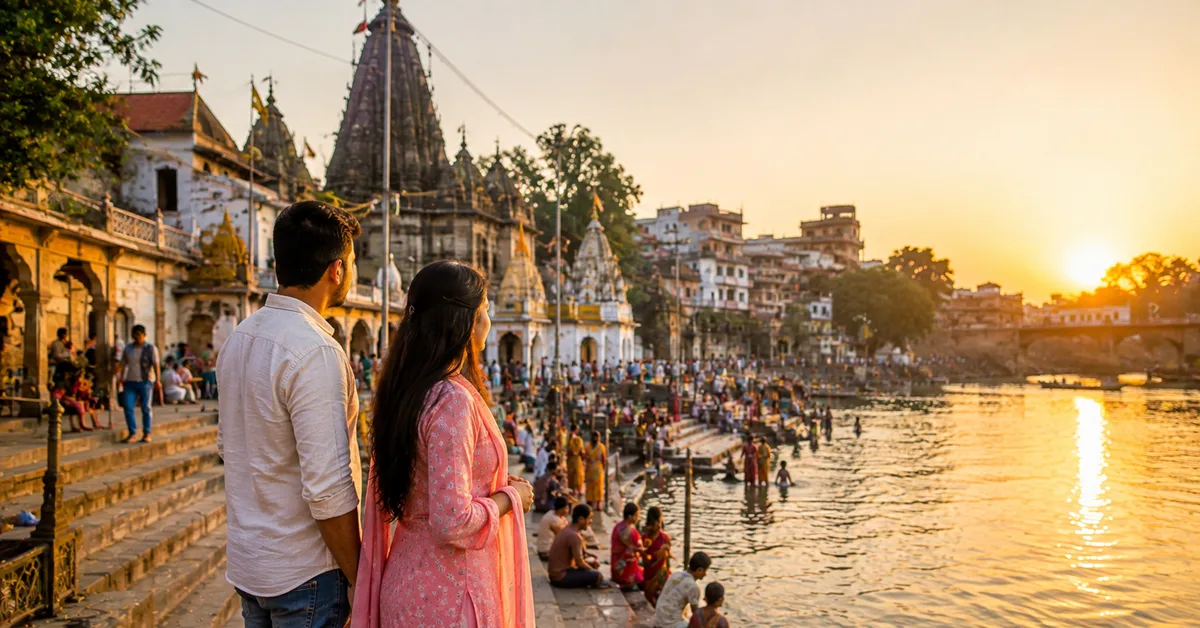
Walk along the ghats.
Observe the temples and shrines surrounding the area.
Watch devotees performing rituals.
If you visit in the evening, the atmosphere becomes particularly interesting as the riverfront becomes more active.
This is not a place where sightseeing means ticking off a monument.
The experience comes from observing the religious life of the city.
Is Ram Kund Worth Visiting?
Yes.
If you are already visiting Panchavati, there is no reason to skip it.
It is one of the places that helps explain why Nashik is considered one of India’s major pilgrimage cities.
7. Kapaleshwar Mahadev Temple
Kapaleshwar Mahadev Temple is another important temple in Panchavati, located close to Ram Kund.
The temple is unusual because, according to local tradition, there is no Nandi statue positioned in front of the Shiva shrine.
Kapaleshwar Temple Visitor Information
| Information | Details |
|---|---|
| Location | Panchavati, near Ram Kund |
| Google Rating | Approximately 4.8/5 |
| Approx. Google Reviews | 4,900+ |
| Entry Fee | Free |
| Opening Time | Around 5:00 AM |
| Closing Time | Around 11:00 PM; some days may vary |
| Recommended Duration | 30–60 minutes |
| Best Time | Early morning or evening |
| How to Reach | Walking from Ram Kund or by auto/cab |
| Approx. Transport Cost | ₹100–₹250 from central Nashik |
| Practical Tip | Combine it with Ram Kund and Kalaram Temple |
The current local business listing shows the temple at approximately 4.8/5 from more than 4,900 reviews, with early-morning opening and late-evening closing hours. Shree Kapaleshwar Mahadev Mandir Panchvati Nashik
Why Is Kapaleshwar Temple Famous?
The temple is associated with Lord Shiva and is considered one of the important religious sites of Panchavati.
Its unusual feature is the absence of Nandi in front of the Shiva shrine.
Local religious tradition gives several explanations for this distinctive arrangement.
The temple’s location is equally important. It sits close to Ram Kund, meaning visitors can easily experience several religious landmarks within a short walk.
What Should You Experience?
Visit the temple as part of your Panchavati walking circuit.
A convenient sequence is:
Kalaram Temple → Sita Gufa → Ram Kund → Kapaleshwar Temple
This avoids unnecessary transportation and lets you experience the old religious quarter on foot.
Is Kapaleshwar Temple Worth Visiting?
Yes, especially for pilgrims and travellers interested in Hindu temple traditions.
For a first-time visitor, it is more meaningful when combined with the other Panchavati attractions rather than treated as a separate excursion.
8. Sula Vineyards
Sula Vineyards is arguably the attraction that changed Nashik’s image from being primarily a pilgrimage destination to being one of India’s best-known wine tourism regions.
Located in the Gangapur area, the vineyard combines wine tourism, restaurants, accommodation, events and countryside views.
Maharashtra Tourism describes Nashik as India’s “Wine Capital” and identifies vineyards as one of the region’s defining attractions.
Sula Vineyards
4.3•Vineyard•OpenWebsite
•Directions
•099700 90010
Sula Vineyards Visitor Information
| Information | Details |
|---|---|
| Location | Gangapur-Savargaon Road, Nashik |
| Google Rating | Approximately 4.3/5 |
| Approx. Google Reviews | 26,000+ |
| Entry / Experience Fee | Around ₹600 weekday / ₹1,000 weekend and prime days for the current wine-tour coupon |
| Redemption | Coupon value can be redeemed at participating outlets on the same day |
| Opening Time | Around 10:00–10:30 AM depending on day |
| Closing Time | Around 11:00 PM; outlet timings vary |
| Recommended Duration | 3–4 hours |
| Best Time | October–February; late afternoon for views |
| How to Reach | Private cab, taxi or self-drive |
| Approx. Transport Cost | ₹700–₹1,500 each way depending on vehicle |
| Practical Tip | Arrange a driver or cab if you plan to taste wine |
Current Sula information lists the wine-tour coupon at ₹600 on weekdays and ₹1,000 on weekends/prime days, with the coupon value redeemable at outlets on the same day.
The current business listing shows Sula at approximately 4.3/5 with more than 26,000 reviews and operating hours extending into the evening. Sula Vineyards
Why Is Sula Vineyards Famous?
Sula has become closely associated with India’s growing wine industry.
The vineyard experience is about much more than drinking wine.
Visitors can learn how grapes are cultivated, understand the winemaking process, explore the property and enjoy views across the surrounding countryside.
The setting is one of the biggest attractions.
Rows of grapevines stretch across the landscape, while the surrounding hills provide a scenic backdrop.
What Should You Experience?
If you’re interested in wine, take a guided tour.
You can learn about:
- Grape cultivation
- Harvesting
- Fermentation
- Wine storage
- Bottling
- Different wine varieties
The tasting experience is obviously intended for adults.
If you’re travelling with a mixed group, the vineyard itself still offers plenty to enjoy even if you don’t drink alcohol.
The restaurants and views make it a pleasant leisure stop.
Sunset at Sula
Late afternoon is one of the best times to visit.
The light becomes softer and the vineyard landscape becomes particularly attractive for photography.
If you plan to stay until sunset, don’t leave transportation arrangements until the last moment.
Is Sula Vineyards Worth Visiting?
Yes, but it depends on the type of traveller.
For couples and groups of friends:
Highly recommended.
For wine and food enthusiasts:
Essential.
For families:
Worth visiting for the scenery and dining, although wine tasting itself is obviously an adult activity.
For a purely religious pilgrimage:
Optional.
Sula is what makes a Nashik itinerary feel different from a conventional temple tour.
9. Saptashrungi Devi Temple
Saptashrungi is one of the most important pilgrimage destinations in the Nashik region.
The temple is located around 60 km from Nashik city in the Vani area and sits dramatically among seven mountain peaks.
Maharashtra Tourism identifies Saptashrungi as an important Shakti pilgrimage site and describes the surrounding landscape as being associated with seven peaks and numerous sacred water bodies.
Saptashrungi Temple Visitor Information
| Information | Details |
|---|---|
| Location | Saptashrungi Gad, Vani, Nashik district |
| Google Rating | Approximately 4.7/5 |
| Approx. Google Reviews | 30,000+ |
| Entry Fee | General temple entry is free |
| Opening Time | Around 5:00 AM |
| Closing Time | Around 9:00 PM |
| Recommended Duration | 2–4 hours |
| Best Time | October–February |
| How to Reach | Taxi, bus or private vehicle from Nashik |
| Approx. Transport Cost | ₹1,500–₹2,500 round trip by private cab |
| Practical Tip | Start early; festival days can be exceptionally crowded |
The current local business listing shows 4.7/5 from more than 30,000 reviews, with listed hours of approximately 5:00 AM to 9:00 PM. Shree Saptashrungi Nivasini Devi Shaktipeeth
Why Is Saptashrungi Famous?
The temple is dedicated to Goddess Saptashrungi Nivasini.
The name refers to the seven surrounding mountain peaks.
The shrine is considered one of Maharashtra’s important Shakti pilgrimage centres and is particularly significant during Navratri and other religious occasions.
The mountain setting makes the temple visually impressive.
This isn’t simply a temple in the middle of a city. It is a pilgrimage complex integrated into a dramatic hill landscape.
What Should You Experience?
The journey itself is part of the attraction.
As you approach Saptashrungi Gad, the surrounding hills become increasingly prominent.
Depending on the current access arrangements, visitors can use the developed access route and available facilities to reach the shrine.
If you’re travelling with elderly family members, don’t assume that the visit will be as physically easy as a city temple. Check the latest access arrangements before departure.
Is Saptashrungi Worth Visiting?
Yes, especially for pilgrims.
For travellers with only three or four days in Nashik, however, the decision depends on priorities.
If your trip is strongly religious:
Include it.
If your main interests are temples in Nashik city, caves and vineyards:
It can be skipped in favour of a more relaxed itinerary.
The roughly 120-km round trip from Nashik also means it consumes a substantial part of a day.
10. Anjaneri Hills
Anjaneri is another attraction worth considering if you want to add nature and mythology to your Nashik trip.
The hills are traditionally regarded as the birthplace of Lord Hanuman and are also associated with ancient caves, temples and trekking routes.
Maharashtra Tourism specifically highlights Anjaneri as a destination combining religious significance with trekking and natural scenery.
Anjaneri Visitor Information
| Information | Details |
|---|---|
| Location | Anjaneri Hills, between Nashik and Trimbakeshwar |
| Google Rating | Varies by individual location/listing |
| Entry Fee | Generally no major entry fee for the hill area |
| Opening / Closing | Daylight trekking recommended |
| Recommended Duration | 4–6 hours for a substantial visit |
| Best Time | October–February; post-monsoon with caution |
| How to Reach | Private vehicle or taxi |
| Approx. Transport Cost | ₹800–₹1,500 round trip depending on starting point |
| Practical Tip | Start early, carry water and avoid attempting the trek casually during extreme heat or heavy rain |
Why Is Anjaneri Famous?
The religious connection is its biggest attraction.
According to local tradition, Anjaneri is associated with Anjana Devi and the birth of Lord Hanuman.
The hills also contain caves and ancient religious sites.
For travellers who enjoy walking and outdoor experiences, this provides a completely different experience from Nashik’s urban temples.
Is It Worth Visiting?
Yes, if you enjoy trekking and have an additional half or full day.
For a relaxed family pilgrimage trip, it may not be necessary.
11. Someshwar Waterfall and Temple
Someshwar is a useful option if you want to add a short nature stop without travelling too far from Nashik.
The area around Someshwar Temple and the Godavari River becomes particularly attractive during the monsoon.
Someshwar Visitor Information
| Information | Details |
|---|---|
| Location | Near Gangapur Road, Nashik |
| Entry Fee | Generally free for the temple/natural area |
| Recommended Duration | 1–2 hours |
| Best Time | Monsoon and immediately after, subject to safe conditions |
| How to Reach | Taxi, auto or private vehicle |
| Approx. Transport Cost | ₹250–₹600 one way |
| Practical Tip | Avoid getting close to strong water currents during heavy rain |
Maharashtra Tourism includes Someshwar Waterfall among Nashik’s attractions and notes that it is particularly appealing during the monsoon.
Is It Worth Visiting?
If you have a spare couple of hours, yes.
If your schedule is already full, don’t sacrifice Trimbakeshwar, Pandavleni or Sula to fit it in.
Nashik Attractions: Which Ones Should You Prioritise?
| Priority | Attraction | Best For |
|---|---|---|
| Must Visit | Trimbakeshwar | Pilgrimage, architecture and culture |
| Must Visit | Panchavati | Ramayana heritage and temples |
| Must Visit | Pandavleni Caves | History and architecture |
| Must Visit | Sula Vineyards | Wine tourism and scenery |
| Must Visit | Ram Kund | Spirituality and riverfront |
| Recommended | Kalaram Temple | History and religion |
| Recommended | Kapaleshwar Temple | Religious heritage |
| Recommended | Saptashrungi | Pilgrimage and mountain scenery |
| Optional | Anjaneri | Trekking and mythology |
| Optional | Someshwar | Nature and monsoon scenery |
Best Nashik Itinerary by Traveller Type
For Pilgrims
Prioritise:
Trimbakeshwar → Panchavati → Kalaram Temple → Sita Gufa → Ram Kund → Kapaleshwar → Saptashrungi
You can largely ignore the vineyards if spirituality is your main reason for travelling.
For Couples
Prioritise:
Panchavati → Pandavleni → Sula Vineyards → Gangapur area → relaxed cafés
This creates a much more leisurely trip.
For Families
Prioritise:
Panchavati → Trimbakeshwar → Pandavleni → Sula → Someshwar
Add Anjaneri only if the family enjoys walking and trekking.
For History Lovers
Prioritise:
Pandavleni → Kalaram Temple → Panchavati → Trimbakeshwar → Sita Gufa
For Nature Lovers
Prioritise:
Anjaneri → Sula countryside → Someshwar → Brahmagiri → nearby waterfalls during safe weather
Nashik Trip: Practical Day-Wise Plan
At this stage, the most efficient four-day structure becomes clearer.
Day 1 – Panchavati and Old Nashik
Total distance: Approximately 15–20 km
Travel time: Around 30–60 minutes of cumulative local travel, excluding sightseeing
Transport: Walking + auto/cab
Estimated transport cost: ₹400–₹1,000 per person
Daily budget: ₹1,500–₹3,000 per person
Suggested hotel area: Panchavati or central Nashik
Morning
Start with Kalaram Temple.
Continue to Sita Gufa.
Afternoon
Have lunch at a local Maharashtrian restaurant.
Visit Ram Kund and Kapaleshwar Temple.
Evening
Walk around Panchavati and the Godavari riverfront.
If you’re visiting during a major religious festival, allow considerably more time.
Day 2 – Trimbakeshwar and Brahmagiri
Total distance: Approximately 60–75 km round trip
Travel time: Around 2–3 hours driving
Transport: Private cab
Estimated transportation: ₹800–₹1,500 per person depending on group size
Daily budget: ₹2,000–₹4,000 per person
Suggested hotel area: Central Nashik / Panchavati
Morning
Leave around 6:00–7:00 AM.
Arrive at Trimbakeshwar early.
Complete darshan and explore the temple surroundings.
Afternoon
Have lunch in Trimbak.
If weather and fitness permit, explore the Brahmagiri area or Kushavarta Tirtha.
Evening
Return to Nashik.
Have a relaxed dinner rather than adding another major attraction.
Day 3 – Pandavleni and Sula Vineyards
Total distance: Approximately 45–60 km
Travel time: Around 2–3 hours driving
Transport: Private cab
Estimated transportation: ₹700–₹1,500 per person
Daily budget: ₹2,500–₹5,000 per person
Suggested hotel area: Gangapur Road or central Nashik
Morning
Reach Pandavleni as early as possible.
Explore the caves before the heat becomes uncomfortable.
Afternoon
Lunch and rest.
Head towards Gangapur Valley.
Evening
Spend the late afternoon and evening at Sula Vineyards.
Enjoy the vineyard landscape, winery experience and dinner if desired.
Arrange a cab in advance if consuming alcohol.
Day 4 – Saptashrungi or Relaxed Nashik
There are two ways to handle the final day.
Option A: Pilgrimage-Focused
Travel to Saptashrungi.
Approximate round-trip distance: 120 km
Travel time: 3–4 hours driving
Transport: Private cab
Budget: Approximately ₹2,000–₹4,000 per person
Return to Nashik for your departure.
Option B: Relaxed Nashik
If you don’t want another long drive:
Visit:
- Someshwar
- Gangapur Dam area
- Local markets
- Muktidham Temple
- Food spots
- Local shops
This option is much better if your departure is on the same evening.
Recommended Restaurants in Nashik
For your trip, I would mix traditional food with a couple of modern dining experiences.
For Maharashtrian Food
Try a local restaurant serving:
- Misal pav
- Thali
- Pithla bhakri
- Bharli vangi
- Sabudana vada
For Vegetarian Food
Nashik has plenty of vegetarian restaurants.
A simple local thali can cost approximately ₹150–₹350 per person.
A more elaborate restaurant meal may cost ₹400–₹800.
For Vineyard Dining
Sula’s on-site restaurants provide a more premium experience.
Budget approximately ₹800–₹1,500+ per person for a proper meal depending on what you order.
How to Save Money on a Nashik Trip
The biggest expense in Nashik is usually not food.
It is transportation.
Stay centrally
A centrally located hotel can save substantial taxi costs.
Share a cab
For Trimbakeshwar and Saptashrungi, four people sharing a taxi is much more economical than travelling individually.
Group attractions geographically
Don’t travel from Panchavati to Pandavleni and then back to Panchavati unnecessarily.
Eat local
Misal and traditional meals are considerably cheaper than eating every meal at premium restaurants.
Visit Sula selectively
If you’re not interested in wine, you can enjoy the vineyard atmosphere without necessarily choosing every premium experience.
Important Monsoon Advice
Nashik looks spectacular during the monsoon, but outdoor attractions require caution.
Pandavleni’s steps can become slippery.
Anjaneri trails can become muddy.
Someshwar and other waterfall areas can become dangerous when water flow increases.
Don’t stand directly beside fast-moving water for photographs.
If heavy rainfall is forecast, replace outdoor attractions with temples, museums, food experiences or shopping.
What Should You Carry?
- Comfortable walking shoes
- Light cotton clothes
- A light jacket for winter evenings
- Rain jacket or umbrella during monsoon
- Sunglasses
- Sunscreen
- Reusable water bottle
- Power bank
- Personal medicines
- Government ID
- Small cash
- Comfortable footwear for temple visits
- Extra clothes if visiting outdoor water attractions
For Pandavleni and Anjaneri, comfortable footwear is much more important than fashionable footwear.
Photography Tips
Pandavleni
Morning light is ideal.
Photograph the caves with the surrounding landscape rather than only taking close-ups of the carvings.
Panchavati
Early morning and evening provide better atmosphere.
The ghats around Ram Kund can be particularly interesting during religious ceremonies.
Sula Vineyards
Late afternoon is the best time for vineyard photography.
Use the rows of vines as leading lines.
Avoid photographing people closely without permission.
Trimbakeshwar
Respect temple restrictions.
Don’t photograph restricted areas merely to get a better travel photograph.
Common Mistakes to Avoid
Trying to Visit Saptashrungi and Sula on the Same Day
Technically possible, but unpleasant.
They are in different directions and require significant travel.
Visiting Trimbakeshwar Late
Queues can become extremely long.
Start early.
Ignoring Summer Heat at Pandavleni
The climb is much more enjoyable early in the morning.
Driving After Wine Tasting
Don’t.
Arrange a cab or designated driver beforehand.
Treating Panchavati as One Attraction
It is a whole neighbourhood of interconnected religious and cultural sites.
Walk between them.
Packing the Itinerary Too Tightly
A delayed temple queue can destroy a schedule with no buffer.
Keep your evenings flexible.
Recommended Hotels in Nashik
Nashik has accommodation for almost every budget, from simple lodges near pilgrimage areas to premium hotels around Gangapur Road and the city’s major commercial districts.
Hotel prices fluctuate considerably depending on weekends, festivals, weddings and peak travel periods, so the following figures should be treated as planning ranges.
Budget Hotels
Approximate price: ₹1,000–₹2,500 per night
Budget travellers should look around:
- Panchavati
- Central Nashik
- Nashik Road
- Mumbai Naka
- CBS area
The advantage of staying centrally is that you can save considerably on local transportation.
For a pilgrimage-focused trip, staying around Panchavati can be particularly convenient because several important attractions are within walking distance or a short auto ride.
Mid-Range Hotels
Approximate price: ₹2,500–₹6,000 per night
This is probably the best category for most couples and families.
Good areas include:
- College Road
- Gangapur Road
- Mumbai Naka
- Govind Nagar
- Pathardi Phata
Treat Hotel, Nashik is one option in Govind Nagar, while ibis Nashik is another established choice around the Satpur side of the city.
For travellers wanting easier access towards the Gangapur and vineyard side, hotels around Gangapur Road can be particularly convenient.
Luxury Hotels
Approximate price: ₹7,000–₹15,000+ per night
Luxury travellers can consider:
Radisson Blu Hotel & Spa, Nashik
4.7•HotelWebsite
•Directions
•0253 664 4500
Courtyard by Marriott Nashik
4.3•HotelWebsite
•Directions
•0253 666 6555
Gateway Nashik
4.6•HotelWebsite
•Directions
•0253 669 2300
The current business listings show these properties with strong guest ratings, although room rates vary substantially by date and room type.
For a vineyard-focused couple’s trip, staying towards Gangapur Road can reduce driving time to the wine region.
Best Area to Stay in Nashik
| Area | Best For |
|---|---|
| Panchavati | Pilgrims and temple sightseeing |
| Central Nashik | First-time visitors and budget travellers |
| College Road | Couples, restaurants and cafés |
| Gangapur Road | Couples, vineyards and premium stays |
| Mumbai Naka | Families and road travellers |
| Nashik Road | Railway passengers |
| Pathardi Phata | Premium hotels and highway access |
My Recommendation
For a first four-day holiday, central Nashik or Gangapur Road is the best compromise.
If temples are the entire purpose of your trip, choose Panchavati.
If you want temples plus vineyards, food and comfortable evenings, Gangapur Road or central Nashik makes more sense.
Nashik Food Guide: What You Must Eat
One of the best things you can do on a Nashik trip is deliberately set aside time for food.
Don’t make the mistake of eating only at hotel restaurants.
Nashik has a strong Maharashtrian food culture, and local discussions continue to recommend several traditional misal and regional-food establishments. Current restaurant listings also show a wide selection of Maharashtrian restaurants across the city.
1. Nashik Misal Pav
This is the food you should actively seek out.
Misal combines spicy sprouted-legume curry with farsan, onions, coriander and pav. The exact flavour varies from one restaurant to another.
A plate can typically cost around ₹80–₹180, depending on the restaurant.
Recent local food discussions recommend places such as Sadhana, Ambika, Krushna Vijay and Peruchi Wadi for different styles of misal.
If you enjoy spicy food, ask for the traditional spicy preparation rather than automatically choosing a milder version.
2. Sabudana Vada
A crisp, deep-fried snack made primarily with soaked sabudana, potatoes and peanuts.
It is particularly popular as a breakfast or snack.
Expect approximately ₹50–₹120 depending on the establishment.
3. Pithla Bhakri
This is a traditional Maharashtrian combination worth trying if you want something more substantial.
Pithla is generally prepared using gram flour, while bhakri is a rustic flatbread.
Expect approximately ₹150–₹350 per person.
4. Bharli Vangi
Stuffed brinjals prepared with a spiced filling are another traditional Maharashtrian favourite.
If you’re eating a Maharashtrian thali, look for it on the menu.
5. Thalipeeth
A savoury multigrain flatbread, usually served with curd, chutney or butter.
It’s an excellent breakfast option.
6. Kothimbir Vadi
This coriander-based Maharashtrian snack is another good vegetarian choice.
It is often steamed and then lightly fried before serving.
7. Shrikhand
For dessert, try shrikhand, a thick sweet preparation made from strained yoghurt and flavoured with ingredients such as saffron or cardamom.
8. Chivda
Nashik is a good place to purchase packaged Maharashtrian snacks for the journey home.
Chivda makes an easy souvenir because it travels well and doesn’t require refrigeration.
Best Restaurants and Food Stops
For a traditional Maharashtrian meal, current restaurant listings include options such as The Namastey Nashik – Best Pure Veg Restaurant and Nashik Lunch Home.
For a thali experience, Shree Rajbhog Thali, Mumbai Naka is another popular option.
For a more traditional Marathi dining experience, Verandaah Restaurant is worth considering.
If you want something inexpensive and vegetarian, Udupi Tadka High Gardens Pure Veg restaurant is another practical choice.
Current local listings put several of these restaurants in roughly the ₹200–₹600 range for two at the more affordable end, while premium restaurants can cost substantially more.
Café Culture in Nashik
Nashik has developed a surprisingly good café scene.
If you’re staying around College Road, there are numerous places where you can take a break after sightseeing.
The Breakfast Story Cafe & Bistro is a useful option for breakfast and casual meals.
For a more relaxed evening café experience, Charlies Deck | Best Cafe In Nashik is another option.
Lilly Cafe – First Boho Cafe In Nashik is also suitable if you want a more casual café atmosphere.
Vegetarian Food in Nashik
Vegetarians will have no difficulty finding good food.
Prioritise:
- Misal pav
- Sabudana vada
- Pithla bhakri
- Thalipeeth
- Kothimbir vadi
- Bharli vangi
- Maharashtrian thali
- Poha
- Batata vada
- Shrikhand
- Puran poli
A vegetarian traveller can comfortably spend ₹250–₹600 per day on food if eating primarily at local restaurants.
Shopping in Nashik
Shopping is best left for the final afternoon or evening.
You don’t need to dedicate an entire day to it.
Panchavati Markets
The area around Panchavati is useful for:
- Religious items
- Puja materials
- Small souvenirs
- Traditional products
- Snacks
- Packaged sweets
Main City Markets
Central Nashik has clothing stores, footwear shops, snack shops and general markets.
What to Buy
Good Nashik souvenirs include:
- Chivda
- Local snacks
- Maharashtrian spices
- Pickles
- Grape-based products
- Raisins
- Local sweets
- Traditional handicrafts
- Small religious souvenirs
- Packaged wine, where legally appropriate and if you choose to purchase it
Grapes and Raisins
Because Nashik is one of India’s major grape-growing regions, grape products make particularly appropriate souvenirs.
If you’re visiting during the right season, buying fresh grapes from local sellers can be more enjoyable than buying them from a supermarket.
Bargaining Tips
Bargaining depends on the type of shop.
In established stores and branded outlets, prices are generally fixed.
In street markets:
- Ask the price first.
- Compare two or three shops.
- Negotiate politely.
- Don’t bargain aggressively over very small amounts.
- Check the product carefully before paying.
Hidden Gems Around Nashik
The most popular attractions are worth visiting, but Nashik also has quieter experiences.
Gangapur Dam Area
The Gangapur region is particularly attractive around sunset.
The water, hills and vineyard landscape create a peaceful contrast to central Nashik.
It is also conveniently located near the vineyard circuit.
Someshwar
Someshwar is a good short excursion, especially after the monsoon.
The surrounding landscape becomes greener and the river environment is more attractive.
Don’t get close to strong water currents during heavy rainfall.
Anjaneri
Anjaneri is worth considering for travellers who want to add a hike to their Nashik trip.
It combines mythology, caves, hills and panoramic views.
Allow several hours rather than treating it as a quick sightseeing stop.
Muktidham Temple
Located close to Nashik Road, Muktidham is another interesting temple complex.
It can be particularly convenient for travellers arriving or departing by train.
Because of its location, it can be incorporated into the first or final day without requiring a major detour.
Photography Tips for Nashik
Nashik offers very different photographic opportunities.
Panchavati
Visit early morning.
The soft light, temples, ghats and river create excellent opportunities for atmospheric photographs.
Ram Kund
The ghats become especially interesting during religious ceremonies.
However, don’t photograph people performing private rituals from close range without permission.
Pandavleni
Use the caves and surrounding landscape together.
A wide-angle lens or phone’s wide camera works well.
Early morning is better because the climb can become hot later.
Sula Vineyards
Late afternoon is ideal.
Photograph the vineyard rows with the hills behind them.
The landscape becomes particularly attractive around sunset.
Trimbakeshwar
Photography inside restricted temple areas should never take priority over religious rules.
Follow the instructions of temple authorities.
Common Tourist Mistakes in Nashik
1. Trying to Visit Every Temple
Nashik has an enormous number of religious sites.
You don’t need to visit all of them.
Select the important ones and experience them properly.
2. Visiting Trimbakeshwar Too Late
This is perhaps the biggest practical mistake.
Queues can become extremely long on busy days.
Start early.
3. Planning Saptashrungi as a Quick Excursion
It is roughly 60 km from Nashik.
That’s around 120 km round trip.
Treat it as a proper day excursion.
4. Visiting Pandavleni in the Afternoon
The climb is much more comfortable in the morning.
5. Driving After Wine Tasting
Arrange transportation in advance.
Don’t drive after consuming alcohol.
6. Ignoring Festival Crowds
Nashik becomes dramatically busier during major religious occasions.
Hotel prices, traffic and temple queues can all increase substantially.
7. Not Leaving Buffer Time
A temple queue, traffic jam or delayed meal can easily add an hour.
Don’t create an itinerary where every activity starts exactly 15 minutes after the previous one.
Money-Saving Tips
Stay in the Right Area
A slightly more expensive hotel in a convenient location can sometimes save more money than a cheap hotel requiring long taxi rides every day.
Share Private Taxis
For Trimbakeshwar and Saptashrungi, a taxi shared among four people is considerably more economical.
Eat Local
A local breakfast can cost ₹50–₹150, while a premium café breakfast can easily cost several times that amount.
Visit Vineyards Strategically
If you’re primarily interested in scenery, you don’t necessarily need to purchase every premium experience.
Use Walking Routes
Panchavati is ideal for walking between attractions.
There is little reason to repeatedly hire an auto for locations that are only a short distance apart.
Packing Checklist
- Comfortable walking shoes
- Sandals for temple visits
- Light cotton clothing
- Light jacket for winter mornings
- Rain jacket or umbrella during monsoon
- Sunglasses
- Sunscreen
- Reusable water bottle
- Power bank
- Personal medicines
- Small backpack
- Government ID
- Cash in smaller denominations
- Extra clothes if visiting water attractions
For Pandavleni and Anjaneri, proper walking shoes are far more important than carrying excessive luggage.
Local Etiquette
Nashik is an important pilgrimage destination, so visitors should be particularly respectful around temples and ghats.
At religious sites:
- Dress modestly.
- Remove footwear where instructed.
- Don’t touch idols or religious objects unless permitted.
- Don’t interrupt rituals.
- Follow photography restrictions.
- Keep your voice low inside temples.
At Ram Kund and other ghats, remember that some people are there for deeply personal religious ceremonies.
Give them space.
Safety Advice
Nashik is generally straightforward for tourists, but these precautions make the trip more comfortable.
Around Temples
Keep wallets and phones secure in crowded areas.
Around Water
During monsoon, stay away from strong currents and slippery rocks.
During Trekking
Don’t start an unfamiliar trek late in the afternoon.
Carry water and inform someone about your route.
During Vineyard Visits
Use a cab or designated driver after alcohol consumption.
During Summer
Schedule outdoor activities early and carry sufficient water.
For Families
Keep children close around crowded temple complexes, ghats and hill areas.
Complete 4-Day Nashik Trip Itinerary
Now that the attractions, food and practical details are covered, here is the final itinerary I would recommend for a first-time visitor.
Day 1: Panchavati and Old Nashik
Approximate distance: 15–20 km
Local travel time: 1–2 hours spread throughout the day
Transport: Walking + auto/cab
Estimated transportation cost: ₹400–₹1,000 per person
Daily budget: ₹1,500–₹3,000 per person
Suggested hotel area: Panchavati or central Nashik
Morning
Start early.
Have breakfast with poha, sabudana vada or misal pav.
Visit:
Kalaram Temple
Then walk towards:
Sita Gufa
Continue towards:
Ram Kund
Afternoon
Have a traditional Maharashtrian lunch.
Try:
- Pithla bhakri
- Bharli vangi
- Kothimbir vadi
- Local thali
After lunch, visit:
Kapaleshwar Mahadev Temple
Evening
Walk around Panchavati and the Godavari riverfront.
If you want to experience Nashik’s atmosphere rather than just its monuments, this is the time to slow down.
Return to the hotel and have a relaxed dinner.
Don’t add Trimbakeshwar to this day.
It will make the day unnecessarily rushed.
Day 2: Trimbakeshwar and Brahmagiri
Approximate distance: 60–75 km round trip
Driving time: 2–3 hours
Transport: Private cab or self-drive
Estimated transport cost: ₹800–₹1,500 per person when shared
Daily budget: ₹2,000–₹4,000 per person
Suggested hotel area: Central Nashik or Panchavati
Morning
Leave around 6:00–7:00 AM.
Reach Trimbakeshwar early.
Complete darshan.
Explore the temple surroundings and nearby pilgrimage areas.
Afternoon
Have lunch around Trimbak.
If you’re physically fit and weather conditions are favourable, consider exploring Brahmagiri or nearby religious sites.
Don’t attempt a demanding trek if you’re travelling with young children or elderly family members simply because you want to fit it into the itinerary.
Evening
Return to Nashik.
Keep the evening free.
Have dinner at a Maharashtrian restaurant.
A relaxed evening is preferable to adding another sightseeing stop.
Day 3: Pandavleni and Sula Vineyards
Approximate distance: 45–60 km
Driving time: 2–3 hours
Transport: Private cab
Estimated transport cost: ₹700–₹1,500 per person
Daily budget: ₹2,500–₹5,000 per person
Suggested hotel area: Gangapur Road or central Nashik
Morning
Start early for:
Pandavleni Caves
Allow approximately two hours.
The climb is manageable for reasonably fit travellers but can be uncomfortable in hot weather.
Afternoon
Return for lunch and rest.
Then head towards:
Gangapur Valley
Evening
Spend the late afternoon and evening at:
Sula Vineyards
Take the vineyard tour if interested.
Enjoy the views.
Have dinner if you want to extend the experience.
Arrange a cab beforehand.
Day 4: Saptashrungi or Relaxed Nashik
There are two good options.
Option A: Saptashrungi
Approximate distance: 120 km round trip
Driving time: 3–4 hours
Transport: Private cab
Approximate transport cost: ₹1,500–₹2,500 per person depending on group size
Daily budget: ₹2,500–₹4,500 per person
Leave early.
Visit Saptashrungi Temple.
Return to Nashik by afternoon or evening.
This option is best for pilgrims.
Option B: Slow Final Day
If you’re not particularly religious or have an evening departure, don’t spend the entire final day inside a car.
Instead visit:
- Muktidham
- Someshwar
- Gangapur Dam area
- Local markets
- Food shops
- Cafés
Then collect snacks and souvenirs before departure.
For many travellers, Option B will actually make for a more enjoyable holiday.
Estimated Four-Day Budget
Solo Traveller
Budget: ₹6,000–₹10,000
Comfortable: ₹12,000–₹18,000
Couple
Budget: ₹12,000–₹20,000
Comfortable: ₹20,000–₹32,000
Family of Four
Budget: ₹20,000–₹32,000
Comfortable: ₹30,000–₹45,000
Group of Four to Six
Approximately ₹8,000–₹18,000 per person
depending on accommodation, food, taxi arrangements and vineyard activities.
These figures exclude the cost of reaching Nashik from your home city.
Nashik Trip: Best Experiences at a Glance
| Experience | Recommendation |
|---|---|
| Trimbakeshwar darshan | Essential for pilgrims |
| Panchavati walk | Essential |
| Kalaram Temple | Highly recommended |
| Ram Kund | Highly recommended |
| Pandavleni Caves | Essential for history lovers |
| Sula Vineyards | Highly recommended for couples and groups |
| Saptashrungi | Recommended for pilgrims |
| Anjaneri | Recommended for trekkers |
| Someshwar | Good optional stop |
| Nashik misal | Must try |
| Maharashtrian thali | Must try |
| Local shopping | Worth doing |
| Gangapur sunset | Excellent optional experience |
Frequently Asked Questions
How many days are enough for a Nashik trip?
Four days are ideal for a first visit. This gives you enough time for Trimbakeshwar, Panchavati, Pandavleni, Sula Vineyards and additional attractions without rushing.
What is the best time to visit Nashik?
October to February is generally the best period for comfortable sightseeing. The monsoon months are also attractive because the surrounding hills and vineyards become lush, but outdoor activities require greater weather awareness.
Is Nashik good for a family trip?
Yes. Families can combine temples, caves, vineyards, food experiences and easy nature excursions. Pandavleni and longer treks such as Anjaneri should be planned according to the fitness of family members.
Is Nashik only a pilgrimage destination?
No. This is one of the biggest misconceptions about Nashik. The city combines pilgrimage tourism with Buddhist heritage, vineyards, food, countryside landscapes and trekking opportunities.
What is Nashik famous for?
Nashik is particularly famous for Trimbakeshwar Jyotirlinga, Panchavati, the Godavari River, Kumbh Mela, Pandavleni Caves and its vineyards and wine industry.
Which is better for couples: Nashik or a purely pilgrimage destination?
Nashik is a particularly good choice for couples because the trip can combine temples and cultural attractions with vineyards, cafés, countryside drives and good food.
How far is Trimbakeshwar from Nashik?
Trimbakeshwar is approximately 28 km from central Nashik, making it an easy day trip. However, temple queues can make the excursion considerably longer than the driving distance suggests.
Is Sula Vineyards worth visiting?
Yes, especially for couples, groups and wine or food enthusiasts. Even visitors who don’t drink alcohol can enjoy the vineyard landscape, restaurants and countryside atmosphere. The current Sula experience pricing should be checked before visiting because packages and charges can change.
Final Conclusion
A Nashik trip is best experienced as a combination of four different journeys.
The first is the spiritual journey through Trimbakeshwar, Panchavati, Kalaram Temple, Ram Kund and Kapaleshwar Temple.
The second is the historical journey through the ancient Pandavleni Caves, where the rock-cut architecture provides a fascinating glimpse into the Buddhist heritage of the region.
The third is the countryside experience around Gangapur and Nashik’s vineyards, with Sula Vineyards providing one of the most popular wine-tourism experiences in Maharashtra.
The fourth is the food journey.
Start with misal pav and sabudana vada, move on to a traditional Maharashtrian thali, try local snacks and finish with grape-based products or a relaxed café experience.
For most first-time travellers, the ideal sequence is simple:
Day 1: Panchavati and Old Nashik
Day 2: Trimbakeshwar and Brahmagiri
Day 3: Pandavleni and Sula Vineyards
Day 4: Saptashrungi or a relaxed Nashik day
If you’re travelling primarily for religion, give more time to Trimbakeshwar, Panchavati and Saptashrungi.
If you’re travelling as a couple, don’t rush through the vineyards and Gangapur Valley.
If you’re a history enthusiast, make Pandavleni a priority.
And if food is important to you, leave room for local breakfasts and traditional Maharashtrian restaurants instead of eating every meal at your hotel.
That flexibility is what makes a Nashik holiday work.
You can make it a pilgrimage, a family holiday, a food trip, a heritage journey or a relaxed vineyard getaway without changing the destination itself.
Disclaimer
Travel costs, hotel prices, entry fees, transportation schedules, attraction timings, temple arrangements, weather conditions, exchange rates and local rules can change over time. Google ratings and review counts also change continuously. Travellers should verify the latest information, operating hours, ticket prices, transportation availability, weather conditions and local safety advisories before travelling. During festivals and periods of heavy rainfall, crowds, road conditions and waiting times can change significantly.