
Wayanad Trip: The Ultimate 5-Day Travel Guide to Kerala’s Misty Hills, Waterfalls, Forests and Hidden Natural Wonders
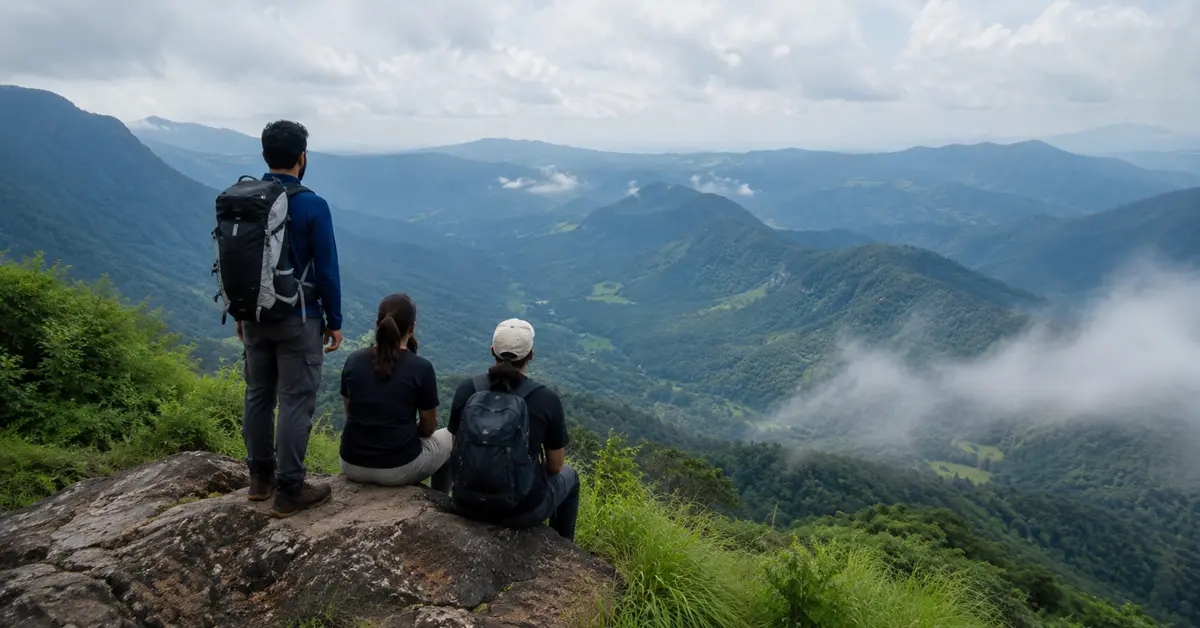
A Wayanad trip is less about ticking off a long list of tourist attractions and more about slowing down and experiencing a completely different side of Kerala. Here, the road winds through mist-covered mountains, coffee and spice plantations stretch across the hills, waterfalls appear between dense forests, and small villages continue traditions that have existed for generations.
Located in the northern part of Kerala and spread across the Western Ghats, Wayanad combines several experiences in one destination. You can spend the morning looking at prehistoric carvings at Edakkal Caves, have lunch surrounded by plantations, go boating on a mountain reservoir in the afternoon, and finish the day watching mist settle over the hills.
The district is particularly appealing because it works for different types of travellers. Couples can choose a secluded plantation resort, families can enjoy lakes and waterfalls, adventure travellers can trek to viewpoints and peaks, wildlife enthusiasts can take a forest safari, and travellers interested in history and culture can explore museums, tribal heritage and ancient sites.
Wayanad is also unusually flexible in terms of trip length. A rushed two-day visit can cover the highlights, but four to five days is much better if you want to experience the destination without spending most of your holiday inside a car.
The district sits at elevations ranging roughly from 700 to more than 2,000 metres, giving it a noticeably cooler and greener character than the Kerala plains. Coffee, pepper, cardamom, tea, ginger and turmeric are important local crops, while forests and wildlife form a major part of the landscape.
If you are planning your first visit, this guide is designed around a practical five-day route rather than simply listing places. It explains where to stay, how much time to allow at each attraction, realistic transport costs, what to eat, where to save money, what to avoid and how to structure your days.
Destination at a Glance
| Information | Details |
|---|---|
| Country / State | India / Kerala |
| Ideal trip duration | 4–5 days |
| Best time to visit | October to May for general sightseeing; monsoon is beautiful but wetter and some activities may be restricted |
| Currency | Indian Rupee (₹ / INR) |
| Language | Malayalam; English is widely understood; Kannada and Tamil are also heard in border areas |
| Time difference | None for Indian travellers |
| Visa requirement | Not applicable for Indian citizens; foreign visitors require an appropriate Indian visa |
| Suitable travellers | Solo travellers, couples, families, senior travellers with suitable planning, and groups |
| Recommended base | Kalpetta, Vythiri or Sulthan Bathery depending on the route |
| Estimated daily budget | Approximately ₹2,000–₹7,000 per person excluding flights, depending on accommodation and activities |
Wayanad’s local language is Malayalam, while English is widely spoken and understood in tourist areas. The district is connected by road to Kerala as well as Karnataka and Tamil Nadu. Calicut International Airport is the main air gateway, while Kannur International Airport is another useful option depending on your route.
Why Should You Visit Wayanad?
Wayanad stands out because it offers a combination that is difficult to reproduce elsewhere in southern India.
1. The landscape changes constantly
One of the pleasures of travelling around Wayanad is that the scenery rarely remains the same for long. You may drive through tea plantations, enter a forest section, cross a small village and suddenly emerge beside a huge reservoir.
The Western Ghats dominate the landscape, and the higher areas can be cool, misty and surprisingly peaceful.
2. It is more than a conventional hill station
Wayanad is not simply another hill station where the main activities are viewpoints and shopping.
The region has prehistoric archaeological sites, tribal heritage, wildlife sanctuaries, plantations, waterfalls, lakes and trekking routes. Edakkal Caves alone provide evidence of ancient human settlement through petroglyphs and engravings believed to date back thousands of years.
3. The forests are a major attraction
Wayanad Wildlife Sanctuary forms part of a larger ecological landscape associated with the Nilgiri Biosphere Reserve. Muthanga is particularly known for elephant sightings, although wildlife sightings are never guaranteed.
A safari should therefore be treated as a forest experience rather than an amusement-park style animal-viewing trip.
4. The food is excellent
The cuisine combines Kerala cooking with Malabar influences. Appam and stew, puttu and kadala curry, Malabar biryani, fish curry, parotta, seafood and several local snacks are worth trying.
Spices are also part of Wayanad’s identity, so buying good-quality pepper, cardamom and coffee can be one of the most useful souvenirs.
5. It works for families
Many Wayanad experiences are not physically demanding. Pookode Lake, Banasura Sagar Dam, museums, viewpoints and plantation areas can comfortably fit into a family holiday.
More demanding places such as Edakkal Caves, Soochipara Falls and Chembra Peak require more consideration if travelling with young children, elderly travellers or anyone with mobility limitations.
Best Time for a Wayanad Trip
October to February: Best overall season
For most travellers, this is the most comfortable period.
The weather is generally pleasant, the landscape remains green after the monsoon and outdoor activities become easier. October and November can still retain some monsoon freshness, while December through February generally brings cooler conditions.
This is the period I would choose for a first Wayanad trip if your priority is sightseeing.
March to May: Warm but still worthwhile
The lower areas become warmer, but the hills remain relatively pleasant compared with many plains destinations.
This is a reasonable period for waterfalls, plantations and resorts, although afternoon sightseeing can feel warmer.
Start outdoor activities early in the morning and keep your more relaxed attractions for the afternoon.
June to September: Monsoon Wayanad
This is the season for travellers who genuinely enjoy rain.
Wayanad becomes exceptionally green, streams fill up and mist can transform the mountains. Kerala experiences substantial rainfall during the southwest monsoon, and Wayanad’s higher-rainfall areas such as Lakkidi, Vythiri and Meppadi can receive particularly heavy showers.
The downside is that trekking, waterfalls, roads and forest attractions can be affected by heavy rain.
For a relaxed resort holiday, monsoon can be wonderful. For a packed sightseeing itinerary, October onward is easier.
Wayanad Weather
Wayanad generally has a cooler climate than the Kerala lowlands because of its elevation.
During December and January, mornings and evenings can feel distinctly cool. Summer afternoons can be warmer, particularly in Sulthan Bathery and lower areas.
Monsoon brings high humidity and frequent rain.
A useful rule is simple:
Carry light clothes throughout the year, but add a light jacket from November to February and a reliable rain jacket during the monsoon.
How Many Days Are Enough for Wayanad?
For a first visit:
- 2 days: Only major highlights.
- 3 days: Good introduction.
- 4 days: Comfortable sightseeing.
- 5 days: Best balance of sightseeing and relaxation.
- 6–7 days: Ideal if combining wildlife, trekking, resorts and slow travel.
For this guide, the recommended itinerary is 5 days and 4 nights.
How to Reach Wayanad
By Air
Wayanad does not have a commercial airport.
The most useful airport is Calicut International Airport, also known as Kozhikode Airport. Kerala Tourism lists it at roughly 65 km from Wayanad, although the actual road distance varies considerably according to where in Wayanad you are staying. Kannur International Airport is another option.
From the airport, you can hire a taxi, use a pre-arranged hotel transfer or combine airport transport with public buses.
From major Indian cities
Travellers from Delhi, Mumbai, Bengaluru, Chennai, Hyderabad, Kolkata and other major cities can generally look for flights to Kozhikode, followed by a road journey to Wayanad.
There is no meaningful reason to insist on a particular airline because schedules change frequently. Compare flight arrival times with your onward road journey before booking.
By Train
The nearest major railway station is Kozhikode.
From Kozhikode, Wayanad is reached by road through the Thamarassery Ghat section.
Kerala Tourism lists Kozhikode railway station at approximately 62 km from some parts of Wayanad, while individual attractions can be much farther away.
By Road
Road travel is one of the best ways to reach Wayanad.
From Bengaluru, the Mysuru–Gundlupet–Sulthan Bathery route is popular. Kerala Tourism’s distance chart places Bengaluru roughly 290 km from Wayanad, with a stated road duration of around 6.5 hours, although real travel time can vary significantly with traffic and forest-road restrictions.
From Mysuru, Wayanad is roughly 124 km by the commonly used route.
Getting Around Wayanad
The biggest planning mistake is underestimating distances.
Wayanad is a district rather than a compact town. Attractions are spread between Kalpetta, Vythiri, Meppadi, Ambalavayal, Sulthan Bathery and Mananthavady.
For families and groups, a private cab is usually the easiest choice.
For couples and solo travellers comfortable with riding, a rented scooter or motorcycle can be useful, but rain, steep roads, wildlife zones and unfamiliar mountain roads require caution.
Approximate local transport planning:
| Transport | Typical planning range |
| Auto-rickshaw for short trips | ₹100–₹300 |
| Local taxi for a short transfer | ₹300–₹800 |
| Full-day private car | ₹2,500–₹4,000 approximately |
| SUV for family/group use | ₹3,500–₹5,500 approximately |
| Scooter rental | ₹500–₹900 per day approximately |
| Airport-to-Wayanad private transfer | ₹2,000–₹3,500+ depending on vehicle and destination |
These are planning estimates rather than fixed tariffs.
Local SIM and Internet
Indian travellers can use Jio, Airtel or Vi, subject to network availability in their exact location.
Internet is generally good in towns and established resorts, but mountain valleys and forest areas can have weaker signals.
Do not rely entirely on mobile internet while travelling to remote attractions.
Download maps for offline use and keep important hotel and transport details saved on your phone.
Safety in Wayanad
Wayanad is generally suitable for tourists, but its natural environment creates risks that are different from city travel.
The most important precautions are:
- Do not enter restricted forest areas.
- Never approach wild elephants.
- Do not stop unnecessarily on forest roads.
- Avoid trekking alone on unfamiliar trails.
- Check weather conditions before waterfalls and treks.
- Wear proper footwear on wet rocks.
- Carry insect repellent.
- Keep children close near waterfalls, reservoirs and steep viewpoints.
- Do not swim where authorities prohibit it.
- Follow forest-department instructions during safaris.
- Avoid driving mountain roads aggressively after dark.
Wayanad Trip Budget
Solo traveller
A budget-conscious solo traveller can plan approximately ₹2,000–₹3,500 per day, excluding the cost of reaching Wayanad.
This assumes a hostel, simple hotel or homestay, local meals, shared transport and limited paid activities.
A more comfortable solo trip with a private room and regular taxi use can reach ₹4,000–₹6,000 per day.
Couple
For two people sharing accommodation, approximately ₹4,500–₹8,000 per day is a sensible planning range.
Resort stays and adventure activities can increase this considerably.
Family of four
A family should plan roughly ₹7,000–₹13,000 per day, depending heavily on accommodation and whether a private vehicle is used.
Families often save money by taking one family room or apartment-style accommodation and hiring a car for the day rather than paying for individual transfers.
Group of six to eight
A group can often achieve excellent value.
A private SUV or traveller vehicle divided among several people can reduce per-person transportation costs substantially.
A practical group budget is approximately ₹2,500–₹6,000 per person per day, excluding flights and premium resorts.
The Ideal 5-Day Wayanad Trip Itinerary
The following itinerary deliberately avoids trying to visit every attraction.
The goal is to create a logical route with enough time to actually enjoy the destination.
Day 1: Arrival, Lakkidi, Pookode Lake and Vythiri
Approximate distance: 40–70 km depending on arrival point
Driving time: 2–3 hours excluding stops
Transport: Private cab or rental car
Estimated transport cost: ₹2,000–₹3,000 for a private car
Approximate daily budget: ₹4,000–₹8,000 for two people
Suggested hotel area: Vythiri or Kalpetta
Suggested meal area: Vythiri/Kalpetta
Morning
Arrive in Wayanad and travel toward Vythiri.
If entering from Kozhikode, the Thamarassery Ghat road is part of the experience itself. Stop at safe viewpoints rather than parking dangerously on bends.
Check into your accommodation and have lunch.
Afternoon: Pookode Lake
Pookode Lake is one of the easiest attractions to include on the first day.
The lake sits amid forested hills and offers walking areas and boating.
The current DTPC listing gives adult entry as ₹40, child entry as ₹30, with boating at ₹300 for a two-seat boat, ₹450 for a four-seat boat and ₹700 for a seven-seat rowboat. The listed visiting hours are 9 AM–6 PM, with boating until 5 PM.
Evening: Lakkidi Viewpoint and Chain Tree
Finish the day around Lakkidi.
The Chain Tree is a quick stop connected with the local legend of Karinthandan, an indigenous guide associated with the historic route through the mountains. The site has no entry fee and is open during daytime.
Return to Vythiri or Kalpetta for dinner.
Best approach: Keep Day 1 relaxed. Do not attempt a waterfall or major trek immediately after a long journey.
Day 2: Edakkal Caves, Wayanad Heritage Museum and Sulthan Bathery
Approximate distance: 70–100 km
Driving time: 3–4 hours
Transport: Private cab/car
Estimated transport cost: ₹2,500–₹3,500
Approximate daily budget: ₹4,500–₹8,500 for two people
Suggested hotel area: Sulthan Bathery or Kalpetta
Suggested meal area: Sulthan Bathery
Morning: Edakkal Caves
Start early.
Edakkal is not simply a cave sightseeing stop. It is one of Wayanad’s most important archaeological attractions.
The current DTPC listing gives entry hours of 8:30 AM–4 PM, with Monday as the holiday, and limits daily visitors to 1,920. Adult entry is ₹50 and child entry ₹30.
Allow around two to three hours because reaching the caves involves walking and climbing.
Afternoon: Wayanad Heritage Museum
After lunch, visit the Wayanad Heritage Museum at Ambalavayal.
The museum contains archaeological and cultural material connected with Wayanad, including exhibits relating to tribal life and earlier periods.
Current DTPC information lists hours of 9 AM–5:30 PM, adult admission at ₹30 and child admission at ₹20.
Evening: Sulthan Bathery
Explore the town, have dinner and return to your hotel.
Sulthan Bathery has historical associations with Tipu Sultan and is named after the military use of a Jain temple as an ammunition store or “battery” during the 18th century.
Day 3: Soochipara Falls and Plantation Country
Approximate distance: 60–90 km
Driving time: 2.5–3.5 hours
Transport: Private cab
Estimated transport cost: ₹2,500–₹3,500
Approximate daily budget: ₹4,500–₹8,000 for two
Suggested hotel area: Kalpetta or Meppadi
Suggested meal area: Meppadi/Kalpetta
Morning: Soochipara Falls
Start early because visitor capacity is restricted.
Soochipara is a three-tiered waterfall surrounded by forest and is reached by a walk from the parking area.
The current DTPC listing gives entry hours of 8 AM–5 PM and a limit of 500 visitors. The listed adult ticket is ₹150, while children in the specified age range are ₹50; students are ₹50 and foreigners ₹300.
Allow at least two hours.
The walk may feel considerably harder on the return journey because you are climbing back uphill.
Afternoon: Meppadi and plantations
After lunch, slow down.
Instead of squeezing another major attraction into the itinerary, visit a coffee or spice plantation if your accommodation offers a guided walk.
This is one of the best ways to understand why Wayanad smells so strongly of coffee, pepper and spices.
Evening
Return to your hotel.
If your resort has a view of the valley, this is a good evening to simply stay in.
A Wayanad trip becomes much more enjoyable when every evening is not another sightseeing mission.
Day 4: Banasura Sagar Dam and Adventure Activities
Approximate distance: 60–90 km
Driving time: 2.5–3.5 hours
Transport: Private car/cab
Estimated transport cost: ₹2,500–₹3,500
Approximate daily budget: ₹5,000–₹9,000 for two
Suggested hotel area: Kalpetta, Vythiri or Padinjarathara
Suggested meal area: Padinjarathara/Kalpetta
Morning: Banasura Sagar Dam
Banasura Sagar Dam is one of the most scenic places in Wayanad.
It is famous for being India’s largest earthen dam and is surrounded by the Banasura Hills and reservoir.
The current DTPC listing gives adult entry as ₹40 and child entry as ₹20. Speed boating is listed at ₹1,000 for five people, pontoon boating at ₹2,000 for 20 people, kayaking at ₹450 for two people for 30 minutes, and ziplining at ₹350 per person. A van service is listed at ₹25 for the return journey.
The attraction is currently listed as open from 9 AM to 5:30 PM.
Afternoon
Choose one or two activities rather than trying everything.
For a family, boating is enough.
For young adults, kayaking and ziplining can add adventure.
For photographers, the reservoir and hills are the real attraction.
Evening
Return slowly toward your hotel.
If you have energy, stop at a scenic roadside viewpoint before sunset.
Day 5: Kuruva Island, Local Food and Departure
Approximate distance: 70–120 km depending on hotel and departure point
Driving time: 3–4 hours
Transport: Private car
Estimated transport cost: ₹2,500–₹4,000
Approximate daily budget: ₹3,500–₹7,000 for two
Suggested hotel area: Mananthavady/Kalpetta depending on departure
Morning: Kuruva Island
Kuruva Island is best treated as a nature experience rather than a checklist attraction.
The island system lies in the Kabini River and is known for bamboo rafting, greenery and nature walks.
Current DTPC information lists entry from 9 AM to 3:30 PM with capacity up to 488 visitors. Adult admission is ₹220, foreign visitors ₹440 and students ₹100. Rafting is listed at ₹100 for adults and ₹50 for children.
Arrive early.
The island is seasonal, and water levels and weather can affect operations.
Afternoon
Have lunch and begin your onward journey.
If your departure is late in the evening, consider a relaxed stop at Mananthavady rather than adding another major attraction.
Major Wayanad Attractions: Detailed Visitor Guide
1. Edakkal Caves
| Information | Details |
| Location | Ambukuthi Mala, near Ambalavayal/Sulthan Bathery |
| Google rating | About 4.1/5 |
| Approx. Google reviews | About 22,000 |
| Indian entry fee | Adult ₹50; child ₹30 |
| Timings | 8:30 AM–4 PM; Monday holiday |
| Recommended duration | 2–3 hours |
| Best time | Morning, especially October–February |
| How to reach | Road to the base, followed by a climb/walk |
| Approx. transport cost | ₹500–₹1,500 from nearby towns by local taxi, depending on distance |
| Practical tip | Wear proper shoes and start early; visitor capacity is limited |
Current Google information shows Edakkal Caves at approximately 4.1/5 with more than 22,000 reviews, while the current DTPC listing confirms the present ticket and timing information.
Why Edakkal Caves is famous
Edakkal is one of the places that gives Wayanad historical depth.
The caves are actually rock shelters formed by massive rocks rather than conventional underground caves. Their importance comes from the prehistoric engravings found on the rock surfaces.
Kerala Tourism describes multiple sets of petroglyphs, including human and animal figures, symbols and other engravings associated with prehistoric settlements. Some are believed to date back thousands of years.
What should you experience?
The journey itself is part of the attraction.
You climb through the hillside, pass rock formations and eventually reach the shelter containing the engravings.
Do not rush through the carvings.
Is it worth visiting?
Absolutely, if you can manage the climb.
For history lovers, it is one of the strongest reasons to visit Wayanad.
For elderly travellers or people with mobility problems, evaluate the physical effort beforehand.
2. Banasura Sagar Dam
| Information | Details |
| Location | Padinjarathara |
| Google rating | About 4.3/5 |
| Approx. Google reviews | About 14,000–15,000 |
| Indian entry fee | Adult ₹40; child ₹20 |
| Timings | 9 AM–5:30 PM |
| Recommended duration | 2–3 hours |
| Best time | Morning or late afternoon |
| How to reach | Road from Kalpetta |
| Approx. transport cost | ₹700–₹1,500 from Kalpetta by taxi depending on vehicle |
| Practical tip | Reserve enough time for walking and boating rather than arriving just before closing |
Current Google-linked review data places Banasura Sagar Dam around 4.3/5 with roughly 15,000 reviews.
Why it is famous
The reservoir surrounded by green hills is the main attraction.
The dam itself is an impressive engineering structure, but the combination of water, hills, islands and activities makes it more attractive to tourists.
What should you experience?
If budget allows, try the speed boat.
Families may prefer the larger pontoon boat.
Photographers should spend time around the reservoir rather than only taking pictures at the entrance.
Is it worth visiting?
Yes.
It is one of the best family-friendly attractions in Wayanad because people who dislike trekking can still enjoy it.
3. Pookode Lake
| Information | Details |
| Location | Pookode, near Vythiri |
| Google rating | About 4.1/5 |
| Approx. Google reviews | About 4,800+ |
| Indian entry fee | Adult ₹40; child ₹30 |
| Timings | 9 AM–6 PM; boating until 5 PM |
| Recommended duration | 1–1.5 hours |
| Best time | October–February; monsoon for misty scenery |
| How to reach | Road from Vythiri/Kalpetta |
| Approx. transport cost | ₹300–₹800 by local taxi from nearby areas |
| Practical tip | Do boating before 5 PM and expect queues on weekends |
Current DTPC information lists the adult fee at ₹40 and boating between ₹300 and ₹700 depending on boat size. Google-linked information currently shows approximately 4.1/5 from about 4,800 reviews.
Why it is famous
Pookode is a freshwater lake surrounded by forested hills.
The lake is known for its distinctive shape, walking areas, boating and relaxed atmosphere.
What should you experience?
Take a boat ride, walk around the lake and browse the local craft and spice stalls.
Do not expect an action-packed attraction.
Its strength is its calmness.
Is it worth visiting?
Yes, particularly for families and couples.
For travellers with limited time, one to one-and-a-half hours is enough.
4. Soochipara Waterfalls
| Information | Details |
| Location | Near Meppadi/Vellarimala |
| Google rating | About 4.2/5 |
| Approx. Google reviews | About 8,600+ |
| Indian entry fee | Adult ₹150; child conditions vary; student ₹50 |
| Timings | 8 AM–5 PM |
| Recommended duration | 2–3 hours |
| Best time | Post-monsoon and periods with good water flow |
| How to reach | Road followed by forest walk |
| Approx. transport cost | ₹600–₹1,500 from nearby towns |
| Practical tip | The return climb is harder than the descent; wear proper footwear |
Google-linked information currently places Soochipara around 4.2/5 with more than 8,600 reviews. The current DTPC listing gives a 500-person capacity and adult entry of ₹150.
Why it is famous
Soochipara is a three-tiered waterfall set against the forested Vellarimala landscape.
The combination of water, rock and forest makes it particularly photogenic.
What should you experience?
Enjoy the waterfall from safe designated areas.
Swimming should only be attempted where permitted and when conditions are safe.
Is it worth visiting?
Yes, but only if you are comfortable walking.
It is not my first recommendation for travellers with serious mobility limitations.
5. Kuruva Island
| Information | Details |
| Location | Kabini River region near Mananthavady |
| Google rating | About 4.1/5 |
| Approx. Google reviews | Limited compared with major attractions |
| Indian entry fee | Adult ₹220; student ₹100 |
| Timings | Entry 9 AM–3:30 PM |
| Recommended duration | 2–3 hours |
| Best time | October–February and operational dry-season periods |
| How to reach | Road followed by island access |
| Approx. transport cost | ₹700–₹1,500 from Mananthavady depending on vehicle |
| Practical tip | Arrive early because daily visitor capacity is restricted |
Current DTPC information lists a maximum daily entry of 488 people and adult admission of ₹220.
Why it is famous
Kuruva is made up of riverine islands surrounded by greenery.
It feels different from the more developed attractions elsewhere in Wayanad.
What should you experience?
Try bamboo rafting or simply walk through the greenery.
Carry drinking water and follow local instructions.
Is it worth visiting?
Yes, if you enjoy nature and quiet places.
It is less suitable for travellers looking for restaurants, shopping or extensive facilities.
6. Chembra Peak and Heart-Shaped Lake
| Information | Details |
| Location | Near Meppadi |
| Google rating | Varies by listing |
| Approx. reviews | Varies by listing |
| Indian visitor fee | ₹50 listed by current DTPC |
| Trek fee | ₹4,000 for a five-person group plus additional per-person charges as listed |
| Timings | Entry 7 AM–3 PM; trekking hours subject to restrictions |
| Recommended duration | 4–6 hours |
| Best time | October–February, subject to weather and permissions |
| How to reach | Road to Meppadi trek base |
| Approx. transport cost | ₹800–₹1,500 from Kalpetta/Meppadi |
| Practical tip | Check trek availability before leaving; weather can affect access |
The current DTPC listing gives a ₹50 visitor fee, separate trekking charges and an entry period from 7 AM to 3 PM.
Why it is famous
Chembra is one of Wayanad’s best-known trekking destinations and is associated with the heart-shaped lake on the trail.
The trek is substantially more demanding than a normal sightseeing stop.
What should you experience?
Start early.
Carry water, wear proper shoes and follow the permitted route.
Is it worth visiting?
Yes for fit travellers and trekking enthusiasts.
It should not be inserted casually into a sightseeing itinerary.
7. Wayanad Heritage Museum
| Information | Details |
| Location | Ambalavayal |
| Google rating | Check current listing before visiting |
| Approx. reviews | Varies by listing |
| Indian entry fee | Adult ₹30; child ₹20 |
| Timings | 9 AM–5:30 PM |
| Recommended duration | 1–1.5 hours |
| Best time | Anytime during opening hours |
| How to reach | Road from Sulthan Bathery |
| Approx. transport cost | ₹300–₹800 from nearby towns |
| Practical tip | Combine it with Edakkal Caves on the same day |
Current DTPC information confirms the ₹30 adult ticket, ₹20 child ticket and 9 AM–5:30 PM operating period.
Why it is famous
The museum brings together archaeological and cultural material connected with Wayanad.
Its collections include material associated with ancient settlements, warriors and tribal communities.
Is it worth visiting?
Definitely, especially after Edakkal Caves.
The two attractions complement one another: Edakkal shows the archaeological site, while the museum provides context through preserved artefacts.
8. En Ooru Tribal Heritage Village
| Information | Details |
| Location | Pookode region |
| Google rating | Check current listing before travel |
| Approx. reviews | Varies by listing |
| Indian entry fee | ₹50 for visitors above age 3 |
| Timings | Mon–Fri 9 AM–5 PM; weekends/public holidays 9 AM–6 PM |
| Recommended duration | 1.5–2.5 hours |
| Best time | Morning or late afternoon |
| How to reach | Road from Vythiri |
| Approx. transport cost | ₹300–₹800 from nearby areas |
| Practical tip | Visit respectfully and treat tribal culture as heritage, not entertainment |
Current DTPC information lists ₹50 admission, a shuttle jeep at ₹40 return and longer opening hours on weekends/public holidays.
Why it is famous
En Ooru was developed to showcase tribal heritage, traditional architecture, food, handicrafts and cultural practices.
Kerala Tourism describes the centre as a place where tribal communities can sell products and showcase their heritage.
Is it worth visiting?
Yes, particularly for families and culturally curious travellers.
It adds an important human dimension to a Wayanad itinerary.
Recommended Areas to Stay
Choosing the correct area is more important than choosing the most expensive hotel.
Budget accommodation
Look around:
- Kalpetta town
- Sulthan Bathery town
- Meppadi
- Mananthavady
Typical planning range: ₹1,200–₹2,500 per night for a basic double room, depending on date and property.
These areas are best if sightseeing matters more than the hotel itself.
Mid-range accommodation
Consider:
- Vythiri
- Kalpetta outskirts
- Meppadi
- Padinjarathara
Typical planning range: ₹3,000–₹7,000 per night.
This is the sweet spot for many families and couples.
Current market listings illustrate how strongly prices vary with dates. For example, Sterling Vythiri Wayanad has recently displayed room rates around the ₹4,000–₹8,000+ range depending on room and meal plan.
Luxury accommodation
For a resort-focused holiday, look around:
- Vythiri
- Padinjarathara
- Karapuzha
- forest and plantation areas around Kalpetta
- Mananthavady/Kuruva region
Luxury properties can range from approximately ₹10,000 to ₹30,000+ per night, with premium villas and private-pool accommodation going higher.
For example, the published 2026–27 tariff for Vythiri Resort lists accommodation from ₹12,000 plus taxes for certain villas and up to ₹27,000 plus taxes for selected premium categories.
What to Eat in Wayanad
Food deserves its own part of the trip.
Malabar biryani
This is one of the obvious dishes to try.
It tends to be fragrant rather than overwhelmingly spicy.
Appam and stew
Soft fermented appam pairs beautifully with vegetable, chicken or other versions of stew.
Puttu and kadala curry
A classic Kerala breakfast.
Puttu is steamed rice flour and coconut served with black chickpea curry.
Kerala parotta and curry
Layered parotta with chicken, beef or vegetable curry is a popular filling meal.
Fish curry
If you eat seafood, try a traditional Kerala fish curry with rice.
Malabar snacks
Look for banana chips, unnakaya, pazham pori and other tea-time snacks.
Chattipathiri
A layered Malabar preparation that can be sweet or savoury depending on the style.
Kerala Tourism specifically highlights Malabar dishes including duck roast, chattipathiri, fish curry, killikoodu and Kerala biryani among Wayanad’s culinary offerings.
Vegetarian Food in Wayanad
Vegetarians should have no major difficulty finding food.
Good choices include:
- Puttu and kadala curry
- Appam and vegetable stew
- Idiyappam
- Dosa
- Idli
- Kerala meals
- Vegetable biryani
- Avial
- Thoran
- Sambar
- Parotta with vegetable curry
If staying at a resort, ask for a Kerala-style vegetarian meal rather than ordering only standard North Indian dishes.
Shopping in Wayanad
What to buy
Wayanad is particularly good for:
- Coffee
- Black pepper
- Cardamom
- Cinnamon
- Tea
- Honey
- Bamboo products
- Coconut-shell products
- Handicrafts
- Herbal products
- Tribal crafts from appropriate community-run outlets
The region’s principal agricultural products include coffee, tea, pepper, cardamom, ginger and turmeric, while local tourism organisations also identify spices, bamboo articles, honey and handicrafts as popular purchases.
Where to shop
Kalpetta and Sulthan Bathery are practical places for general shopping.
For culturally meaningful products, community and tribal heritage centres can be a better choice than generic souvenir shops.
Bargaining tips
Bargaining is more appropriate in informal markets than in fixed-price stores or organised heritage outlets.
Do not bargain aggressively over a small amount with individual artisans.
If buying spices, compare aroma, packaging and freshness rather than choosing solely on price.
Hidden Gems and Less-Obvious Experiences
Cheengeri Hills
Cheengeri Hills offers a relatively accessible trekking experience with views over the surrounding landscape.
Kerala Tourism describes it as a trekking destination with views toward Karapuzha and nearby hills.
It is particularly attractive around sunrise and sunset.
Kanthanpara Waterfalls
Kanthanpara is smaller than Soochipara but can be more relaxed.
The waterfall is around 100 feet high and is surrounded by forest and bamboo areas.
Current DTPC information lists adult entry at ₹40 and child entry at ₹30.
Pazhassi Raja Memorial
For travellers interested in history, this is an excellent alternative to spending the entire trip around natural attractions.
Pazhassi Raja, remembered as the “Lion of Kerala”, resisted the East India Company and is an important figure in Kerala’s colonial history. The memorial at Mananthavady was converted into a museum in 1996.
Current DTPC information lists adult entry at ₹30 and child entry at ₹20.
Brahmagiri Hills
This is for serious nature and trekking enthusiasts.
Current DTPC information lists guided access and a considerably higher fee structure than ordinary tourist attractions.
Do not add it to a normal family itinerary without checking the current trekking conditions.
Common Tourist Mistakes in Wayanad
Trying to cover too much
This is probably the biggest mistake.
Wayanad looks compact on a map, but mountain roads make journeys slower.
Three well-planned attractions can produce a much better day than six rushed stops.
Choosing a hotel only because it is cheap
A cheap hotel 30–40 km from everything can become expensive after repeated taxi journeys.
Ignoring attraction capacity
Places such as Edakkal Caves, Soochipara and Kuruva Island have visitor restrictions.
Arriving late can mean missing the attraction entirely.
Wearing unsuitable footwear
Sandals are fine for lakeside sightseeing.
They are a poor choice for steep trails, wet rocks and waterfall walks.
Treating monsoon travel like winter travel
Heavy rain can change the itinerary.
Keep alternative indoor attractions available.
Expecting guaranteed wildlife
Seeing elephants, deer or other animals is never guaranteed.
A safari is successful even when the forest itself becomes the main experience.
Money-Saving Tips
Stay in Kalpetta or Sulthan Bathery
Central locations can reduce daily taxi costs.
Share transport
For a group of four or more, a private vehicle can be more economical than separate taxis.
Eat where locals eat
Restaurants serving local meals are usually much cheaper than resort dining.
Book the hotel strategically
A slightly more expensive hotel near your planned attractions may actually save money overall.
Avoid unnecessary paid activities
You do not need to pay for every adventure activity at Banasura.
The scenery itself is free once you have entered.
Packing Checklist for Wayanad
- Comfortable walking shoes
- Light cotton clothing
- Light jacket
- Compact rain jacket
- Small backpack
- Water bottle
- Sunscreen
- Sunglasses
- Insect repellent
- Personal medicines
- Power bank
- Phone charging cable
- Waterproof pouch for electronics
- Small towel
- Extra socks
- Identity documents
- Some cash
- UPI-enabled phone
- Comfortable clothes for trekking
For monsoon trips, add an extra pair of footwear and waterproof bags.
Photography Tips for Wayanad
Wayanad rewards early risers.
Sunrise
Cheengeri Hills and selected hill viewpoints can be excellent around sunrise when weather conditions cooperate.
Waterfalls
Use a faster shutter speed if you want to freeze the water or a slower shutter speed if you want a silky-water effect.
Never step onto slippery rocks simply for a photograph.
Banasura Sagar Dam
Late afternoon provides attractive light over the reservoir and hills.
Pookode Lake
Early morning is preferable for quieter photographs.
Mist
Do not assume a cloudy day is a bad photography day.
Wayanad’s mist is part of its visual identity.
Local Etiquette
Wayanad has a strong connection with local communities and tribal heritage.
Dress reasonably modestly when visiting villages, temples and cultural sites.
Ask permission before photographing people, particularly during cultural activities.
Do not touch religious objects or enter restricted areas without permission.
At tribal heritage sites, avoid treating traditional communities as photographic subjects without context or consent.
Never leave plastic behind in forests, waterfalls or river areas.
Important Travel Tips
Start early
Most outdoor attractions are better in the morning.
Keep one flexible afternoon
Do not schedule every hour.
Weather may force you to change plans.
Keep cash
UPI is widely useful, but connectivity can fail in remote areas.
Check the attraction on the morning of travel
This is especially important for waterfalls, trekking areas and wildlife sanctuaries.
Do not trust old travel blogs blindly
Wayanad ticket prices and visitor rules have changed over time.
For example, older online information still shows outdated prices for several attractions, while current DTPC listings now show different rates for Pookode Lake, Edakkal Caves and Soochipara.
A Better Wayanad Trip for Families
If travelling with children, prioritise:
- Pookode Lake
- Banasura Sagar Dam
- En Ooru
- Wayanad Heritage Museum
- Easy plantation experiences
- Selected viewpoints
Be more selective with:
- Chembra Peak
- Edakkal Caves
- Soochipara Falls
- Long forest treks
The problem is not that children cannot enjoy them. The issue is that steep climbs and long walks can quickly become tiring.
A Better Wayanad Trip for Couples
Couples should consider spending at least two nights at a scenic resort rather than changing hotels every night.
A good combination is:
Vythiri + Banasura + plantation experience + Pookode Lake + one waterfall.
Do not fill the itinerary with attractions simply because they are nearby.
A slow breakfast overlooking the hills can be more memorable than another hurried viewpoint.
A Better Wayanad Trip for Adventure Travellers
Focus on:
- Chembra Peak
- Soochipara
- Cheengeri Hills
- Banasura adventure activities
- Bamboo rafting
- Brahmagiri trekking
- Forest experiences
However, adventure activities are weather-dependent.
During heavy monsoon conditions, safety should take priority over the itinerary.
A Better Wayanad Trip for Senior Travellers
Choose:
- Pookode Lake
- Banasura Sagar Dam
- Museums
- Plantation visits
- Scenic drives
- Pazhassi Memorial
- Comfortable resort experiences
Be cautious with:
- Edakkal Caves
- Soochipara
- Chembra
- steep viewpoints
A private vehicle is strongly preferable for seniors because it reduces unnecessary walking and waiting.
Wayanad Trip Cost Example for a Couple
For four nights and five days, excluding flights to Kerala, a realistic mid-range couple’s budget can look like this:
| Expense | Approximate amount |
| Accommodation | ₹16,000–₹30,000 |
| Private vehicle | ₹10,000–₹15,000 |
| Food | ₹6,000–₹10,000 |
| Attraction tickets | ₹1,500–₹3,500 |
| Boating/adventure activities | ₹1,500–₹4,000 |
| Shopping/miscellaneous | ₹2,000–₹5,000 |
| Estimated total | ₹37,000–₹67,500 |
This is deliberately a range rather than a fixed package price because accommodation and vehicle costs change substantially by season.
Wayanad Trip Cost Example for a Family of Four
A family of four staying in comfortable mid-range accommodation should consider roughly:
₹50,000–₹85,000 for five days, excluding flights.
The biggest variables will be hotel category, whether children require separate beds, private vehicle type and adventure activities.
Wayanad Trip Cost Example for a Budget Traveller
A solo traveller using buses, autos, budget accommodation and inexpensive restaurants can potentially keep five days around:
₹10,000–₹18,000, excluding travel to Wayanad.
This requires considerably more planning and flexibility than a private-car itinerary.
Is Wayanad Expensive?
Not necessarily.
Wayanad can be surprisingly affordable if you avoid premium resorts and private vehicles every day.
At the same time, it can become expensive very quickly if you choose luxury villas, private SUVs and multiple adventure activities.
The destination therefore works for both budget and luxury travel.
Frequently Asked Questions
1. How many days are enough for a Wayanad trip?
Four to five days is ideal for a first trip. Three days can cover the highlights, while two days will require a very compressed itinerary.
2. Which month is best for a Wayanad trip?
October to February is generally the easiest period for sightseeing, trekking and outdoor activities. June to September is much wetter but exceptionally green and atmospheric. Kerala Tourism and Incredible India both identify October to May as the broadest favourable travel period.
3. Which airport is nearest to Wayanad?
Calicut International Airport is the principal air gateway and is approximately 65–93 km from different parts of Wayanad depending on the destination. Kannur International Airport is another option.
4. Is Wayanad suitable for families?
Yes. Pookode Lake, Banasura Sagar Dam, museums, heritage centres and scenic drives are particularly family-friendly. Trekking attractions require more careful selection.
5. Is Wayanad safe for tourists?
Wayanad is generally suitable for tourists, but travellers should respect forest regulations, avoid approaching wildlife, use caution around waterfalls and check weather conditions before trekking.
6. What is Wayanad famous for?
Wayanad is famous for its Western Ghats landscape, forests, waterfalls, coffee and spice plantations, Edakkal Caves, wildlife, lakes, trekking and tribal heritage.
7. Can I visit Wayanad during the monsoon?
Yes, but expect heavy rain and possible restrictions. Monsoon is beautiful for resorts, greenery and mist, while trekking and some waterfall activities may be affected.
8. Which area is best to stay in Wayanad?
Kalpetta is the most practical all-round base. Vythiri is better for a scenic resort experience, while Sulthan Bathery is convenient for Edakkal Caves and southern Wayanad attractions.
Final Verdict: Is Wayanad Worth Visiting?
A Wayanad trip works best when you stop treating it as a destination where you have to “cover” everything.
The real appeal lies in the combination.
You have prehistoric history at Edakkal Caves, archaeological collections at the Heritage Museum, misty mountain roads around Vythiri, the peaceful waters of Pookode Lake, the huge landscape of Banasura Sagar Dam, forest walks around Kuruva Island and dramatic waterfalls such as Soochipara.
A well-planned five-day itinerary gives you enough time to experience these without spending the entire holiday rushing from one attraction to another.
For a first visit, the most balanced route is:
Day 1: Vythiri, Pookode Lake and Lakkidi
Day 2: Edakkal Caves, Heritage Museum and Sulthan Bathery
Day 3: Soochipara Falls and plantation experience
Day 4: Banasura Sagar Dam and optional adventure activities
Day 5: Kuruva Island and departure
If you have more time, add Chembra Peak for trekking, Muthanga or Tholpetty for wildlife, En Ooru for tribal heritage, or Pazhassi Memorial for history.
The biggest lesson for planning Wayanad is simple: leave some empty space in your itinerary.
The mountain roads, unexpected viewpoints, plantation cafés, misty mornings and quiet resort evenings are part of the experience. You do not need to turn every hour into a sightseeing appointment.
For most travellers, October to February offers the best overall combination of comfortable weather, greenery and outdoor accessibility, while monsoon is ideal for those specifically seeking rain-soaked landscapes and a quieter resort holiday.
Wayanad is not a destination you simply visit.
It is a place you gradually discover.
Travel Disclaimer
Travel costs, hotel prices, attraction entry fees, transportation charges, operating schedules, visitor limits, weather conditions, exchange rates, and attraction opening and closing timings can change over time. Weather conditions may also cause temporary closures or restrictions, particularly during the monsoon season. Travellers should verify the latest information with the relevant attraction, accommodation provider, transport operator or local tourism authority before travelling.