Sangla Valley Trip: A Complete Travel Guide, Itinerary, Budget and Places to Visit in Kinnaur
A Sangla Valley trip is not the usual Himachal holiday where the main attraction is a busy Mall Road, crowded cafés or a long list of commercial sightseeing points. Sangla is different. Here, the road itself is part of the experience.
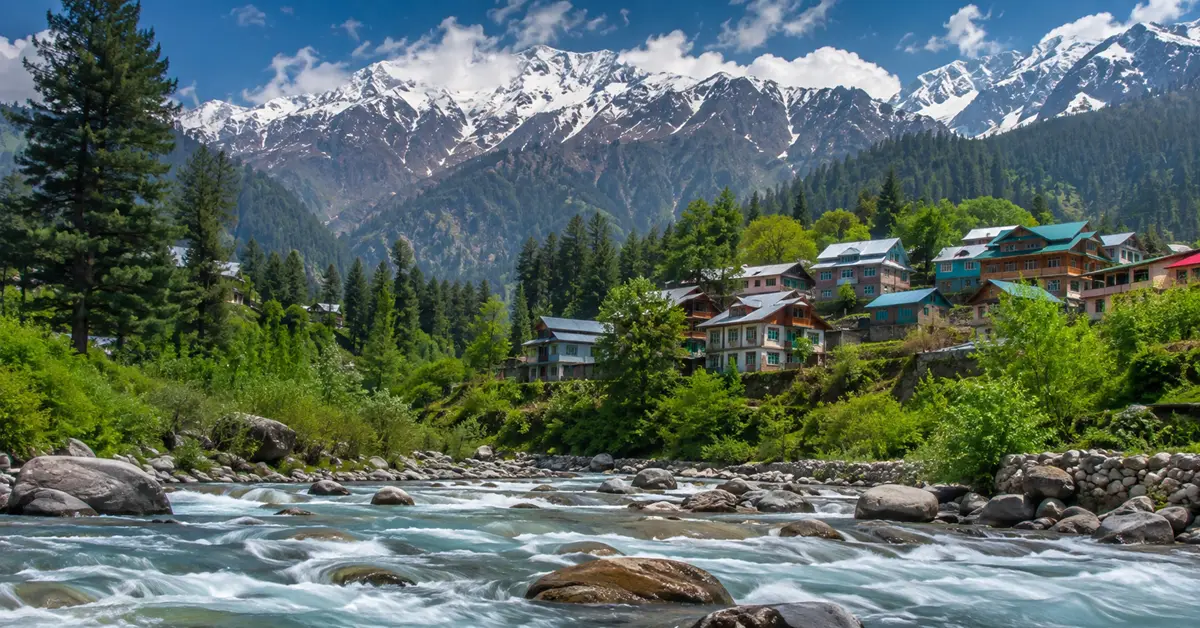
Located in Kinnaur district of Himachal Pradesh, the valley follows the Baspa River through a dramatic landscape of apple orchards, wooden villages, green meadows, pine and deodar forests, high mountain walls and snow-covered peaks. The official Himachal tourism description identifies Sangla as one of Kinnaur’s most scenic valleys, while Chitkul, at the upper end of the valley, is the last inhabited village on the Indo-Tibetan border.
What makes the destination especially rewarding is the combination of scenery and culture. A short drive can take you from Sangla to Kamru, Batseri, Rakchham and eventually Chitkul, yet each settlement has its own character. Traditional Kinnauri houses, temples, orchards and village paths sit naturally within the Himalayan landscape.
A good Sangla Valley trip is therefore less about ticking off attractions and more about slowing down. Spend time beside the Baspa River, walk through an old village, drink tea overlooking the mountains, explore Kamru Fort, watch the light change over the valley and spend a night in Chitkul if road and weather conditions permit.
For most travellers, 4–5 days in the Sangla Valley is an excellent balance between travel time and actual exploration.
Destination at a Glance
| Information | Details |
|---|---|
| Country / State | India / Himachal Pradesh |
| Region | Kinnaur district, Baspa or Sangla Valley |
| Ideal trip duration | 4–5 days in the valley; 6–7 days including Shimla/Kalpa |
| Best time to visit | April to October; May–June and September–October are especially pleasant |
| Currency | Indian Rupee (₹ / INR) |
| Language | Hindi, Kinnauri dialects; basic English is understood in tourist establishments |
| Time difference | None for travellers from India; IST (UTC+5:30) |
| Visa requirement | Not applicable to Indian citizens |
| Suitable for | Couples, families with older children, solo travellers, photographers and small groups |
| Approximate daily budget | ₹1,500–₹3,000 budget; ₹3,000–₹6,000 mid-range; ₹7,000+ comfortable/luxury |
| Sangla altitude | Roughly 2,600–2,700 metres |
| Chitkul altitude | About 3,450 metres / 11,319 feet |
| Nearest practical airport | Shimla Airport (SLV); Chandigarh is a useful larger-airport alternative |
| Nearest major railhead | Kalka; Shimla is the nearest railhead to the Kinnaur region but road travel remains necessary |
Chitkul’s altitude is officially given at around 3,450 metres, so travellers should remember that the upper valley is considerably higher than Sangla itself.
Why Should You Visit Sangla Valley?
There are several reasons Sangla deserves a place on a serious Himachal itinerary.
1. The scenery is exceptionally varied
The valley changes dramatically as you drive upward. Near Sangla, you see orchards, forests and settlements. Towards Rakchham and Chitkul, the landscape becomes more alpine, with larger mountain walls, open meadows and a stronger sense of remoteness.
2. It feels less commercial than Shimla or Manali
Sangla has tourist infrastructure, but it has not lost its village character. You can still walk through settlements where farming, horticulture and traditional architecture remain part of everyday life.
3. The Baspa River defines the valley
The Baspa runs through the valley and provides many of its most beautiful viewpoints. The river is particularly attractive around Rakchham and Chitkul.
4. Kinnauri culture is a major part of the experience
The architecture, temples, festivals, clothing and village traditions give the region an identity that goes beyond mountain scenery.
5. Chitkul is genuinely memorable
Chitkul is not simply a “photo stop”. At roughly 3,450 metres, it is an exceptionally high inhabited Himalayan settlement and one of the most distinctive destinations in Himachal Pradesh.
Best Time for a Sangla Valley Trip
The official Himachal Tourism guidance considers April to October a good period for Kinnaur. Winter temperatures can fall well below freezing, particularly in December and January.
April to May
Spring brings a combination of cool temperatures, emerging greenery and blossoming orchards.
Typical experience: Cool mornings, pleasant afternoons and cold nights.
This is a good period for travellers who want fewer crowds and don’t mind chilly weather.
June
June is among the most comfortable months for sightseeing. Snow may still be visible on higher slopes while lower parts of the valley become greener.
Best for: Families, road trips and first-time visitors.
July to August
The Baspa Valley can remain attractive during the monsoon because Kinnaur is comparatively rain-shadowed, but road conditions can still be affected by landslides, falling rocks or temporary closures elsewhere on the route.
Do not assume that a dry-looking destination means the entire journey is risk-free.
September to October
This is arguably one of the best periods for photographers. The air can become clearer, autumn colours begin appearing and apple-growing areas are particularly attractive.
November to March
Winter transforms Sangla and Chitkul into a snow-covered landscape. However, this is not the easiest period for a first Sangla Valley trip. Roads, accommodation availability, weather and local movement can become unpredictable.
Weather You Can Expect
Sangla’s weather varies considerably with altitude.
| Season | What to Expect |
| Spring | Cool days, cold nights, blossoming orchards |
| Summer | Pleasant daytime weather, chilly mornings and evenings |
| Monsoon | Cooler temperatures but possible road disruption |
| Autumn | Crisp air, clearer mountain views and changing foliage |
| Winter | Very cold, frequent snow at higher elevations and possible road/access restrictions |
Pack layers rather than relying on a single heavy jacket. Mountain weather can change rapidly during the day.
How to Reach Sangla Valley
By Air
The nearest airport generally used for Sangla is Shimla Airport (SLV). The journey does not end at the airport, however; a long road journey is still required.
As of August 2026, direct Delhi–Shimla flights by Alliance Air are operating, with a flight time of roughly 1 hour 15 minutes. The current schedule is subject to change.
For travellers coming from Delhi, flying to Shimla can save some time compared with an entirely road-based journey, but the airport’s limited schedule means that a road journey from Chandigarh or Delhi may sometimes be more practical.
Approximate Delhi–Shimla airfare: ₹7,000–₹10,000 one way depending on date and availability.
Chandigarh Airport
Chandigarh is often the more practical gateway if you are combining flights with a road trip. It has significantly more flight connectivity than Shimla.
From Chandigarh, expect a long mountain road journey. Budget approximately ₹8,000–₹15,000 for a private one-way taxi, depending on vehicle and season.
By Road from Shimla
Shimla to Sangla is roughly 220–230 km by road, although the journey can take around 9–10 hours because of mountain roads, traffic, road conditions and stops. The Himachal government lists Sangla at about 230 km from Shimla and approximately 9.5 hours by car under normal conditions.
A useful route is:
Shimla → Narkanda → Rampur → Jeori → Karcham → Sangla
At Karcham, the road branches towards the Baspa Valley. Sangla is about 18 km from Karcham.
From Delhi
Delhi to Sangla is roughly 560–590 km depending on the route. A continuous drive is possible but exhausting.
A much better plan is:
Delhi → Shimla → Sangla
or
Delhi → Chandigarh → Sangla
For a family trip, splitting the journey makes the experience considerably more comfortable.
Currency, ATMs and Payments
The currency is the Indian Rupee (₹).
UPI works at many hotels, restaurants and shops, but do not rely exclusively on digital payments in remote areas.
Carry at least ₹5,000–₹10,000 in cash per person for a multi-day trip, particularly if travelling beyond Sangla.
ATMs and banking facilities are limited compared with large towns. Withdraw cash before heading deeper into the valley.
SIM, Mobile Network and Internet
Major Indian telecom operators may work in parts of the valley, but connectivity can vary dramatically from one location to another.
A practical approach is:
- Keep your primary SIM active.
- Download offline maps.
- Save hotel phone numbers before leaving.
- Do not depend on continuous mobile data in Chitkul or remote stretches.
- Download entertainment and important documents before the journey.
- Tell family members that connectivity may temporarily disappear.
Even where mobile signal exists, internet speeds can be inconsistent.
Safety in Sangla Valley
Sangla is generally suitable for normal tourists, but the journey requires more caution than a conventional hill-station holiday.
The biggest risks are not crime-related; they are mountain roads, altitude, weather, landslides, falling rocks and river conditions.
Avoid driving aggressively, especially after sunset.
Do not stand close to unstable cliffs for photographs.
Never enter the Baspa River simply because the water appears calm. The water is extremely cold, and conditions can change.
At Chitkul, allow your body time to adjust to the altitude. Headache, dizziness, unusual fatigue or nausea should not be ignored.
How Many Days Are Enough for Sangla Valley?
3 Days
Possible, but rushed.
You can see Sangla, Kamru, Rakchham and Chitkul, but the long journey will dominate the trip.
4 Days
A good short trip.
You can spend time in Sangla, visit Kamru, explore Rakchham and dedicate a full day to Chitkul.
5 Days
Recommended.
This allows you to slow down and enjoy the villages rather than treating the valley as a checklist.
6–7 Days
Ideal if combined with Shimla, Sarahan, Kalpa or Reckong Peo.
Complete 5-Day Sangla Valley Itinerary
The following itinerary assumes that you begin from Shimla.
Day 1: Shimla to Sangla
Distance: Approximately 220–230 km
Travel time: 9–10 hours
Transport: Private cab / self-drive / bus combination
Estimated transport cost: ₹4,500–₹7,000 for a private cab shared by the group
Approximate daily budget: ₹5,500–₹8,000 for two people
Suggested hotel area: Sangla Market / Sangla village / Kamru side
Restaurant options: Local hotel restaurants, Sangla Market eateries and small cafés
Morning
Leave Shimla early.
The road gradually changes from the developed Shimla landscape to the more rugged Kinnaur terrain. Stop around Narkanda or Rampur for breakfast.
Afternoon
Continue towards Karcham.
The landscape becomes increasingly dramatic as the road approaches the Baspa Valley.
From Karcham, take the road towards Sangla. The final section is particularly scenic.
Evening
Check into your hotel.
Do not plan ambitious sightseeing after arrival. Walk around Sangla village, have an early dinner and rest.
Day 2: Sangla, Kamru and Baspa Valley
Distance: Approximately 25–40 km local driving
Travel time: 2–3 hours excluding sightseeing
Transport: Local taxi / hotel vehicle / private car
Estimated transport cost: ₹1,500–₹2,500
Approximate daily budget: ₹3,000–₹5,000 for two people
Suggested hotel area: Sangla
Restaurant options: Hotel restaurants, Sangla Market eateries
Morning: Kamru Fort
Start early and walk towards Kamru Fort.
The fort is built in traditional wood-and-stone Himalayan architecture and is historically associated with the old Bushahr ruling tradition. Himachal Tourism describes Kamru as the former seat of power of the Kinnaur rulers.
Afternoon: Sangla village and Baspa River
Return to Sangla.
Have lunch and spend the afternoon exploring the village and river surroundings.
Evening: Bering Nag Temple
If local temple activities are taking place, this can be a rewarding cultural experience. The temple is particularly interesting because Hindu and Buddhist influences can be seen in the wider complex.
Day 3: Sangla → Batseri → Rakchham → Chitkul
Distance: Approximately 25 km one way from Sangla to Chitkul
Travel time: 1.5–2 hours excluding stops
Transport: Local taxi / private vehicle
Estimated transport cost: ₹2,000–₹3,500 for local sightseeing
Approximate daily budget: ₹4,000–₹6,500 for two people
Suggested hotel area: Chitkul
Restaurant options: Hotel/homestay kitchens and local eateries
Morning: Batseri
Stop at Batseri.
The village is known for traditional architecture, apple orchards and spectacular surroundings. Current Google-derived listings show the village receiving very strong visitor ratings, although review counts remain relatively small.
Afternoon: Rakchham
Continue to Rakchham.
Spend time walking around rather than simply taking photographs from the road.
Evening: Chitkul
Reach Chitkul before sunset.
Check in and explore the village on foot.
The road journey ends here; further travel towards the border region requires walking and is subject to local restrictions. Himachal Tourism describes Chitkul as the last village of the valley, with the motorable road ending there.
Day 4: Full Day in Chitkul
Distance: Approximately 3–8 km local walking/driving
Travel time: Minimal
Transport: Walking / local vehicle where required
Estimated transport cost: ₹300–₹1,000
Approximate daily budget: ₹2,500–₹5,000 for two people
Suggested hotel area: Chitkul
Restaurant options: Hotel kitchens and homestays
Morning
Wake early.
This is one of the most beautiful times of day in Chitkul. Walk through the village while the mountains receive the first sunlight.
Visit Mathi Temple and observe the traditional wooden architecture.
Afternoon
Walk towards the Baspa River and surrounding meadows.
Have lunch at your accommodation.
Evening
Return to the village.
If the sky is clear, spend some time photographing the mountains before sunset.
Chitkul is also a good place to simply do nothing. That is precisely the point.
Day 5: Chitkul to Sangla and onward journey
Distance: Approximately 25 km to Sangla, substantially more if continuing to Shimla
Travel time: 1.5–2 hours to Sangla; 9–10+ hours to Shimla
Transport: Private vehicle / taxi
Estimated transport cost: ₹4,500–₹7,000 to Shimla
Approximate daily budget: ₹5,000–₹8,000 for two people
Suggested hotel area: Shimla if continuing next day
Restaurant options: Local restaurants en route
Leave Chitkul after breakfast.
If your onward journey is long, do not add too many sightseeing stops.
For a relaxed trip, consider staying overnight around Shimla rather than attempting a late-night mountain drive.
Best Places to Visit on a Sangla Valley Trip
1. Sangla Village and Baspa Valley
| Detail | Information |
| Location | Sangla, Kinnaur, Himachal Pradesh |
| Google Rating | Sangla Valley around 4.8/5 |
| Approx. reviews | Around 136 Google reviews for the listed Sangla Valley attraction |
| Entry fee | Free |
| Opening / closing | Open access; practical sightseeing during daylight |
| Recommended duration | 2–4 hours |
| Best time | Morning and late afternoon |
| How to reach | Road from Karcham, approximately 18 km |
| Transport cost | Local taxi approximately ₹800–₹1,500 depending on route |
| Practical tip | Explore slowly instead of treating Sangla only as a hotel base |
Sangla is the natural heart of the valley. The Baspa River flows through the region, giving the valley its alternative name, Baspa Valley. The official tourism department describes the scenery as particularly picturesque, with orchards and high mountain views forming the landscape.
The attraction here is not a single monument. It is the landscape itself.
Walk around the village, observe traditional houses and look for viewpoints where the valley opens towards the mountains.
Is it worth visiting? Absolutely. Sangla is the place where you should slow down.
2. Kamru Fort
| Detail | Information |
| Location | Kamru village, above Sangla |
| Google Rating | About 4.4/5 |
| Approx. reviews | Around 830+ Google reviews |
| Entry fee | Generally free; local religious restrictions apply |
| Opening / closing | Commonly listed around 9:00 AM–5:00 PM; verify locally |
| Recommended duration | 45–75 minutes |
| Best time | Morning or late afternoon |
| How to reach | Drive to Kamru and walk uphill |
| Transport cost | ₹300–₹800 local transfer depending on starting point |
| Practical tip | Dress respectfully and follow temple restrictions |
Kamru Fort is one of Sangla’s most important cultural landmarks. Current Google-derived information places it around 4.4/5 with more than 800 reviews.
The structure is not a conventional stone fort with huge walls. It is a tall wooden-and-stone Himalayan structure, reflecting the architectural traditions of Kinnaur.
The fort is historically associated with the Bushahr rulers and is traditionally regarded as the old seat of power. A temple associated with Kamakhya/Kamakshi Devi is located within the complex.
The uphill walk is part of the experience. From the higher point, you get an excellent perspective over Sangla and the surrounding mountains.
Is it worth visiting? Yes. It is one of the few places where Sangla’s natural beauty and history come together.
3. Batseri Village
| Detail | Information |
| Location | Between Sangla and Rakchham |
| Google Rating | About 4.9/5 |
| Approx. reviews | Around 20+ in current listings |
| Entry fee | Free |
| Opening / closing | Open village; visit during daylight |
| Recommended duration | 1–2 hours |
| Best time | Morning or afternoon |
| How to reach | Road from Sangla towards Chitkul |
| Transport cost | ₹500–₹1,000 as part of local taxi sightseeing |
| Practical tip | Walk quietly through residential areas and respect private property |
Batseri is one of those places that can easily be missed by travellers rushing towards Chitkul.
That is a mistake.
The village gives you a better opportunity to understand everyday Kinnauri life. Traditional houses, orchards, mountain views and narrow paths create a setting that feels considerably more authentic than a conventional tourist attraction.
Current Google-derived listings show strong visitor sentiment, with the village rated around 4.9/5 from a relatively small review base.
Is it worth visiting? Yes, particularly for photographers and travellers interested in village culture.
4. Rakchham Valley
| Detail | Information |
| Location | Upper Baspa Valley, between Sangla and Chitkul |
| Google Rating | About 4.9/5 |
| Approx. reviews | Around 20+ for the listed Rakchham Valley attraction |
| Entry fee | Free |
| Opening / closing | Open access; daylight recommended |
| Recommended duration | 2–3 hours |
| Best time | Morning to late afternoon |
| How to reach | Road from Sangla towards Chitkul |
| Transport cost | ₹1,000–₹1,500 as part of a local sightseeing trip |
| Practical tip | Wear shoes suitable for uneven village and meadow paths |
Rakchham is arguably one of the most beautiful sections of the entire Sangla Valley.
The village and surrounding landscape offer a combination of forests, meadows, mountains and the Baspa River. Current Google listings show Rakchham Valley at around 4.9/5, although the number of reviews is still small compared with major tourist destinations.
This is a good place to stop for a longer walk.
The best experience is not necessarily at a marked attraction. It is found along the trails, riverbanks and open spaces around the village.
Is it worth visiting? Definitely. If you have only one day for Sangla’s upper valley, do not skip Rakchham.
5. Chitkul Village
| Detail | Information |
| Location | Upper Baspa Valley, Kinnaur |
| Google Rating | Around 4.8–4.9/5 depending on the Google listing |
| Approx. reviews | Ratings/review counts vary by listing |
| Entry fee | Free |
| Opening / closing | Village access; practical sightseeing from sunrise to sunset |
| Recommended duration | Full day or overnight |
| Best time | Morning and late afternoon |
| How to reach | Road from Sangla via Rakchham |
| Transport cost | ₹2,000–₹3,500 round-trip local taxi from Sangla |
| Practical tip | Stay overnight if possible rather than rushing through a day visit |
Chitkul is the signature destination of the Sangla Valley.
The official Incredible India tourism portal places the village at approximately 3,450 metres and describes it as the last inhabited settlement on the Indo-Tibetan border.
The village’s appeal comes from the complete setting: wooden homes, apple orchards, mountain slopes, meadows and the Baspa River.
Chitkul is particularly beautiful early in the morning. By staying overnight, you get something that day-trippers miss: quiet village lanes after the vehicles have left.
Is it worth visiting? Without question. It should be the centrepiece of your Sangla itinerary.
6. Mathi Temple, Chitkul
| Detail | Information |
| Location | Chitkul village |
| Google Rating | About 4.8/5 |
| Approx. reviews | Around 12 Google reviews for the listed attraction |
| Entry fee | Generally free |
| Opening / closing | Religious site; timings may vary |
| Recommended duration | 30–45 minutes |
| Best time | Morning or afternoon |
| How to reach | Walk through Chitkul village |
| Transport cost | No separate cost |
| Practical tip | Follow local dress and photography rules |
Mathi Temple is an important cultural stop in Chitkul.
Its traditional wooden architecture is one of the most visually distinctive examples of Kinnauri craftsmanship in the village. The temple is associated with the local deity tradition and is an important part of village life.
Current Google-derived listings put Mathi Temple at approximately 4.8/5, although the number of reviews is small.
Do not treat it merely as a photography location. It is an active religious space.
Is it worth visiting? Yes, particularly if you are interested in architecture and local culture.
7. Shree Bering Nag Ji Temple
| Detail | Information |
| Location | Sangla village |
| Google Rating | About 4.7/5 |
| Approx. reviews | Around 230 Google reviews |
| Entry fee | Free |
| Opening / closing | Religious timings vary |
| Recommended duration | 30–60 minutes |
| Best time | Late afternoon if local rituals are taking place |
| How to reach | Short local drive/walk from Sangla |
| Transport cost | ₹100–₹300 locally |
| Practical tip | Ask locals before photographing rituals or sacred objects |
Bering Nag Temple provides a fascinating introduction to the religious culture of Sangla.
Current listings show approximately a 4.7/5 rating from more than 200 Google reviews.
One of the most interesting aspects is the coexistence of Hindu and Buddhist traditions in the wider religious landscape.
The temple is not as visually famous as Kamru Fort or Chitkul, but culturally it can be more revealing.
Is it worth visiting? Yes, especially for travellers interested in Kinnauri traditions.
8. Sangla Meadows
| Detail | Information |
| Location | Sangla Valley |
| Google Rating | About 4.8/5 |
| Approx. reviews | Small Google review base, around 4 reviews |
| Entry fee | Usually free |
| Opening / closing | Daylight recommended |
| Recommended duration | 1–2 hours |
| Best time | Morning or afternoon |
| How to reach | Local vehicle followed by walking depending on access |
| Transport cost | Approximately ₹500–₹1,000 |
| Practical tip | Conditions can be muddy after rain; wear proper shoes |
Sangla Meadows offers open Himalayan scenery rather than architecture.
It is particularly attractive for people who want to walk, sit quietly and photograph the surrounding mountains.
Current listings show a rating around 4.8/5, although the review sample is very small, so the rating should not be treated as statistically significant.
Is it worth visiting? Yes if you have time for a slow afternoon; it is not essential on a rushed itinerary.
Recommended Hotels in Sangla Valley
Hotel prices fluctuate substantially according to season, weekends and availability.
Budget
Look for homestays around Sangla Market, Kamru and Rakchham.
Typical price: ₹1,200–₹2,500 per room.
Basic accommodation is often the best way to experience local hospitality.
Mid-Range
Good mid-range options generally include properties around Sangla and Chitkul.
Typical price: ₹2,500–₹5,000 per room.
Recent booking listings show Sangla properties such as Prakash Regency around the ₹3,000 range and Chitkul properties commonly around ₹3,000–₹4,500, depending on dates.
Comfortable / Premium
For travellers prioritising views, larger rooms and better facilities:
Typical price: ₹5,000–₹9,000+ per night.
Chitkul has fewer genuinely premium choices than Shimla or Manali, so expectations should remain realistic.
A useful strategy
Stay 2 nights in Sangla and 1–2 nights in Chitkul.
This gives you both convenience and the experience of sleeping in the upper valley.
What to Eat in Sangla Valley
Food in Sangla is more about warm, simple mountain cooking than sophisticated restaurant menus.
Must-Try Foods
Siddu: A steamed wheat-based preparation, often filled with ingredients such as lentils, nuts or local mixtures.
Chana Madra: A Himachali preparation made with chickpeas in a rich yoghurt-based gravy.
Rajma: Local-style rajma with rice makes an excellent mountain meal.
Tibetan-style momos: Common in tourist areas and useful when you want something familiar.
Thukpa: A warming noodle soup, especially enjoyable in cold weather.
Local trout: Trout is associated with the cold-water streams of the region, although availability and preparation vary.
Vegetarian Options
Vegetarians will have no major difficulty.
Ask for:
- Dal-chawal
- Rajma-chawal
- Chana madra
- Vegetable thukpa
- Momos
- Aloo-based Himachali dishes
- Siddu
- Seasonal vegetables
Shopping Guide
Sangla is not a conventional shopping destination.
The best purchases are locally connected products rather than mass-produced souvenirs.
What to Buy
- Kinnauri caps
- Handwoven woollens
- Shawls
- Local handicrafts
- Apples and seasonal fruit
- Chilgoza where legally and sustainably sourced
- Local honey
- Handmade wool products
Where to Shop
Try small shops in Sangla Market and village-level sellers rather than expecting a large shopping complex.
Bargaining
Bargain politely with commercial souvenir sellers, but do not aggressively negotiate with village artisans or small producers over a modest price difference.
Hidden Gems Around Sangla
Batseri’s village lanes
Instead of photographing the village only from the road, walk through the settlement respectfully.
Rakchham’s river surroundings
Spend time away from the main road and explore safe walking routes.
Early-morning Chitkul
The quietest and most photogenic period can be just after sunrise.
Baspa Valley viewpoints
Some of the best photographs come from unmarked roadside viewpoints. Stop only where parking is safe.
Local village interactions
A conversation with a homestay owner can reveal more about Kinnaur than a formal sightseeing tour.
Common Tourist Mistakes
Trying to cover Sangla in two days
The travel time is too long. You will spend more time inside a vehicle than experiencing the valley.
Driving after dark
Avoid unnecessary night driving on mountain roads.
Treating Chitkul like a picnic stop
The village deserves at least several hours, preferably an overnight stay.
Ignoring altitude
Chitkul is substantially higher than Sangla. Do not immediately attempt strenuous trekking after arrival.
Depending completely on UPI
Carry cash.
Expecting luxury infrastructure
Remote Kinnaur is not comparable with Manali.
Swimming or standing in the Baspa River
Do not underestimate cold mountain water.
Disrespecting temples
Follow local customs regarding footwear, clothing, food restrictions and photography.
Money-Saving Tips
- Travel as a group and split the taxi.
- Choose a homestay rather than a premium resort.
- Stay two nights in one Sangla property rather than changing hotels repeatedly.
- Book transport early during peak summer.
- Eat at local restaurants and homestays.
- Carry snacks from Shimla or Rampur.
- Use buses for the long-distance portion if comfort is less important than price.
- Travel in shoulder season for lower accommodation rates.
For a private road trip, the largest saving usually comes from sharing the vehicle rather than trying to reduce food or accommodation costs excessively.
Estimated Sangla Valley Travel Budget
Solo Traveller
| Expense | Approximate cost |
| Accommodation | ₹1,200–₹3,000 per night |
| Food | ₹500–₹900 per day |
| Local transport | ₹500–₹1,500 per day |
| Activities | ₹0–₹500 |
| Suggested daily budget | ₹2,200–₹5,000 |
Couple
| Expense | Approximate cost |
| Accommodation | ₹2,000–₹5,000 per night |
| Food | ₹1,000–₹1,800 per day |
| Shared/local transport | ₹1,000–₹2,500 per day |
| Activities | ₹0–₹1,000 |
| Suggested daily budget | ₹4,000–₹8,000 |
Family of Four
| Expense | Approximate cost |
| Family accommodation | ₹3,500–₹7,000 per night |
| Food | ₹1,800–₹3,000 per day |
| Local vehicle | ₹2,000–₹4,000 per day |
| Activities | ₹0–₹2,000 |
| Suggested daily budget | ₹7,000–₹13,000 |
Small Group
| Expense | Approximate cost |
| Shared rooms | ₹1,500–₹3,500 per person |
| Food | ₹500–₹900 per person/day |
| Shared taxi | ₹1,000–₹2,000 per person/day |
| Activities | ₹0–₹1,000 |
| Suggested daily budget | ₹3,000–₹6,000 per person |
These figures exclude flights and the major journey to and from Sangla.
Photography Tips for Sangla Valley
Sangla is one of the better destinations in Himachal for landscape photography.
Best light
Early morning and late afternoon produce much better mountain definition than harsh midday light.
Photograph the villages
Do not focus only on mountains. Traditional wooden architecture, prayer flags, orchards, village paths and local life tell the story of Kinnaur.
Use foreground elements
A wooden house, apple tree, river or walking trail can give scale to large mountains.
Chitkul
Photograph the village from a respectful distance. Avoid entering private homes or farms simply for a photograph.
River photography
Use a slow shutter speed if you have a tripod, but always remain well away from unstable riverbanks.
Packing Checklist for a Sangla Valley Trip
- Warm jacket
- Thermal inner layers
- Fleece or sweater
- Comfortable trekking/walking shoes
- Waterproof outer layer
- Sunglasses
- Sunscreen
- Lip balm and moisturiser
- Basic medicines
- Reusable water bottle
- Power bank
- Offline maps
- Cash
- Government ID
- Small backpack
- Torch
- Camera and spare batteries
- Gloves and woollen cap for colder months
Local Etiquette
Kinnaur has a strong cultural identity, and visitors should behave accordingly.
Dress modestly around temples.
Ask before photographing people.
Do not enter agricultural fields without permission.
Do not touch religious objects casually.
Keep music volume low in villages.
Avoid littering.
Do not assume that every beautiful wooden building is a tourist attraction; many are private homes.
If someone invites you for tea or a conversation, respond respectfully without turning the interaction into a staged photo session.
Important Travel Tips
Start early
Mountain journeys take longer than map estimates suggest.
Keep buffer time
A landslide, road repair or traffic jam can change the day’s schedule.
Avoid overpacking
You will have enough to carry during hotel changes and village walks.
Keep offline copies
Save your hotel reservation, ID details, taxi driver’s number and important travel information on your phone.
Check road conditions before leaving
Road conditions in high-altitude Kinnaur can change quickly.
Don’t make Chitkul the only objective
The villages between Sangla and Chitkul are part of what makes the journey special.
Spend at least one night in the upper valley
If your schedule allows, sleeping in Chitkul or Rakchham is much more rewarding than simply arriving for lunch and leaving.
Is Sangla Valley Suitable for Families?
Yes, with some planning.
Families with children can enjoy Sangla, Batseri and Chitkul, but the long road journey can be tiring.
For young children, avoid an overly aggressive itinerary.
For older adults, choose comfortable accommodation and allow additional rest time.
The most important consideration is altitude. Chitkul is much higher than Sangla, so the family should not immediately undertake demanding walks after arrival.
Is Sangla Valley Good for Couples?
Very much so.
Sangla is particularly appealing to couples who prefer quiet mountain destinations over busy commercial hill stations.
A good couple’s itinerary would include:
Shimla → Sangla → Rakchham → Chitkul → Sangla/ Shimla
Choose a room with a valley or mountain view and spend at least one evening without trying to “see” anything.
Is Sangla Valley Good for Solo Travellers?
Yes, particularly for experienced travellers.
The valley is peaceful and scenic, but solo travellers should plan transportation carefully because local public transport can be less convenient than in major tourist towns.
For remote walks and treks, use a local guide where appropriate.
Frequently Asked Questions About Sangla Valley
1. What is the best time to visit Sangla Valley?
April to October is generally considered the most suitable period. May, June, September and early October offer a particularly good balance of accessibility, scenery and weather.
2. How many days are enough for a Sangla Valley trip?
Four to five days is ideal if you are focusing on Sangla, Rakchham and Chitkul. Add two or three days if combining the trip with Shimla, Sarahan or Kalpa.
3. Is Chitkul worth visiting?
Yes. Chitkul is one of the most distinctive villages in Himachal Pradesh and sits at roughly 3,450 metres. Its scenery, architecture, Baspa River and remote atmosphere make it the highlight of the valley for most travellers.
4. Is Sangla safe for tourists?
Sangla is generally suitable for tourists, but mountain-road safety and weather conditions require more attention than in conventional hill stations. Avoid risky driving, night travel and unstable riverbanks.
5. What is the nearest airport to Sangla?
Shimla Airport is the nearest practical airport commonly associated with the Kinnaur route. Chandigarh is often more convenient because of its broader flight connectivity.
6. Can I visit Sangla Valley in winter?
Yes, but winter travel requires substantially more planning. Snow, freezing temperatures and road conditions can affect accessibility, particularly towards Chitkul.
7. Is there mobile network in Sangla and Chitkul?
Connectivity varies by location. Sangla generally offers better connectivity than the upper valley, while remote stretches can have weak or intermittent service. Carry offline maps and do not depend entirely on mobile internet.
8. Is Sangla better than Manali for a peaceful trip?
If your priority is quiet landscapes, traditional villages and a less commercial Himalayan experience, Sangla can be a better choice. Manali offers more activities, nightlife and tourist infrastructure, while Sangla offers greater tranquillity and cultural character.
Final Verdict: Is a Sangla Valley Trip Worth It?
A Sangla Valley trip is worth taking if you want to experience a quieter, more authentic side of Himachal Pradesh.
The journey is long. The roads are demanding. Internet connectivity can be inconsistent. Accommodation in the upper valley is simpler than in mainstream hill stations. These are not drawbacks to hide; they are part of understanding what makes Sangla different.
The ideal trip begins with a slow journey from Shimla towards Kinnaur, followed by two nights around Sangla. Spend time at Kamru Fort and the Baspa River, then travel gradually through Batseri and Rakchham before reaching Chitkul.
Stay overnight in Chitkul if possible. Wake early, walk through the village, visit Mathi Temple, sit beside the Baspa River and watch the mountains change colour.
The most important lesson is simple: do not rush Sangla Valley.
It is not a destination where seeing ten places in one day makes the trip better. The best memories often come from the spaces between the attractions—the road beside the Baspa, an apple orchard glowing in evening light, a quiet village lane, a cup of tea at a homestay or a mountain view that makes everyone in the vehicle suddenly stop talking.
For travellers looking beyond the crowded Himachal circuit, Sangla, Rakchham and Chitkul together offer one of the most rewarding Himalayan road-trip experiences in northern India.
Disclaimer
Travel costs, hotel prices, road conditions, entry fees, transportation schedules, attraction timings, local restrictions, mobile connectivity, weather conditions and other travel information can change over time. Google ratings and review counts are also dynamic and may change after publication. Travellers should verify the latest road conditions, accommodation availability, local access restrictions, attraction timings, transportation schedules and other essential information before beginning their journey.