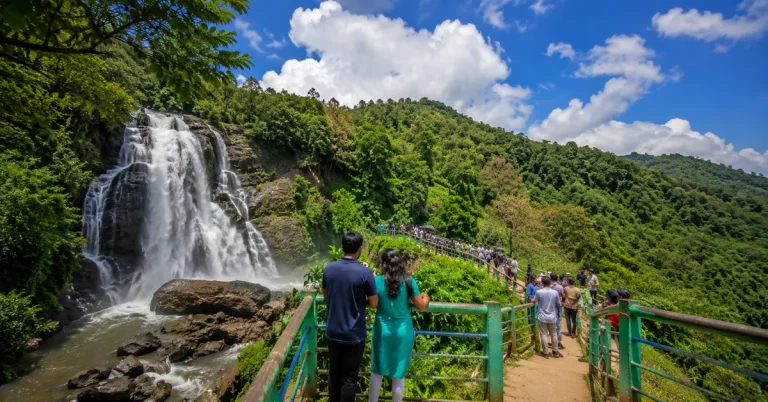
Palampur Trip Guide: Complete 4-Day Itinerary, Tea Gardens, Places to Visit, Hotels, Food, Budget and Travel Tips
A Palampur trip is a refreshing alternative to the crowded Himachali hill stations that dominate most travel itineraries. Instead of towering commercial buildings, traffic-heavy markets and a packed schedule of tourist attractions, Palampur offers something considerably calmer: green tea gardens, views of the Dhauladhar mountains, quiet monasteries, old temples, village roads, forested picnic areas and a food scene that is slowly becoming one of the most interesting in the Kangra Valley.
What makes Palampur particularly appealing is its versatility. A couple can spend an afternoon walking through tea plantations and sitting in a café with mountain views. A family can visit Saurabh Van Vihar, explore a zoo and stop at a temple. Art lovers can spend half a day in Andretta, while travelers interested in Tibetan culture can visit Tashi Jong Khampagar Monastery. Adventure seekers can even combine Palampur with nearby Bir-Billing.
Palampur is approximately 38 km from Kangra Airport, around 35 km from Dharamshala according to district tourism information, and is connected by road and the Kangra Valley narrow-gauge railway. Major nearby attractions include Neugal Khad, Saurabh Van Vihar, Baijnath Temple, Andretta, Tashi Jong and the tea-growing areas around the town.
The biggest mistake first-time visitors make is trying to treat Palampur like a checklist destination. There are not dozens of blockbuster attractions that need to be rushed through. The real pleasure comes from combining three or four significant places with plenty of time for tea, food, walking and mountain scenery.
For most travelers, three to four days is the ideal Palampur trip duration. Four days gives you enough time to see the major attractions, visit Andretta, experience the tea country, and keep at least one relaxed period in the itinerary.
Destination at a Glance
| Information | Palampur, Himachal Pradesh |
|---|---|
| Country / State | India / Himachal Pradesh |
| District | Kangra |
| Ideal trip duration | 3–4 days |
| Longer trip | 5–6 days |
| Best overall time | March–May and October–November |
| Best for | Tea gardens, mountains, temples, monasteries, cafés, families and slow travel |
| Currency | Indian Rupee (₹ / INR) |
| Language | Hindi, English, Punjabi and Kangri |
| Time difference | None within India; IST |
| Visa requirement | Not applicable to Indian citizens; foreign nationals require a valid Indian visa/eVisa unless an exemption applies |
| Suitable travelers | Solo travelers, couples, families and groups |
| Approximate daily budget | ₹1,500–₹3,000 budget; ₹3,500–₹6,500 comfortable |
| Nearest airport | Kangra Airport / Gaggal Airport |
| Airport distance | Approximately 38 km from Palampur |
| Famous for | Kangra tea, Dhauladhar views, monasteries, temples, Andretta and Neugal Khad |
Why Should You Visit Palampur?
Palampur deserves more attention than it normally receives because its appeal is not built around one single attraction.
It is the combination that makes the destination special.
Tea gardens surrounded by the Dhauladhar
The first thing you notice in Palampur is the landscape. Tea bushes occupy large stretches of the valley, and on clear days the Dhauladhar range rises dramatically behind them.
Unlike destinations where the mountains are visible only from selected viewpoints, Palampur’s mountains constantly interact with everyday life. You see them behind houses, tea estates, roads and village fields.
A slower alternative to Dharamshala and Manali
Palampur is quieter than the major tourist hubs.
That makes it particularly suitable for travelers who do not want every hour filled with sightseeing.
You can have breakfast for an hour, drive to a monastery, spend time in a tea garden, return to your hotel and still feel that you had a productive holiday.
Excellent combination of culture and nature
Few destinations allow you to move from tea plantations to Buddhist architecture to a centuries-old Shiva temple and then to an art village within a relatively small travel radius.
Palampur does.
Perfect base for nearby excursions
Palampur also works as a hub.
You can explore:
- Baijnath
- Tashi Jong
- Andretta
- Gopalpur
- Chamunda
- Bir
- Dharamshala
- Kangra
This means visitors can spend four nights in one hotel and explore several parts of the Kangra Valley without continuously changing accommodation.
Best Time to Visit Palampur
The best time for a Palampur trip depends on what you want to see.
For comfortable sightseeing, March to May and October to November are particularly attractive.
March to May
Spring brings pleasant temperatures and lush greenery.
The landscape is especially attractive for photography, village walks and tea-garden visits.
Daytime temperatures can be comfortable for sightseeing, while mornings and evenings remain cooler.
This is an excellent season for families and couples.
June
June is usually warmer, particularly around the middle of the day.
However, early mornings and evenings remain pleasant enough for sightseeing.
If traveling in June, plan outdoor activities early and reserve the hotter afternoon for cafés, museums or relaxed hotel time.
July to September
The monsoon changes Palampur dramatically.
Tea plantations and surrounding hills become exceptionally green, but rainfall can affect road travel, visibility and outdoor activities.
Heavy rain may also make river areas and trails unsafe.
The destination can still be beautiful during the monsoon, but it is better suited to travelers who are comfortable with flexible plans.
October to November
This is one of the best periods for a classic Palampur trip.
The weather becomes more comfortable, visibility frequently improves and the tea-country landscape looks attractive.
The evenings become cool, so carry at least one warm layer.
December to February
Winter is quieter.
Daytime can be crisp and pleasant, while nights may be cold.
This period can suit travelers who prefer fewer crowds and are more interested in peaceful stays than long outdoor days.
Snow should not be treated as a guaranteed feature of Palampur itself.
Palampur Weather: What to Expect
| Season | What the weather generally feels like |
|---|---|
| March–May | Mild days, cool mornings and evenings, good for outdoor sightseeing |
| June | Warm afternoons, pleasant mornings and evenings |
| July–September | Monsoon, lush landscape, rain and occasional travel disruption |
| October–November | Pleasant days, cool evenings and generally better mountain visibility |
| December–February | Cold nights, quieter surroundings and winter conditions |
The Dhauladhar range can be hidden behind cloud even when the town itself feels comfortable.
That is normal.
Do not judge the quality of a Palampur trip solely by whether the snow peaks are visible on the first morning.
How Many Days Are Enough for a Palampur Trip?
Two days
Two days work for a short weekend.
You can cover:
- Tea gardens
- Neugal Khad
- Saurabh Van Vihar
- One monastery or temple
- A few cafés
The problem is that you will probably have to skip Andretta or experience it in a rushed way.
Three days
Three days is a good minimum for first-time visitors.
You can combine:
- Tea gardens
- Neugal Khad
- Saurabh Van Vihar
- Tashi Jong
- Andretta
- Baijnath
Four days
Four days is the best balance for most travelers.
You can see the major highlights without constantly sitting in a car.
It also gives you flexibility if weather interrupts one day’s plans.
Five to six days
Choose this duration if you want:
- Dharamshala
- Bir-Billing
- Rajgundha
- Longer village walks
- More cafés
- More relaxed mornings
- A wellness or slow-travel experience
How to Reach Palampur
By Air
The nearest airport is Kangra Airport, also called Gaggal Airport, approximately 38 km from Palampur.
The airport has direct connectivity from Delhi, making flying the most convenient option for travelers who do not want to spend an entire day on the road.
A taxi from the airport to Palampur generally takes around 1.5–2 hours depending on traffic and weather.
A practical airport transfer budget is approximately ₹1,500–₹2,500 per vehicle, depending on the car and season.
Flights from Delhi
Current September 2026 schedules show non-stop Delhi–Kangra services from airlines including IndiGo and SpiceJet, with flight times around 1 hour 25 minutes to 1 hour 30 minutes.
Observed fares can start around ₹4,000–₹5,000 on selected dates, but fares can rise considerably during weekends, holidays and high-demand periods.
For a Palampur holiday, look at the total journey rather than only the air ticket.
A ₹4,500 flight followed by a ₹2,000 taxi can still be more efficient than an overnight road journey when time matters.
By Road
Road travel is the most common way to reach Palampur from other Himachal destinations.
From Dharamshala
Approximately 35–45 km depending on the route.
Travel time is usually around 1.5–2 hours.
From Chandigarh
Approximately 250–260 km.
Allow around 6–8 hours depending on traffic and road conditions.
From Delhi
Approximately 480–500 km by road.
Travel time can be around 10–13 hours.
An overnight Volvo or private bus can make sense, particularly for budget travelers.
From Manali
The road route is long compared with Dharamshala or Chandigarh, but Palampur can be incorporated into a larger Himachal circuit.
By Train
Palampur lies on the Kangra Valley narrow-gauge railway system.
This is not a fast railway.
The attraction is the journey itself.
Traveling by narrow-gauge train through the lower Himalayas can be a memorable experience for travelers who enjoy slow journeys.
The broad-gauge railhead most useful for long-distance travelers is Pathankot.
A practical combination is:
Delhi or another major city → Pathankot → narrow-gauge railway/road → Palampur.
Do not choose this option when you are short on time.
Choose it when the railway experience itself is part of your holiday.
Local Transportation in Palampur
You do not necessarily need a private car for the town.
For local travel, you can use:
- Auto-rickshaws where available
- Local buses
- Taxis
- App/phone-arranged cabs where available
- Rental two-wheelers where legally permitted
- Walking
For sightseeing outside the town, a private taxi is the most practical option.
A full-day local sightseeing vehicle can typically cost around ₹1,500–₹2,500, depending on the route, vehicle and number of hours.
For a group of four, this can be very economical.
Local SIM and Internet in Palampur
Indian travelers can simply use their existing mobile connection.
Foreign visitors should obtain a legitimate local SIM or eSIM through authorized channels.
Mobile connectivity is generally reasonable around Palampur town, but signal quality can weaken around:
- Remote tea gardens
- Mountain roads
- Village trails
- Forest areas
- Higher-elevation routes
Hotels and cafés commonly provide Wi-Fi, but speed and reliability vary.
A traveler working remotely should keep mobile data as a backup.
Do not assume that a beautiful mountain café will automatically have business-quality internet.
Currency and Money in Palampur
Palampur uses the Indian Rupee.
The practical denominations for everyday travel include:
₹10, ₹20, ₹50, ₹100, ₹200 and ₹500 notes, along with coins.
UPI is widely useful in urban and tourist-facing businesses, but travelers should still carry cash.
Cash is particularly useful for:
- Small tea stalls
- Local taxis
- Small shops
- Temple donations
- Rural cafés
- Parking
- Small entry counters
Keep some ₹10, ₹20, ₹50 and ₹100 notes.
You do not want to hand a small roadside food vendor a ₹500 note for a ₹60 purchase.
Visa Information for Foreign Travelers
Indian citizens do not need a visa for travel to Palampur.
Foreign visitors need a valid passport and appropriate permission to enter India. India’s immigration authorities currently operate regular visa and eligible eVisa systems.
Foreign travelers should also check the current entry requirements and any required arrival formalities before flying to India.
Once inside India, there is no separate visa requirement for traveling from Delhi to Himachal Pradesh.
Safety Tips for Palampur
Palampur is generally comfortable for tourists, but mountain destinations require common-sense precautions.
Around rivers and streams
Never climb onto slippery rocks simply to get a better photograph.
Neugal Khad can look calm while water movement elsewhere may be stronger than expected.
During monsoon
Avoid unnecessary river crossings.
Heavy rainfall can quickly alter conditions.
On mountain roads
Avoid unnecessary night driving on unfamiliar roads.
Allow extra time rather than trying to drive aggressively to reach the next attraction.
In remote villages
Tell your hotel or driver when taking a longer walk into unfamiliar countryside.
With children
Supervise children near:
- Rivers
- Bridges
- Slopes
- Tea-garden edges
- Roads
- Zoo enclosures
- Temple steps
At monasteries and temples
Respect local rules.
Photography may not be permitted in every interior space.
Four-Day Palampur Trip Itinerary
The following itinerary is designed particularly for a first-time traveler who wants a combination of nature, culture, food and relaxed sightseeing.
It intentionally avoids trying to visit every possible attraction.
Day 1: Arrival, Tea Gardens and Neugal Khad
Total distance
Approximately 15–25 km of local sightseeing, excluding your journey into Palampur.
Travel time
Approximately 1.5–3 hours of local driving.
Transportation
Taxi + walking.
Estimated transportation cost
₹500–₹1,000 per person when shared.
Approximate daily budget
₹2,000–₹4,000 excluding hotel and intercity transportation.
Suggested hotel area
Stay near:
- Palampur town
- Ghuggar
- Sungal
- Dharamshala Road
Suggested restaurants
- Neugal Café
- Cliffy’s Café
- Coy’s Café
Morning: Arrive and Check In
Reach Palampur and check into the hotel.
Do not immediately begin an intensive sightseeing schedule if you arrived after an overnight journey.
Have lunch and rest.
Afternoon: Palampur Tea Gardens
Start your sightseeing with the attraction that defines Palampur.
Walk around accessible tea-growing areas and enjoy the landscape.
Do not assume every tea garden is open to unrestricted visitors. Some plantations are private.
Evening: Neugal Khad
Head toward Neugal Khad.
The combination of water, rocks, open sky and the Dhauladhar backdrop makes this one of the best places to slow down at the end of the day.
Return to town for dinner.
Day 2: Saurabh Van Vihar, Monastery and Café Evening
Total distance
Approximately 30–45 km.
Travel time
Around 3–4 hours of driving plus walking.
Transportation
Private taxi or local cab.
Estimated transportation cost
₹700–₹1,200 per person depending on group size.
Approximate daily budget
₹2,000–₹4,000 excluding hotel.
Suggested hotel area
Remain in the same Palampur hotel.
Suggested restaurants
- Cloud-7
- Coy’s Café
- The Terrace Café
- Cliffy’s Café
Morning: Saurabh Van Vihar
Begin early.
The forested setting is more pleasant before the afternoon becomes warmer.
Spend approximately 1–2 hours walking, relaxing and exploring the park.
Families may particularly enjoy this stop.
Afternoon: Tashi Jong Khampagar Monastery
Drive toward Tashi Jong.
This is not an attraction that should be rushed.
Take time to look at the architecture and artwork and understand the atmosphere of the monastery complex.
Evening: Café Evening
Return toward Palampur.
Have coffee, dessert or an early dinner.
This is intentionally a light evening.
Palampur rewards travelers who leave some time unplanned.
Day 3: Andretta Art and Pottery Day
Total distance
Approximately 30–40 km round trip depending on your hotel.
Travel time
Around 2–3 hours of driving plus sightseeing.
Transportation
Private taxi.
Estimated transportation cost
₹600–₹1,000 per person depending on group size.
Approximate daily budget
₹2,000–₹4,000 plus pottery activity charges.
Suggested hotel area
Palampur town or quieter properties toward the tea gardens.
Suggested restaurants
Lunch in or around Andretta if available, followed by a café dinner in Palampur.
Morning: Andretta
Drive approximately 12–13 km from Palampur to Andretta.
Andretta has a completely different personality from central Palampur.
It is associated with artists, theatre, pottery and a slower rural atmosphere.
Late Morning: Sobha Singh Art Gallery
Visit the gallery dedicated to the work and legacy of artist Sobha Singh.
Allow enough time to actually examine the paintings and personal artifacts.
Afternoon: Andretta Pottery
This is one of the most enjoyable hands-on activities in the region.
Current pottery-studio offerings include a 45-minute history/process/hands-on experience around ₹650 per person, while a shorter hands-on session is around ₹150.
The activity works particularly well for families with children and couples.
Evening
Return to Palampur.
Have dinner and keep the evening free.
Day 4: Baijnath Temple, Tea Experience and Optional Gopalpur
Total distance
Approximately 60–80 km depending on the final route.
Travel time
Around 4–6 hours.
Transportation
Private taxi.
Estimated transportation cost
₹1,500–₹2,500 per vehicle.
Approximate daily budget
₹2,500–₹5,000 per person depending on group size and lunch.
Suggested hotel area
Check out from Palampur or stay one final night depending on your onward route.
Suggested restaurants
- Local Himachali restaurant in Baijnath
- Cloud-7 or another Palampur restaurant after returning
- Tea-estate café where available
Morning: Baijnath Temple
Leave after breakfast.
Baijnath is an important historic Shiva temple approximately 16 km from Palampur according to Himachal Tourism.
Spend 45–90 minutes exploring the temple.
Late Morning: Tea Experience
Choose one of two options depending on interest.
Option A: Palampur Cooperative Tea Factory
This works well for travelers interested in how tea is processed.
Option B: Wah Tea Estate
Wah is a more immersive tea experience, with guided walks, tea-making information and tasting.
Afternoon: Gopalpur
If you have children or enjoy wildlife, continue toward Dhauladhar Nature Park.
If you are traveling as a couple and would rather slow down, skip the zoo and spend a longer afternoon in Palampur instead.
Evening
Return to Palampur.
Have a final dinner and prepare for departure.
Palampur Attractions: Detailed Visitor Guide
The following ratings and review counts are approximate Google snapshots checked during September 2026. Google ratings and review totals change continuously, so treat them as current reference points rather than permanent figures.
1. Palampur Tea Gardens
| Detail | Information |
|---|---|
| Location | Palampur and surrounding tea-growing belt |
| Google Rating | Approximately 4.6/5 |
| Approximate Google reviews | Approximately 1,800–1,900 |
| Entry Fee | No general fee for accessible public viewpoints; private properties may charge or restrict entry |
| Opening & Closing | No single universal timing; individual estates differ |
| Recommended duration | 1–2 hours |
| Best time | March–October for lush greenery; October–November for comfortable weather |
| How to reach | Taxi, local vehicle or walking for nearby stretches |
| Approx. transport cost | ₹200–₹800 depending on location |
| Practical travel tip | Confirm access before entering a private estate |
Why are the Palampur Tea Gardens famous?
Tea is inseparable from Palampur’s identity.
The valley’s tea gardens form one of the most distinctive landscapes in the Kangra region.
What makes them special is not merely the tea.
It is the combination of neatly arranged tea bushes, village settlements and the Dhauladhar mountains.
Historical significance
Tea cultivation in the Kangra Valley has a long history dating back to the colonial period.
Over time, Kangra tea developed its own identity and became an important regional agricultural product.
What should you experience?
Do not simply stop at the roadside, take two photographs and leave.
Walk where public access is allowed.
Look at how the tea bushes are arranged.
Observe the workers if harvesting is taking place, without disturbing them.
Is it worth visiting?
Absolutely.
For most first-time visitors, this is the defining Palampur experience.
2. Neugal Khad
| Detail | Information |
|---|---|
| Location | Neugal Khad, around 3 km from Palampur town |
| Google Rating | Approximately 4.6/5 |
| Approximate Google reviews | Approximately 300 for the Neugal Khad Bridge listing |
| Entry Fee | Usually free for the natural area |
| Opening & Closing | Open during daylight; individual cafés have their own hours |
| Recommended duration | 1–2 hours |
| Best time | Clear weather, especially late afternoon |
| How to reach | Taxi, auto/local vehicle or private car |
| Approx. transport cost | ₹150–₹400 locally |
| Practical travel tip | Do not walk onto wet rocks or approach fast-moving water |
Why is Neugal Khad famous?
Neugal Khad is one of Palampur’s easiest nature escapes.
The stream and surrounding landscape create an accessible mountain experience without requiring a serious trek.
The nearby bridge provides a popular viewpoint.
On clear days, the Dhauladhar range makes the scene considerably more dramatic.
What should visitors experience?
Walk around the safe sections.
Sit for a while.
Enjoy tea or snacks nearby.
Do not turn the visit into a risky river adventure.
Is it worth visiting?
Yes.
It is particularly good for families and first-time visitors because it requires relatively little effort.
3. Saurabh Van Vihar
| Detail | Information |
|---|---|
| Location | About 4 km from Palampur town |
| Google Rating | Approximately 4.3/5 |
| Approximate Google reviews | Approximately 6,400+ |
| Entry Fee | ₹20 per adult; children may be charged around ₹10 depending on current local practice |
| Opening & Closing | Approximately 9:30 AM–6:30 PM |
| Recommended duration | 1–2 hours |
| Best time | Morning or late afternoon |
| How to reach | Taxi, car or local bus |
| Approx. transport cost | ₹150–₹400 locally |
| Practical travel tip | Carry some cash; the latest district information lists cash payment at the gate |
Why is Saurabh Van Vihar famous?
Saurabh Van Vihar is more than a picnic park.
It is a memorial associated with Captain Saurabh Kalia, who made the supreme sacrifice during the 1999 Kargil conflict.
The forest park combines remembrance, recreation and environmental awareness.
The approximately 35-acre area includes wooded sections, walking paths and a man-made lake.
What can you do there?
You can:
- Walk through the forest
- Enjoy the lake
- Take a pedal boat where operating
- Sit under the trees
- Have a family picnic
- Photograph the Dhauladhar range
Is it worth visiting?
Yes, especially for families.
It is one of the better places in Palampur for combining nature and a meaningful historical context.
4. Tashi Jong Khampagar Monastery
| Detail | Information |
|---|---|
| Location | Tashi Jong, approximately 15 km from Palampur |
| Google Rating | Approximately 4.6/5 |
| Approximate Google reviews | Approximately 750 |
| Entry Fee | Generally free |
| Opening & Closing | Access varies according to monastery activities; daytime visits are most practical |
| Recommended duration | 1–2 hours |
| Best time | Morning or late afternoon |
| How to reach | Taxi/private car |
| Approx. transport cost | ₹500–₹1,000 depending on group size |
| Practical travel tip | Dress modestly and maintain silence around prayer areas |
Why is Tashi Jong famous?
Tashi Jong offers an authentic introduction to Tibetan Buddhist culture.
The complex is known for its distinctive architecture, murals, woodwork and religious atmosphere.
For many travelers, the most memorable part is not any single building.
It is the silence.
Cultural significance
Tashi Jong is associated with the Khampagar Buddhist tradition and Tibetan refugee communities.
It offers visitors a chance to observe a living religious and cultural tradition rather than a museum reconstruction.
What should you experience?
Walk slowly.
Observe the architecture.
Look at the artwork where photography is permitted.
Spend a few quiet minutes simply listening to the surroundings.
Is it worth visiting?
Very much so.
It is one of the best cultural experiences within easy reach of Palampur.
5. Sobha Singh Art Gallery
| Detail | Information |
|---|---|
| Location | Andretta village |
| Google Rating | Approximately 4.5/5 |
| Approximate Google reviews | Approximately 1,700–1,800 |
| Entry Fee | Nominal fee; current local pricing should be confirmed |
| Opening & Closing | Approximately 9:30 AM–5:00 PM |
| Recommended duration | 45–60 minutes |
| Best time | Late morning or early afternoon |
| How to reach | Taxi/private car from Palampur |
| Approx. transport cost | ₹400–₹800 return depending on vehicle |
| Practical travel tip | Photography inside may require an additional charge |
Why is it famous?
Andretta is strongly associated with artist Sobha Singh.
The gallery occupies the former home/studio setting associated with the artist and showcases his paintings, personal objects and artistic legacy.
His works often connect with Sikh and Punjabi cultural subjects, historical personalities and Himalayan life.
What should visitors experience?
Pay attention to more than the famous paintings.
Look at:
- Personal belongings
- Photographs
- Studio surroundings
- Art reproductions
- Souvenir materials
Is it worth visiting?
Yes, particularly for art and cultural travelers.
It also makes an excellent companion to Andretta Pottery.
6. Andretta Pottery
| Detail | Information |
|---|---|
| Location | SH 17, Andretta, approximately 12–13 km from Palampur |
| Google Rating | Approximately 3.9/5 |
| Approximate Google reviews | Approximately 225 |
| Entry Fee | No general sightseeing admission; workshops are paid |
| Workshop pricing | Around ₹150 for a short hands-on session; around ₹650 for a 45-minute history/process/hands-on session |
| Opening & Closing | Approximately 10:00 AM–5:00 PM |
| Recommended duration | 1–2 hours |
| Best time | Weekdays and non-peak hours |
| How to reach | Taxi/private vehicle; limited bus connectivity |
| Approx. transport cost | ₹400–₹800 return from Palampur |
| Practical travel tip | Wear clothes that can get dirty and confirm the session before traveling |
Why is Andretta Pottery famous?
Andretta is one of the more unusual cultural stops near Palampur.
The pottery tradition here is not presented merely as a souvenir shop.
Visitors can see artisans working with clay and, through hands-on sessions, try the wheel themselves.
What should you experience?
Book or arrange a hands-on session.
A pottery experience becomes much more memorable when you actually touch and shape the clay.
Children often enjoy this more than a conventional museum.
Is it worth visiting?
Yes.
It is one of the strongest family and couple activities around Palampur.
7. Wah Tea Estate
| Detail | Information |
|---|---|
| Location | Patti Panchrukhi Road, Palampur region |
| Google Rating | Approximately 4.4/5 |
| Approximate Google reviews | Approximately 450+ |
| Entry Fee | Guided experience approximately ₹300 per person based on current listed information |
| Opening & Closing | Approximately 10:00 AM–6:00 PM |
| Recommended duration | 1–2 hours |
| Best time | Morning or early afternoon |
| How to reach | Taxi/private car |
| Approx. transport cost | ₹500–₹1,000 return depending on distance |
| Practical travel tip | Confirm operating day and tour availability before leaving |
Why is Wah Tea Estate famous?
Wah offers something beyond a scenic tea plantation.
Visitors can learn about:
- Tea cultivation
- Plucking
- Processing
- Withering
- Packing
- Tea tasting
The experience is particularly interesting for anyone who drinks tea every day but has never seen how tea travels from leaf to cup.
What should you experience?
Take the guided tour.
Do not simply walk around the estate.
The information about processing adds significant value.
Is it worth visiting?
Yes, particularly for tea enthusiasts.
For a first Palampur visit, I would choose Wah over a random scenic tea plantation if a guided experience is available.
8. Palampur Cooperative Tea Factory
| Detail | Information |
|---|---|
| Location | National Highway area, Palampur |
| Google Rating | Approximately 4.3/5 |
| Approximate Google reviews | Approximately 100–120 |
| Entry Fee | Visitor/tour access may be free or locally managed; confirm before arrival |
| Opening & Closing | Common visitor listings indicate roughly 9:00 AM–6:00 PM on operating days |
| Recommended duration | 30–90 minutes |
| Best time | Weekday daytime |
| How to reach | Taxi, car or local transport |
| Approx. transport cost | ₹100–₹300 locally |
| Practical travel tip | Look for the main-road entrance and factory outlet |
Why is it famous?
The cooperative factory shows the commercial side of Kangra tea.
Instead of only admiring tea bushes, you can see how harvested leaves are processed.
For travelers interested in agricultural tourism, this makes the tea experience more complete.
What should you experience?
Watch the processing.
Try the tea when tasting is available.
Consider purchasing tea from the factory outlet rather than buying an unlabelled packet from a roadside stall.
Is it worth visiting?
Yes for tea lovers.
If tea is not particularly interesting to you, spend more time in the landscapes instead.
9. Dhauladhar Nature Park, Gopalpur
| Detail | Information |
|---|---|
| Location | Gopalpur, on the Dharamshala–Palampur road |
| Google Rating | Approximately 4.1/5 |
| Approximate Google reviews | Approximately 5,900+ |
| Entry Fee | Paid; current rates vary by visitor category |
| Opening & Closing | Approximately 9:00 AM–4:30 PM; commonly closed on Monday |
| Recommended duration | 2–3 hours |
| Best time | Morning |
| How to reach | Taxi/private car or bus |
| Approx. transport cost | ₹500–₹1,200 depending on route |
| Practical travel tip | Carry water and comfortable walking shoes |
Why is it famous?
The Dhauladhar Nature Park combines wildlife with a forested environment.
It can be particularly enjoyable for families because children have something to see beyond mountains and temples.
What should visitors experience?
Take your time.
There is walking involved, including slopes and ramps.
Wear proper shoes.
Do not feed animals.
Is it worth visiting?
Yes for families and wildlife enthusiasts.
Couples without children might prefer a tea estate or monastery if they have limited time.
10. Baijnath Shiva Temple
| Detail | Information |
|---|---|
| Location | Baijnath, approximately 16 km from Palampur |
| Google Rating | Approximately 4.8/5 |
| Approximate Google reviews | Approximately 3,300+ |
| Entry Fee | Free |
| Opening & Closing | Daytime temple access; ritual schedules may vary |
| Recommended duration | 45–90 minutes |
| Best time | Morning or late afternoon |
| How to reach | Taxi, car or bus |
| Approx. transport cost | ₹500–₹900 by taxi from Palampur depending on arrangement |
| Practical travel tip | Dress modestly and allow additional time during religious festivals |
Why is Baijnath Temple famous?
Baijnath is one of the key historic religious attractions around Palampur.
The temple is dedicated to Shiva and is notable for its stone architecture and long religious history.
The setting also makes it an easy addition to a Palampur tea-and-temple day.
What should you experience?
Look closely at the exterior architecture and stone carving.
Take your time inside the complex.
The temple is more interesting when you understand that it remains a living religious site rather than simply a monument.
Is it worth visiting?
Yes.
It is one of the most worthwhile short excursions from Palampur.
11. Chamunda Devi Temple
| Detail | Information |
|---|---|
| Location | Chamunda, roughly 10–25 km from Palampur depending on reference point |
| Google Rating | Approximately 4.7/5 |
| Approximate Google reviews | Approximately 24,000+ |
| Entry Fee | Free |
| Opening & Closing | Commonly early morning to evening; exact ritual schedule varies |
| Recommended duration | 1–2 hours |
| Best time | Morning or around aarti, subject to crowd |
| How to reach | Taxi, car or bus |
| Approx. transport cost | ₹500–₹1,000 depending on group and route |
| Practical travel tip | Expect crowds during festivals and religiously significant dates |
Why is Chamunda Devi famous?
Chamunda Devi is one of the important religious destinations in Kangra.
The temple sits in a scenic setting near the Baner River, surrounded by mountain scenery.
The combination of pilgrimage and landscape makes it attractive even to visitors who are not religious.
What should you experience?
Visit the temple respectfully, then take time to appreciate the wider surroundings.
The journey itself is scenic.
Is it worth visiting?
Yes for religious and cultural travelers.
For a short two-day Palampur itinerary, it can be skipped in favor of tea gardens and Neugal Khad.
Best Hotels for a Palampur Trip
Hotel prices fluctuate significantly depending on weekends, holidays, room category and season.
Treat the following ranges as planning figures rather than guaranteed rates.
Budget Hotels and Homestays
Typical range:
₹800–₹1,800 per night
Good for:
- Solo travelers
- Backpackers
- Students
- Budget families
Look around:
- Palampur town
- Ghuggar
- Sungal
- Tea-garden outskirts
A homestay can be a particularly good choice for travelers who care more about atmosphere than hotel facilities.
Mid-Range Hotels
Typical range:
₹2,000–₹5,000 per night
Useful facilities to prioritize:
- Parking
- Breakfast
- Reliable hot water
- Heating in winter
- Wi-Fi
- Mountain-facing rooms
- Flexible check-in
RS Sarovar Portico
A good option for travelers seeking a conventional full-service hotel.
Recent September 2026 pricing has been around ₹4,500–₹5,500 per night in some searches, although rates vary by date and room type.
Hotel Tea Bud
A useful choice for travelers who want easy access to tea gardens and nearby sightseeing.
Luxury and Premium Stays
Typical range:
₹5,000–₹15,000+ per night
Premium properties may go substantially higher for suites and special dates.
Araiya Palampur
Suitable for:
- Couples
- Special occasions
- Travelers wanting a resort experience
Recent room searches have shown prices around ₹9,000–₹12,000+ depending on room type, discount and date.
Wah Tea Estate
The attraction here is not conventional luxury.
The appeal is staying within a tea estate setting.
It can be a memorable choice for travelers who want their hotel itself to become part of the destination experience.
Where Should You Stay in Palampur?
Near town
Choose this if:
- You want restaurants nearby
- You do not have a private car
- You prefer easier local transport
Ghuggar / Dharamshala Road
Good for:
- Upscale hotels
- Restaurants
- Easy access to sightseeing
Tea-garden outskirts
Best for:
- Couples
- Quiet holidays
- Photography
- Longer stays
The trade-off is that you will need transport for almost everything.
Must-Try Food During a Palampur Trip
Palampur’s food culture is broader than many travelers expect.
You can find traditional Himachali food alongside Tibetan dishes, North Indian meals and contemporary café cuisine.
Kangra-style food
Look for:
- Rajma
- Madra
- Chana
- Dal
- Rice
- Seasonal vegetables
- Himachali dham-style combinations
Tibetan food
Try:
- Momos
- Thukpa
- Thenthuk
- Tingmo
Café food
Palampur has developed a strong modern café scene.
You will commonly find:
- Pizza
- Pasta
- Sandwiches
- Pancakes
- Coffee
- Cakes
- Smoothies
- Salads
Vegetarian Food in Palampur
Vegetarians have plenty of options.
Good choices include:
- Veg momos
- Veg thukpa
- Shamu datse
- Rajma
- Dal
- Chana madra
- Paratha
- Paneer dishes
- Pizza
- Pasta
- Sandwiches
For strict vegetarians, ask whether soups or sauces contain meat stock.
Recommended Restaurants and Cafés
Current restaurant listings show several well-reviewed dining options in Palampur.
Coy’s Café
Good for:
- Coffee
- Café meals
- Healthy food
- Couples
Cliffy’s Café
Good for:
- Pizza
- Asian food
- Casual lunch
Cloud-7
Useful for travelers looking for a more formal restaurant environment.
Neugal Café
Best used as part of your Neugal Khad visit.
The attraction is as much about location and views as it is the meal.
Shopping in Palampur
Palampur is not a serious shopping destination, and that is perfectly fine.
Instead of buying generic souvenirs, focus on products connected to the region.
What to buy
- Kangra tea
- Local honey
- Handmade pottery
- Woollens
- Small Himachali handicrafts
- Tibetan-inspired handicrafts
- Local spices
- Art prints from Andretta
- Handmade decorative items
Where to shop
For authentic tea, consider:
- Tea factory outlets
- Tea estates
- Local tea stores
For pottery:
- Andretta
For traditional handicrafts:
- Local markets and small specialist shops
Bargaining tips
Bargain politely at informal stalls.
Avoid excessive bargaining with artisans over handmade products.
The objective is to get a fair price, not simply the lowest possible price.
Hidden Gems Around Palampur
Palampur becomes more interesting when you move away from the main sightseeing circuit.
Bandla and Maa Vindhyavasini Temple
The temple near Bandla is around 3 km from Palampur and combines a spiritual stop with an attractive mountain setting.
The older hilltop temple is particularly atmospheric for travelers who enjoy lesser-known religious sites.
Andretta Village
Even after visiting the gallery and pottery studio, spend time walking around Andretta.
The village atmosphere is the attraction.
Smaller Tea Trails
Ask locals where visitors are permitted to walk.
Some of the best photography opportunities are not at the most famous tea-garden signboards.
Common Tourist Mistakes in Palampur
Trying to finish everything in two days
This usually results in a long list of places and very little enjoyment.
Treating tea gardens as only photo stops
Take time to understand the tea-growing landscape.
Entering private plantations
Always ask before entering.
Visiting Neugal Khad during unsafe weather
River conditions can change rapidly.
Spending every evening in the hotel
Palampur’s cafés and cool evening weather are part of the destination.
Ignoring Andretta
Art and pottery are among the experiences that make Palampur different from other Himachal towns.
Driving too late
Mountain roads should not be treated like city roads.
Money-Saving Tips for a Palampur Trip
Share taxis
For families and groups, this significantly reduces sightseeing costs.
Stay outside premium resort zones
A comfortable homestay can cost a fraction of a luxury property.
Eat local meals
Traditional food is often cheaper and more interesting than eating every meal at a resort.
Buy tea directly from tea outlets
You get a more destination-specific product and can avoid generic tourist markup.
Travel midweek
Room demand can be lower outside weekends.
Combine nearby attractions
Do not drive back and forth unnecessarily.
For example:
Baijnath + tea experience
works better than treating them as separate journeys.
Packing Checklist for Palampur
Clothing
- T-shirts
- Comfortable trousers
- Light sweater
- Warm jacket
- Rain jacket during monsoon
- Thermal layers in winter
Footwear
- Comfortable walking shoes
- Sandals
- Trekking shoes if hiking
Essentials
- Sunglasses
- Sunscreen
- Lip balm
- Reusable water bottle
- Small backpack
Electronics
- Phone
- Charger
- Power bank
- Camera if required
Documents
- Government ID
- Driving licence if driving
- Travel tickets
- Hotel confirmation
Photography Tips for Palampur
Tea gardens
Morning light is often more flattering than harsh midday sunshine.
Shoot along rows of tea bushes rather than photographing only from the road.
Dhauladhar mountains
Use tea fields or rooftops as foreground elements.
Neugal Khad
The bridge and water make natural leading lines for mountain photography.
Monasteries
Avoid flash where prohibited.
Take time to photograph architecture rather than only people.
Andretta
Old walls, pottery, village lanes and studio details can produce more distinctive photographs than conventional mountain panoramas.
Local Etiquette
Palampur’s religious and rural character means travelers should be respectful.
At temples:
- Dress appropriately
- Follow footwear rules
- Observe queue systems
- Do not disturb rituals
At monasteries:
- Keep voices low
- Ask before photographing
- Avoid touching religious objects
- Do not interrupt prayer sessions
In villages:
- Ask before photographing people closely
- Do not enter homes or farms without permission
- Do not litter
- Respect private agricultural land
Is Palampur Good for Families?
Yes, very much.
A family trip can combine:
- Tea gardens
- Saurabh Van Vihar
- Dhauladhar Nature Park
- Temples
- Cafés
- Andretta Pottery
The biggest advantage is that you do not have to make every activity physically demanding.
Parents can enjoy the landscape while children spend time at the zoo or making pottery.
Is Palampur Good for Couples?
Palampur is excellent for couples who prefer a peaceful destination.
It is particularly suitable for:
- Mountain-view stays
- Tea gardens
- Cafés
- Art
- Quiet walks
- Photography
- Short road trips
Rather than planning ten attractions, choose two or three and leave the rest of the day open.
Is Palampur Good for Solo Travelers?
Yes.
The town is manageable, the main attractions are straightforward to access, and cafés make it relatively easy to spend time alone without feeling isolated.
For solo travelers, the best itinerary combines:
Tea gardens + cafés + Andretta + monastery + one day excursion.
For remote walks, tell your accommodation about your route and avoid isolated trails in poor weather.
Palampur and Bir Billing: Can You Combine Them?
Absolutely.
Palampur and Bir are approximately 29 km apart according to Himachal Tourism’s distance table.
A combined trip makes sense for travelers interested in:
- Tea gardens
- Tibetan culture
- Paragliding
- Cafés
- Monasteries
- Nature
A strong seven-day itinerary could be:
Day 1: Dharamshala
Day 2: Dharamshala
Day 3: Palampur
Day 4: Palampur + Andretta
Day 5: Bir
Day 6: Bir Billing
Day 7: Departure
This is considerably more varied than spending seven days in one crowded hill station.
Palampur and Dharamshala: Which Should You Choose?
Choose Dharamshala if you want:
- More tourist infrastructure
- McLeod Ganj
- Tibetan markets
- Busy cafés
- Treks
- A stronger backpacker scene
Choose Palampur if you want:
- Tea gardens
- Quiet roads
- Slower travel
- Village scenery
- Monasteries without as much crowd
- A more relaxed family holiday
The best approach is often to visit both.
Palampur Trip for First-Time Visitors: The Best Balanced Plan
For a traveler visiting for the first time, I would prioritize the following:
Must do
Palampur Tea Gardens
Neugal Khad
Saurabh Van Vihar
Tashi Jong
Andretta
Add depending on interest
Baijnath Temple
Wah Tea Estate
Dhauladhar Nature Park
Chamunda Devi Temple
Trying to do all ten in two days is unnecessary.
What to Do in Palampur If You Don’t Want Adventure Activities
This is one of Palampur’s strongest advantages.
You do not need adventure activities to enjoy the destination.
A non-adventure itinerary can be:
Morning: Tea garden walk
Late morning: Café breakfast
Afternoon: Tashi Jong
Evening: Neugal Khad
Another day can be:
Morning: Andretta Art Gallery
Afternoon: Pottery session
Evening: Relaxed dinner in Palampur
This makes Palampur particularly suitable for grandparents, parents and families with different interests.
What to Do in Palampur When the Weather Is Bad
Mountain weather should always be part of the plan.
If rain or cloud ruins your outdoor day:
Visit Andretta
The gallery and pottery studio are much less dependent on mountain views.
Visit a tea factory
This is one of the better weather-proof attractions.
Explore cafés
Use the afternoon for coffee, local food and reading.
Visit a monastery
Monastery visits are often enjoyable even under cloudy skies.
Stay at the hotel
This may sound obvious, but it is sometimes the right travel decision.
A rainy mountain afternoon is not wasted time.
Suggested Palampur Trip Budget
Solo Traveler
Budget style
Approximately:
₹1,500–₹3,000 per day
A four-day trip:
₹6,000–₹12,000
Add intercity transport separately.
Comfortable style
Approximately:
₹3,500–₹6,000 per day
Four days:
₹14,000–₹24,000
Couple
Budget couple
Approximately:
₹3,000–₹5,000 per day for two
Four days:
₹12,000–₹20,000
Comfortable couple
Approximately:
₹5,000–₹9,000 per day
Four days:
₹20,000–₹36,000
A premium resort stay can raise this significantly.
Family of Four
A practical four-person family budget is approximately:
₹6,000–₹10,000 per day
For four days:
₹24,000–₹40,000
This includes accommodation, meals and local sightseeing at a moderate level but excludes major intercity transportation.
Group of Four to Six
Groups can reduce the cost of:
- Taxis
- Private sightseeing
- Accommodation
- Shared meals
A realistic ground budget is around:
₹2,500–₹5,000 per person per day
For four days:
₹10,000–₹20,000 per person
excluding intercity travel.
How to Plan a Palampur Trip Around Different Family Preferences
This is where Palampur performs exceptionally well.
Imagine a family where:
- One person wants temples
- One wants tea gardens
- Children want animals
- Parents want peaceful sightseeing
- Someone wants cafés
Do not try to make everyone do everything.
Instead:
Morning: Choose the main shared attraction.
Afternoon: Split interests where practical.
Evening: Bring everyone back together for dinner.
A day could look like:
Morning: Tea garden
Afternoon: Children visit Dhauladhar Nature Park while others explore a café or nearby attraction
Evening: Everyone meets for dinner
This is much more enjoyable than forcing the whole family into every stop.
Important Travel Tips for Palampur
Carry a light jacket even during warmer months
Mountain evenings can become cool quickly.
Keep a flexible schedule
Weather may force changes.
Carry cash
Especially for smaller establishments.
Keep your hotel booking flexible during uncertain weather
Particularly useful during monsoon.
Do not assume every tea garden is publicly accessible
Always confirm permission.
Start early for longer excursions
This gives you more buffer for traffic and unexpected delays.
Do not underestimate distances
A 30-km mountain drive can take considerably longer than the same distance on a highway.
Keep one afternoon unplanned
This is perhaps the most important Palampur tip.
Do not fill every hour.
Frequently Asked Questions About a Palampur Trip
1. How many days are enough for a Palampur trip?
Three to four days are ideal. Three days cover the major attractions, while four days allow time for tea gardens, Andretta, monasteries, temples and a relaxed day.
2. What is Palampur famous for?
Palampur is best known for its Kangra tea gardens, Dhauladhar mountain views, monasteries, temples, Neugal Khad, Andretta’s art and pottery culture, and peaceful Himalayan atmosphere.
3. Which is the best month to visit Palampur?
March to May and October to November are among the best periods for comfortable sightseeing, scenic landscapes and outdoor activities.
4. How far is Palampur from Dharamshala?
Palampur is approximately 35–45 km from Dharamshala, depending on the exact points and route.
5. What is the nearest airport to Palampur?
Kangra Airport at Gaggal is the nearest airport, approximately 38 km from Palampur.
6. Is Palampur good for a family trip?
Yes. Tea gardens, Saurabh Van Vihar, the Dhauladhar Nature Park, temples, monasteries and pottery activities give families plenty of options without requiring strenuous trekking.
7. Can Palampur and Bir Billing be covered in one trip?
Yes. They are close enough to combine comfortably. A six- to seven-day Kangra Valley itinerary can include both destinations.
8. Is Palampur expensive?
Not necessarily. Budget travelers can manage the destination at around ₹1,500–₹3,000 per day, excluding major intercity transportation, while comfortable travelers may spend ₹3,500–₹6,500 or more.
Final Four-Day Palampur Itinerary at a Glance
| Day | Main experiences |
|---|---|
| Day 1 | Arrival, tea gardens, Neugal Khad |
| Day 2 | Saurabh Van Vihar, Tashi Jong Monastery, cafés |
| Day 3 | Andretta, Sobha Singh Art Gallery, pottery experience |
| Day 4 | Baijnath Temple, Wah Tea Estate or Tea Factory, optional Dhauladhar Nature Park |
Final Verdict: Is a Palampur Trip Worth It?
A Palampur trip is worth it for travelers who want a quieter side of Himachal Pradesh.
It is not the place to visit when you want endless nightlife, crowded shopping streets or a packed adventure schedule.
It is the place to visit when you want to wake up to mountains, walk through tea gardens, spend an hour inside a peaceful monastery, eat good food, explore a village connected with artists and pottery, and end the day without feeling exhausted.
The ideal first trip is four days.
Start with the tea landscape and Neugal Khad. Spend the second day combining nature with Tibetan culture. Dedicate the third to Andretta, because its art and pottery experiences provide something that many Himalayan destinations simply do not have. Finish with Baijnath and a proper tea experience, adding the Gopalpur nature park if it fits your interests.
The destination becomes even more rewarding when you stop treating it like a collection of attractions.
Give yourself time to sit.
Have another cup of tea.
Take the longer road.
Stay for sunset.
Speak with someone who lives there.
That is when Palampur starts feeling less like another stop on a Himachal itinerary and more like a place you actually experienced.
Disclaimer
Travel costs, hotel prices, entry fees, transportation schedules, visa regulations, exchange rates, mobile connectivity, attraction timings, weather conditions and activity availability can change over time. Outdoor attractions and road travel can also be affected by rain, landslides, local conditions or other circumstances. Google ratings and review counts change continuously. Travelers should verify the latest prices, opening hours, transportation schedules, access conditions, visa requirements and local rules before traveling.