
Srinagar Trip: Complete Travel Guide, 5-Day Itinerary, Budget, Places to Visit and Travel Tips
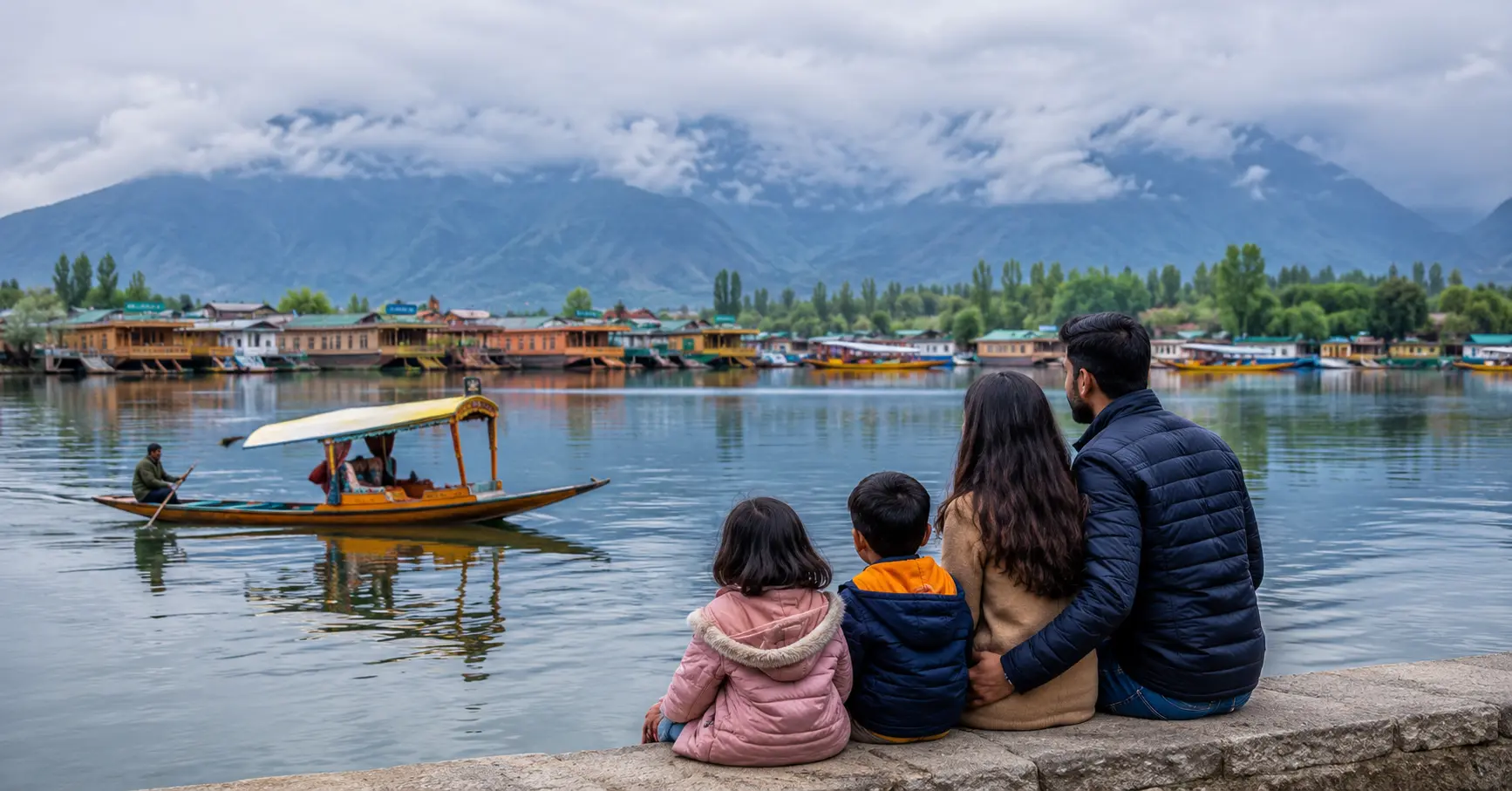
A Srinagar trip is not simply about ticking famous tourist attractions off a list. The city has a slower rhythm that becomes apparent almost as soon as you arrive. Mornings begin around the still waters of Dal Lake, wooden boats move quietly across the surface, Mughal gardens climb gently toward the Zabarwan hills, and the old city reveals a completely different side of Kashmir through its mosques, markets, wooden architecture and food traditions.
Srinagar is also one of those destinations where the journey is as important as the sightseeing. A shikara ride can be more memorable than a crowded attraction, a cup of kahwa beside the lake can stay with you longer than a shopping trip, and simply sitting somewhere with a view of the mountains can become one of the highlights of the holiday.
The city works particularly well for couples, families and first-time Kashmir travellers because many major attractions are relatively close to one another. A well-planned Srinagar trip itinerary can combine lakes, gardens, heritage sites, religious landmarks, food and shopping without requiring long hours on the road every day.
For most travellers, 4 to 5 days is the ideal duration for Srinagar itself. Five days allows enough time to explore the principal attractions without turning the holiday into a rush.
Destination at a Glance
| Detail | Information |
|---|---|
| Country / State | India / Jammu & Kashmir |
| Ideal Trip Duration | 4–5 days for Srinagar; 6–8 days if adding Pahalgam, Gulmarg or Sonamarg |
| Best Time to Visit | March–June for gardens and pleasant weather; September–October for clear skies and comfortable sightseeing; December–February for winter |
| Currency | Indian Rupee (₹ / INR) |
| Language | Kashmiri, Urdu, Hindi and English are widely understood |
| Time Difference | None for Indian travellers |
| Visa Requirement | No visa or permit for Indian citizens visiting Srinagar |
| Suitable Travellers | Solo travellers, couples, families, senior travellers and groups |
| Approx. Daily Budget | ₹2,000–₹4,000 budget; ₹4,000–₹7,500 mid-range; ₹9,000+ for premium travel, excluding flights |
| Nearest Airport | Sheikh ul-Alam International Airport, Srinagar (SXR) |
| Main Tourist Areas | Dal Lake, Boulevard Road, Dalgate, Gupkar, Nishat, Shalimar, Nigeen |
| Typical Airport-to-Dal Lake Transfer | About 25–35 minutes, depending on traffic |
The Srinagar district administration currently lists the airport as the main air gateway and notes that prepaid taxis and cab services are available outside arrivals; the drive toward Dal Lake and the city centre is generally around 25–35 minutes.
Why Should You Visit Srinagar?
Srinagar stands out because several different kinds of travel experiences come together in one destination.
Dal Lake and the shikara experience
Dal Lake is the visual symbol of Srinagar. The lake is surrounded by gardens, hotels, houseboats, floating markets and a long boulevard, while shikaras provide an entirely different way of seeing the city.
The district administration describes Dal Lake as an integral part of Srinagar’s tourism and recreation, with a shoreline of roughly 15.5 kilometres and an extensive wetland ecosystem.
Mughal gardens
Srinagar’s Mughal gardens are among the city’s greatest assets. Nishat Bagh, Shalimar Bagh and Chashme Shahi were created around terraces, water channels, fountains, flowers and mature trees, often with spectacular views of Dal Lake and the surrounding mountains.
History and spirituality
Srinagar isn’t just scenery. The city has centuries of religious and cultural history. Shankaracharya Temple, Hazratbal Shrine, Jamia Masjid and the old-city neighbourhoods add an important cultural dimension to the trip.
Food
A Srinagar holiday should include Kashmiri food rather than only hotel buffets. Wazwan specialities, rogan josh, yakhni, gushtaba, tabak maaz, kahwa and Kashmiri breads offer a genuine taste of the region.
A destination that suits different budgets
Srinagar can be surprisingly economical for travellers willing to stay slightly away from premium lakefront properties. Budget rooms can be found around Dal Lake and other parts of the city, while luxury properties offer expansive gardens, mountain views and premium lake-region locations.
Current accommodation listings show budget rooms starting below ₹2,000 in some cases, while premium properties can move well beyond ₹20,000 a night depending on date and season.
Best Time to Visit Srinagar
There isn’t one universally perfect month for a Srinagar trip. The best time depends on what you want from the holiday.
March to April: Tulips and spring
This is the most attractive period for travellers who specifically want the famous tulip season. The Indira Gandhi Memorial Tulip Garden opened on March 16, 2026, and the adult Indian visitor ticket for the 2026 season was ₹100.
Spring brings colourful gardens, fresh greenery and pleasant sightseeing conditions. Expect larger crowds around weekends and during peak bloom.
May to June: Pleasant sightseeing
These months are excellent for a classic Srinagar holiday. Gardens are lush, daytime conditions are generally comfortable and long sightseeing days are practical.
Chashme Shahi, for example, is described by the local administration as being at full bloom around May and June.
July to August: Green, lively and relatively warm
The landscape becomes extremely green, and lotus blooms may appear in parts of Dal Lake. The district administration notes that floating gardens known as Raad can bloom with lotus flowers during July and August.
However, this is not the season for tulips. The Tulip Garden is a seasonal attraction and should not be included in an August itinerary as a primary sightseeing stop.
September to October: One of the best overall periods
The weather becomes more comfortable, skies can be clearer and the famous autumn colours begin appearing later in the season. This is particularly attractive for photography and relaxed sightseeing.
December to February: Winter Srinagar
Winter is for travellers who want a distinctly colder Kashmir experience. Temperatures can fall sharply, especially at night, and nearby high-altitude destinations can receive significant snow.
For a first-time Srinagar visitor looking mainly for gardens, sightseeing and comfortable weather, late spring or early autumn is generally the easier choice.
How Many Days Are Enough for a Srinagar Trip?
For Srinagar alone:
3 days: Possible, but rushed.
4 days: Good for the principal attractions.
5 days: Best balance for most travellers.
6–7 days: Better if adding day trips or spending more time relaxing around the lakes.
The itinerary below uses 5 days, allowing enough time for the main attractions while retaining some flexibility.
How to Reach Srinagar
By Air
The easiest option for most Indian travellers is to fly into Sheikh ul-Alam International Airport (SXR).
The airport has direct or regularly scheduled connectivity with major Indian cities, with Delhi serving as one of the most useful gateways. Current airline information also shows Srinagar connectivity involving Delhi, Mumbai and Bengaluru, while the airport’s broader network includes other major Indian cities depending on season and airline schedule.
Air India currently lists Srinagar services to cities including Delhi, Mumbai and Bengaluru, while SpiceJet’s published schedules also show Delhi–Srinagar services.
For most travellers, Delhi is the simplest connecting point if a non-stop flight from the home city isn’t available.
Approximate flight cost from India
Domestic one-way fares vary significantly.
A practical planning range is:
- Delhi–Srinagar: around ₹4,000–₹10,000 one way
- Mumbai–Srinagar: around ₹6,000–₹14,000 one way
- Bengaluru–Srinagar: around ₹7,000–₹16,000 one way
- Other cities: ₹6,000–₹18,000 depending on connections and season
Air India fare examples available during the current season showed Srinagar–Delhi from about ₹7,043, Srinagar–Mumbai from about ₹8,989 and Srinagar–Bengaluru from around ₹12,107 on selected dates. These are examples rather than fixed fares.
By Train
Rail connectivity has improved considerably, but travellers planning a Srinagar trip should check the exact operational route and train timings for their dates. Jammu and Kashmir’s railway network has expanded substantially, including connectivity across the Chenab Bridge.
For a short holiday, flying is generally more convenient.
By Road
Srinagar can be reached by road from Jammu, and road travel is scenic but considerably slower than flying. This option makes more sense as part of a wider Kashmir road trip than a short city break.
Currency, Cash, ATMs and Digital Payments
Srinagar uses the Indian Rupee (₹).
There is no currency conversion requirement for Indian travellers.
UPI is widely useful in urban areas, hotels and established restaurants. Nevertheless, keep some cash because smaller vendors, local transport providers, parking points and some roadside establishments may prefer cash.
A sensible approach is to carry around ₹2,000–₹5,000 in cash per person for daily expenses, while keeping the rest accessible through digital payment methods.
Mobile SIM and Internet in Srinagar
Airtel, Jio and Vi services are available in Srinagar, with coverage generally strongest around urban and heavily visited areas.
For an Indian traveller, a normal active SIM usually works; new connections require standard KYC documentation.
Internet performance can vary with location, congestion and local network conditions. Hotel Wi-Fi is common, but don’t assume every remote part of a Kashmir itinerary will have equally strong connectivity.
For travellers working remotely, it is sensible to keep mobile data from a second network as backup.
Safety Tips for a Srinagar Trip
Srinagar can be enjoyed comfortably by tourists, but sensible travel behaviour matters.
Avoid entering restricted areas or attempting photography around sensitive military, police or government installations. Follow security instructions without argument.
Check local conditions before travelling to areas outside the main tourist circuit, especially if your itinerary includes mountain roads or day trips.
For religious places, dress modestly and follow local rules.
Keep hotel, driver and emergency contacts saved offline.
Avoid very late-night travel in unfamiliar areas.
During road journeys, use a reliable driver familiar with the current route rather than assuming that a short-looking distance will be a quick drive.
Most importantly, don’t treat every area of Kashmir as if conditions are identical. A local situation can change independently of conditions in central Srinagar.
Srinagar Trip Budget: How Much Does It Cost?
The following figures are practical planning estimates for Srinagar itself and exclude flights.
Solo Traveller
A budget solo traveller can manage approximately ₹2,000–₹3,500 per day by using budget accommodation, local food and shared or economical transport.
A comfortable solo traveller should plan around ₹4,000–₹6,000 daily.
Couple
A couple sharing one room can generally manage around ₹5,000–₹8,000 per day in a comfortable mid-range setup.
Luxury properties can quickly push this beyond ₹12,000–₹25,000 per day for accommodation and dining alone.
Family of Four
For a family using one good family room or two rooms, a practical middle-budget range is approximately ₹8,000–₹13,000 per day, excluding flights.
Transport becomes a larger component because a private vehicle is often more practical for families.
Group of 4–6 Adults
A group that shares a private vehicle can often reduce per-person sightseeing transportation costs substantially.
Budget approximately ₹2,500–₹5,000 per person per day for accommodation, food and local transport in a sensible mid-range setup.
A current travel-industry estimate for local Srinagar costs places city taxi circuits roughly around ₹1,800–₹3,000 for a half day and ₹2,800–₹4,500 for a full day, depending on vehicle and season. Shikara rides are commonly quoted around ₹800–₹1,500 per hour, though actual negotiated rates can differ.
Detailed 5-Day Srinagar Trip Itinerary
Day 1: Arrival, Dal Lake and Shikara Ride
Total distance: Approximately 20–30 km
Travel time: 1.5–2.5 hours of combined transfers and sightseeing
Mode: Airport taxi + local taxi/auto + shikara
Estimated transportation cost: ₹1,200–₹2,000 for a couple; ₹2,500–₹3,500 for a private vehicle
Approx. daily budget: ₹4,000–₹7,000 for two people excluding flights
Suggested hotel area: Dalgate, Boulevard Road, Dal Lake or Gupkar
Restaurant options: Krishna Vaishno Dhaba, local Kashmiri restaurants around Boulevard Road, hotel restaurants
Morning
Arrive at Srinagar Airport and drive toward your hotel.
Don’t pack the first day too aggressively. Srinagar traffic, hotel check-in and airport transfer can take longer than expected.
Check in, have lunch and rest.
Afternoon
Walk around the Dal Lake waterfront.
Spend time simply observing the lake instead of immediately boarding a boat. This gives you a better sense of the place before the shikara ride.
Evening
Take a one-hour shikara ride around Dal Lake.
The ride is not just a boating activity. It is a way to experience floating gardens, houseboats, distant mountain views and the quieter side of Srinagar.
Negotiate the complete fare before departure and confirm the duration.
Return to the hotel for dinner.
Day 2: Nishat Bagh, Shalimar Bagh, Chashme Shahi and Pari Mahal
Total distance: Approximately 30–40 km
Travel time: 3–4 hours including sightseeing movement
Mode: Private taxi
Estimated transportation cost: ₹2,500–₹3,500
Approx. daily budget: ₹4,500–₹8,000 for two people excluding hotel
Suggested hotel area: Dal Lake, Nishat or Boulevard Road
Restaurant options: Mughal Darbar, Shamyana, local restaurants around Nishat/Boulevard
Morning
Start early and head towards Nishat Bagh.
Spend at least 1–1.5 hours here. Take your time walking from the lower to upper terraces.
Late Morning
Continue to Shalimar Bagh.
The two gardens are close enough to combine comfortably.
Afternoon
Have lunch and then visit Chashme Shahi.
Because Chashme Shahi is compact, you don’t need an enormous amount of time here.
Evening
Finish the day at Pari Mahal.
The elevated position makes it especially attractive toward sunset, although traffic on the narrow approach road can become frustrating at busy times.
Return to your hotel after sunset.
Day 3: Shankaracharya Temple, Hazratbal, Nigeen Lake and Old Srinagar
Total distance: Approximately 30–45 km
Travel time: 3–5 hours depending on traffic and sightseeing time
Mode: Taxi + walking
Estimated transportation cost: ₹2,000–₹3,000
Approx. daily budget: ₹4,000–₹7,000 for two people excluding hotel
Suggested hotel area: Dal Lake or Lal Chowk
Restaurant options: Krishna Vaishno Dhaba for vegetarian food; local Kashmiri restaurants for traditional dishes
Morning
Begin with Shankaracharya Temple.
Go early to avoid the strongest crowds and afternoon heat. Be prepared for stairs and security restrictions.
Late Morning
Travel to Hazratbal Shrine.
The lakeside location adds another dimension to the visit.
Afternoon
Have lunch and head towards Nigeen Lake.
Nigeen is usually calmer than the more heavily commercial parts of Dal Lake. Consider a short lakeside stop or another boat ride if the atmosphere appeals to you.
Evening
Explore a section of Old Srinagar.
Walk through lanes around the historic city, observe traditional wooden architecture and visit a local bakery or tea shop.
This is one of the best ways to understand that Srinagar is more than gardens and lakes.
Day 4: Tulip Garden Season / Botanical Garden / Leisure Day
Total distance: 20–35 km
Travel time: 2–4 hours
Mode: Private taxi or local cab
Estimated transportation cost: ₹1,800–₹3,000
Approx. daily budget: ₹4,000–₹7,000 for two people excluding hotel
Suggested hotel area: Dal Lake, Nishat or Gupkar
Restaurant options: Hotel restaurant, Boulevard Road cafés and established vegetarian restaurants
March–April version
Visit the Indira Gandhi Memorial Tulip Garden during the bloom season.
The 2026 season began on March 16, with adult Indian entry set at ₹100.
May–October version
Skip the Tulip Garden if it is out of season and instead spend more time around the Botanical Garden, Dal Lake, Nigeen Lake or the Mughal gardens.
Afternoon
Have a relaxed lunch.
Use the afternoon for shopping, café time or simply returning to Dal Lake.
Evening
Take your final relaxed walk along Boulevard Road and enjoy kahwa.
This day is intentionally lighter. A common mistake in Kashmir is trying to turn every holiday into a road trip.
Day 5: Local Culture, Shopping and Departure
Total distance: Approximately 15–25 km
Travel time: 2–3 hours
Mode: Taxi/auto/walking
Estimated transportation cost: ₹800–₹1,500
Approx. daily budget: ₹2,000–₹4,000 excluding departure flight
Suggested hotel area: Dalgate/Boulevard for easy airport access
Restaurant options: Local breakfast café, traditional bakery, hotel breakfast
Morning
Have breakfast and explore a local market.
Buy saffron only from a reputable seller, and ask about packaging and origin.
Late Morning
Visit a local handicraft store for papier-mâché, carpets, shawls or walnut-wood products.
Afternoon
Collect luggage and leave for Srinagar Airport with sufficient buffer time.
For domestic departures, allow additional time because airport security procedures can take longer during busy travel periods.
Best Attractions in Srinagar
The Google ratings and approximate review volumes below were checked against current Google-indexed listings in August 2026 and should be treated as snapshots because ratings and counts change continuously. Current Google-indexed information shows Dal Lake around 4.6, Nishat Garden 4.4, Shalimar Garden 4.4, Chashme Shahi 4.4, Pari Mahal 4.4, Shankaracharya Temple 4.8, Hazratbal 4.7 and Tulip Garden 4.5.
1. Dal Lake
| Information | Details |
|---|---|
| Location | Srinagar, central/eastern city |
| Google Rating | 4.6/5 |
| Approx. Google Reviews | 10,000+ |
| Entry Fee | Free to access the lakeshore |
| Shikara Cost | Roughly ₹800–₹1,500 per hour, depending on negotiation, route and season |
| Timings | Lakefront accessible through the day; boating depends on weather and operator |
| Recommended Duration | 2–3 hours |
| Best Time | Early morning or late afternoon |
| How to Reach | Taxi/auto to Dalgate, Boulevard Road or selected ghats |
| Approx. Transport Cost | ₹150–₹500 within central Srinagar; more for private transfers |
| Practical Tip | Confirm the shikara duration and total fare before boarding |
Dal Lake is the defining landscape of Srinagar. The lake is closely associated with houseboats, shikaras, floating gardens and the city’s tourism economy. The official district description notes that the lake stretches along a shoreline of about 15.5 kilometres and is integrated with surrounding gardens and recreational infrastructure.
The best experience is not necessarily the longest boat ride. An hour around sunset or early morning can be enough.
For photography, early morning provides softer light and fewer crowds. For couples, evening rides are often more atmospheric. Families usually find daytime rides easier.
Is it worth visiting? Absolutely. A Srinagar trip without Dal Lake feels incomplete.
2. Nishat Bagh
| Information | Details |
|---|---|
| Location | Boulevard Road, eastern side of Dal Lake |
| Google Rating | 4.4/5 |
| Approx. Google Reviews | 19,000+ |
| Entry Fee | Budget approximately ₹20–₹50 per Indian visitor; gate rates can vary |
| Opening & Closing | Around 9:00 AM–7:00 PM |
| Recommended Duration | 1–1.5 hours |
| Best Time | Morning or late afternoon |
| How to Reach | Taxi, auto or local transport via Boulevard Road |
| Approx. Transport Cost | ₹250–₹700 from central Srinagar |
| Practical Tip | Walk through the upper terraces for the best combination of garden and lake views |
Nishat Bagh is one of the most photogenic attractions in Srinagar. It was designed and built in 1633 by Asif Khan and is the second-largest of the celebrated Mughal gardens in the Kashmir Valley. Its terraced layout provides views toward Dal Lake and the mountains.
The garden’s 12 terraces are a major part of its charm. Don’t rush through the lower section. The upper levels give you changing perspectives of the garden, water features and surrounding landscape.
Recent Google-indexed listings put Nishat Garden around 4.4/5 with roughly 19,000+ reviews.
Is it worth visiting? Yes. Many travellers actually prefer Nishat to Shalimar because of the broader lake-and-mountain views.
3. Shalimar Bagh
| Information | Details |
|---|---|
| Location | Shalimar, northeastern side of Dal Lake |
| Google Rating | 4.4/5 |
| Approx. Google Reviews | 21,000+ |
| Entry Fee | Budget approximately ₹20–₹50 per Indian visitor |
| Opening & Closing | 9:00 AM–7:00 PM |
| Recommended Duration | 1–1.5 hours |
| Best Time | Morning or late afternoon |
| How to Reach | Taxi/auto via Boulevard Road |
| Approx. Transport Cost | ₹300–₹800 from central Srinagar |
| Practical Tip | Spend time around the central water channel and upper terraces |
Shalimar Bagh was developed by Mughal Emperor Jahangir for Nur Jahan in 1619 and later expanded under Shah Jahan. The garden is recognised for its four-tiered layout, central water channel and Persian-inspired garden design.
The atmosphere here is slightly more formal than Nishat. The combination of fountains, mature trees, terraces and architecture explains why the garden remains one of Srinagar’s classic tourist stops.
Is it worth visiting? Yes, particularly for travellers interested in Mughal history, architecture and landscaped gardens.
4. Chashme Shahi
| Information | Details |
|---|---|
| Location | Zabarwan Range, near Raj Bhavan |
| Google Rating | 4.4/5 |
| Approx. Google Reviews | 12,000+ |
| Entry Fee | Budget approximately ₹20–₹50 |
| Opening & Closing | Generally about 9:00 AM–7:00 PM; seasonal operation may vary |
| Recommended Duration | 45–60 minutes |
| Best Time | April–October |
| How to Reach | Taxi via Boulevard Road |
| Approx. Transport Cost | ₹250–₹600 |
| Practical Tip | Combine it with Pari Mahal because they are very close |
Chashme Shahi means “Royal Spring” and was constructed in 1632 around a natural spring. The garden was commissioned during Shah Jahan’s reign for Dara Shikoh. The local administration describes it as the smallest of Srinagar’s three major Mughal gardens.
It is compact, which makes it easy to combine with other sights.
Its appeal comes from the natural spring, terraced layout, greenery and peaceful atmosphere.
Is it worth visiting? Yes, especially when combined with Pari Mahal.
5. Pari Mahal
| Information | Details |
|---|---|
| Location | Zabarwan hills above Chashme Shahi |
| Google Rating | 4.4/5 |
| Approx. Google Reviews | 8,600+ |
| Entry Fee | About ₹50 is a useful budget estimate; verify at the gate |
| Opening & Closing | 9:30 AM–7:30 PM |
| Recommended Duration | 45–60 minutes |
| Best Time | Late afternoon or sunset |
| How to Reach | Taxi/private car; narrow uphill approach |
| Approx. Transport Cost | ₹300–₹700 from nearby central areas |
| Practical Tip | Use a smaller vehicle during crowded periods |
Pari Mahal, or “Palace of Fairies,” sits high above Srinagar and overlooks Dal Lake. The monument was built by Mughal Prince Dara Shikoh in the mid-17th century and was associated with learning, astronomy and astrology.
The views are the main reason many travellers remember Pari Mahal. At sunset, the lake, city and mountains come together in a single panorama.
Current visitor information lists the opening window as 9:30 AM–7:30 PM.
Is it worth visiting? Definitely. It combines history and one of Srinagar’s best elevated viewpoints.
6. Shankaracharya Temple
| Information | Details |
|---|---|
| Location | Shankaracharya Hill |
| Google Rating | 4.8/5 |
| Approx. Google Reviews | 8,700+ |
| Entry Fee | Generally free; security procedures apply |
| Opening & Closing | 7:30 AM–5:00 PM |
| Recommended Duration | 1–1.5 hours |
| Best Time | Early morning |
| How to Reach | Taxi to the access area, followed by stairs |
| Approx. Transport Cost | ₹300–₹700 from central Srinagar |
| Practical Tip | Expect security checks and do not carry unnecessary items |
Shankaracharya Temple is one of the city’s most important religious landmarks. The elevated location provides exceptional views over Srinagar and Dal Lake.
Incredible India currently lists visiting hours as 7:30 AM to 5:00 PM.
The attraction involves climbing stairs, so elderly visitors should plan accordingly.
Because it is an active religious site, visitors should dress respectfully and follow security instructions.
Is it worth visiting? Yes. Even non-religious travellers often appreciate the panoramic city view and historical setting.
7. Hazratbal Shrine
| Information | Details |
|---|---|
| Location | Hazratbal, western side of Dal Lake |
| Google Rating | 4.7/5 |
| Approx. Google Reviews | 3,000 |
| Entry Fee | Free |
| Opening & Closing | Visitor hours commonly listed around 9:30 AM–5:30 PM; prayer/special-day variations apply |
| Recommended Duration | 45–90 minutes |
| Best Time | Late morning or afternoon outside major prayer periods |
| How to Reach | Taxi/auto |
| Approx. Transport Cost | ₹250–₹600 from central Srinagar |
| Practical Tip | Dress modestly and follow photography and prayer-area instructions |
Hazratbal is one of Kashmir’s most significant Muslim shrines and is located beside Dal Lake. Its white marble architecture and lakeside setting make it visually striking, but the site’s real importance is spiritual.
Incredible India currently lists a general visitor window of 9:30 AM–5:30 PM, with Sunday closure noted on its visitor information page. Local prayer schedules and special occasions can affect access.
Visitors of different faiths can visit, but appropriate dress and respectful behaviour are essential.
Is it worth visiting? Yes, particularly for travellers interested in Kashmir’s religious and cultural heritage.
8. Indira Gandhi Memorial Tulip Garden
| Information | Details |
|---|---|
| Location | Foothills of Zabarwan Range overlooking Dal Lake |
| Google Rating | 4.5/5 |
| Approx. Google Reviews | 17,000+ |
| Entry Fee | 2026 Indian adult ticket: ₹100; children: ₹50 |
| Opening & Closing | Around 9:00 AM–7:00 PM during the 2026 season |
| Recommended Duration | 1.5–2 hours |
| Best Time | Mid-March to April, during bloom |
| How to Reach | Taxi/private car |
| Approx. Transport Cost | ₹300–₹700 |
| Practical Tip | Do not include it in summer/autumn itineraries expecting flowers |
The Tulip Garden is one of Srinagar’s most seasonal attractions. In 2026, it opened on March 16 with millions of blooms spread across numerous varieties, and the Indian adult entry price was fixed at ₹100.
This is the attraction to build your trip around if tulips are the main reason for visiting.
Do not make the mistake of assuming the garden remains colourful throughout the year.
Is it worth visiting? During bloom season, absolutely. Outside bloom season, choose another attraction instead.
Recommended Hotels in Srinagar
Hotel prices vary sharply with weekends, summer demand, festivals and availability.
| Category | Recommended Area / Examples and Approx. Price |
|---|---|
| Budget | Dalgate, Dal Lake, Boulevard and Lal Chowk; roughly ₹1,000–₹3,000 per room |
| Mid-range | Dal Lake, Raj Bagh, Nishat and Boulevard; roughly ₹3,500–₹8,000 |
| Luxury | Gupkar, Dal Lake and Nishat; roughly ₹10,000–₹30,000+ |
Budget accommodation can be considerably cheaper outside the premium lakefront belt. Recent listings for properties around Dal Lake show rooms around ₹1,000–₹2,000 on selected dates, while premium hotels can exceed ₹20,000.
Budget
Hotel New Green View / Hotel New Green View-I area: Useful for travellers who prioritise location and price. Recent listings have shown rooms below ₹2,000 on selected dates.
Mid-range
Look around Dalgate, Boulevard Road, Raj Bagh and Nishat. These areas provide a good balance between access to attractions and accommodation cost.
Luxury
Radisson Hotel Srinagar is a practical upscale city hotel, while The LaLiT Grand Palace Srinagar is a more premium heritage-style option.
Recent Google hotel listings showed Radisson around US$98–$104 per night on selected July dates, while The LaLiT Grand Palace was around US$260–$280 on selected dates, demonstrating the large difference between upper-upscale and luxury inventory.
For an experience-led luxury holiday, choose a property with a strong lake or mountain setting rather than simply paying for a higher star category.
Must-Try Food in Srinagar
A Srinagar trip is incomplete without trying Kashmiri cuisine.
Rogan Josh
A classic slow-cooked meat preparation, traditionally aromatic rather than aggressively spicy.
Yakhni
A delicately seasoned meat dish prepared in a yoghurt-based gravy.
Gushtaba
A festive minced-meat preparation associated with Kashmiri Wazwan.
Tabak Maaz
Crisp-edged lamb ribs cooked traditionally and served as part of the Wazwan tradition.
Dum Aloo
One of the most familiar vegetarian Kashmiri dishes.
Haak Saag
A simple leafy green preparation that gives you a taste of everyday Kashmiri food rather than restaurant-style rich dishes.
Kahwa
The drink you should repeatedly order throughout the holiday. Kashmiri kahwa is usually prepared with green tea, spices and often saffron or nuts.
Kashmiri breads
Try girda, lavasa and tsochvor with tea or breakfast.
For vegetarians, Srinagar is not difficult, but traditional Wazwan restaurants are naturally meat-heavy. Established vegetarian restaurants and local dhabas are better choices when you want a fully vegetarian meal. Current restaurant listings in the Lal Chowk/Dal Gate area include vegetarian options such as Krishna Vaishno Dhaba and Gulab Sweets.
Srinagar Shopping Guide
Srinagar is one of India’s best destinations for traditional handicrafts.
What to Buy
- Pashmina shawls
- Kashmiri carpets
- Papier-mâché products
- Walnut-wood handicrafts
- Kashmiri embroidery
- Saffron
- Dry fruits
- Traditional spices
- Kashmiri woollens
Where to Shop
Lal Chowk: Good for general shopping and local-market experience.
Residency Road: Useful for handicrafts and established shops.
Boulevard Road: Convenient for tourist-oriented purchases.
Government or established handicraft outlets: Better for expensive carpets and high-value products where authenticity matters.
Bargaining Tips
Bargain for ordinary souvenirs, but don’t assume every expensive Kashmiri product is overpriced simply because the initial quotation is high.
For carpets, shawls or saffron, ask questions about material, origin, craftsmanship, certification and receipts rather than focusing only on price.
A genuine hand-crafted product may look expensive next to a machine-made imitation.
Hidden Gems Around Srinagar
Srinagar’s most rewarding moments can happen outside the obvious tourist list.
Nigeen Lake
Quieter than the busiest stretches of Dal Lake and particularly attractive for travellers who prefer a slower atmosphere.
Naseem Bagh
An enormous chinar-filled landscape close to Dal Lake, particularly attractive during autumn.
Old Srinagar lanes
The historic neighbourhoods around Jamia Masjid and Nowhatta provide glimpses of traditional architecture and local life.
Floating Vegetable Market
The early-morning activity on the lake is a different side of Srinagar. This is best approached as an observational experience rather than a staged tourist attraction.
Local bakeries
Don’t overlook small neighbourhood bakeries. Kashmiri bread and tea can become one of the simplest and most memorable parts of the trip.
Common Tourist Mistakes in Srinagar
Trying to cover all of Kashmir from Srinagar
Srinagar is not a substitute for Pahalgam, Gulmarg or Sonamarg. If those destinations are on your wish list, extend the trip rather than cramming them into the same three-day itinerary.
Treating shikara rides as fixed-price activities
Confirm the duration and total price first.
Choosing a hotel solely because it is beside Dal Lake
Some lakefront areas are excellent for views but can be busy, noisy or inconvenient for vehicle access.
Spending too much time indoors
Srinagar rewards slow exploration. You don’t need a packed schedule.
Ignoring seasonality
A summer trip cannot replicate the Tulip Garden experience of March or April.
Buying expensive handicrafts without understanding quality
Do not buy a high-value shawl or carpet simply because a salesperson says it is “pure.”
Money-Saving Tips
Book flights early, especially for spring and summer weekends.
Stay slightly away from the premium lakefront zone if your hotel room is mainly for sleeping.
Share a private taxi among four to six travellers.
Use local restaurants rather than eating every meal at a premium hotel.
Combine nearby attractions in a logical circuit rather than booking separate rides.
Avoid buying every souvenir from the first shop you enter.
For a couple, a comfortable private vehicle for selected sightseeing days often provides better value than repeatedly hiring short local rides.
Packing Checklist for Srinagar
- Comfortable walking shoes
- Light layers
- Warm jacket for evenings outside summer
- Sunglasses
- Sunscreen
- Small umbrella or rain layer depending on season
- Basic medicines
- Reusable water bottle
- Power bank
- Valid government ID
- Modest clothing for religious sites
- Small backpack for sightseeing
- Cash in smaller denominations
For winter travel, proper thermal layers matter much more than carrying one very thick jacket.
Photography Tips for Srinagar
The best photographs are often taken when the city is least busy.
For Dal Lake, shoot early in the morning or around sunset.
For Nishat Bagh, use the upper terraces to frame the garden, lake and mountain backdrop together.
For Shalimar Bagh, focus on symmetry, water channels and reflections.
For Pari Mahal, sunset is particularly effective because of the elevated perspective.
For Shankaracharya Hill, use the viewpoint to capture the scale of Srinagar rather than only the temple structure.
At religious places, ask before photographing people or sensitive areas.
A phone camera is enough for most Srinagar photography. The important factor is timing, not expensive equipment.
Local Etiquette in Srinagar
Srinagar is culturally diverse, but religious traditions are an important part of everyday life.
Dress conservatively around shrines and mosques.
Remove shoes where required.
Ask before photographing worshippers.
Avoid loud behaviour at religious sites.
Do not enter restricted areas.
Do not assume that tourist status exempts you from local etiquette.
A respectful traveller usually gets a much warmer experience than someone who treats the city as an amusement park.
Important Practical Travel Tips
Keep hotel and driver details saved offline.
Confirm your transport fare before starting a paid journey.
Carry a little cash even when using UPI.
Avoid overloading your first and last days.
Keep extra time for the airport.
Check mountain-road conditions before planning any day trip outside Srinagar.
For Tulip Garden, verify whether the flowers are actually in bloom rather than relying only on generic travel articles.
Expect attraction timings, security procedures and ticket prices to change.
Don’t compare Srinagar traffic with Delhi or Mumbai; a short distance can take longer than expected because of road conditions and congestion.
Frequently Asked Questions About a Srinagar Trip
1. How many days are enough for a Srinagar trip?
Four days is enough for the major sights, but five days is better. It allows you to visit Dal Lake, the Mughal gardens, Pari Mahal, Shankaracharya Temple, Hazratbal and Old Srinagar without rushing.
2. What is the best month to visit Srinagar?
For a balanced sightseeing trip, May, June, September and October are excellent choices. For tulips, target March to April.
3. Is Srinagar suitable for a family trip?
Yes. Srinagar works very well for families because many attractions involve short walks rather than demanding trekking. The main consideration for senior travellers is the number of stairs at places such as Shankaracharya Temple.
4. How much does a 5-day Srinagar trip cost?
A couple travelling comfortably should budget approximately ₹25,000–₹40,000 for five days, excluding flights and shopping. Budget travel can be lower, while luxury travel can be significantly higher.
5. Is a shikara ride in Dal Lake worth it?
Yes. It is one of the defining experiences of Srinagar. One hour is usually enough for a first ride.
6. Is Srinagar safe for tourists?
Tourists can enjoy Srinagar, but travel conditions can change. Follow local advisories, respect security restrictions, avoid sensitive areas and stay informed about road conditions.
7. Is the Tulip Garden open throughout the year?
No. It is seasonal and is primarily a spring attraction. The 2026 season opened on March 16.
8. Which area is best to stay in Srinagar?
For first-time visitors, Dalgate, Boulevard Road and Dal Lake are convenient. For quieter premium stays, Gupkar and Nishat are attractive alternatives.
Final Verdict: Is a Srinagar Trip Worth It?
A Srinagar trip works best when you resist the temptation to make it a checklist holiday.
Start with Dal Lake and a shikara ride, explore the grand Mughal gardens, watch the city from Pari Mahal, experience the spiritual atmosphere of Hazratbal and Shankaracharya, taste authentic Kashmiri food, and leave enough space for wandering through the old city’s lanes.
The five-day plan above gives you a strong balance:
Day 1: Arrival and Dal Lake
Day 2: Nishat, Shalimar, Chashme Shahi and Pari Mahal
Day 3: Shankaracharya, Hazratbal, Nigeen and Old Srinagar
Day 4: Tulip Garden in spring or a relaxed garden/lake day in other seasons
Day 5: Shopping, local culture and departure
For most travellers, May–June and September–October provide the easiest combination of comfortable sightseeing and attractive scenery, while March–April is the choice for the iconic tulip season.
Srinagar is also an excellent starting point for a longer Kashmir holiday. Once you have experienced the city, you can extend the journey toward Gulmarg, Pahalgam, Sonamarg or other destinations rather than trying to force everything into a single itinerary.
The real charm of Srinagar, however, lies in the moments between the attractions: a quiet lake in the morning, a bowl of warm food after a long walk, the sound of water flowing through an old Mughal garden, or the view of the mountains appearing behind the city at sunset.
That is what makes a well-planned Srinagar trip feel like a holiday rather than simply another sightseeing tour.
Disclaimer
Travel costs, hotel prices, entry fees, transportation fares, airline schedules, attraction timings, security procedures, exchange rates and travel rules can change over time. Weather and local conditions may also affect sightseeing and road travel. The information in this guide is intended for planning purposes. Always verify the latest details with the relevant hotel, airline, transport provider or local authority before travelling.