Hemkund Sahib Trip: Complete Travel Guide, Trek Route, Best Time, Itinerary and Travel Tips
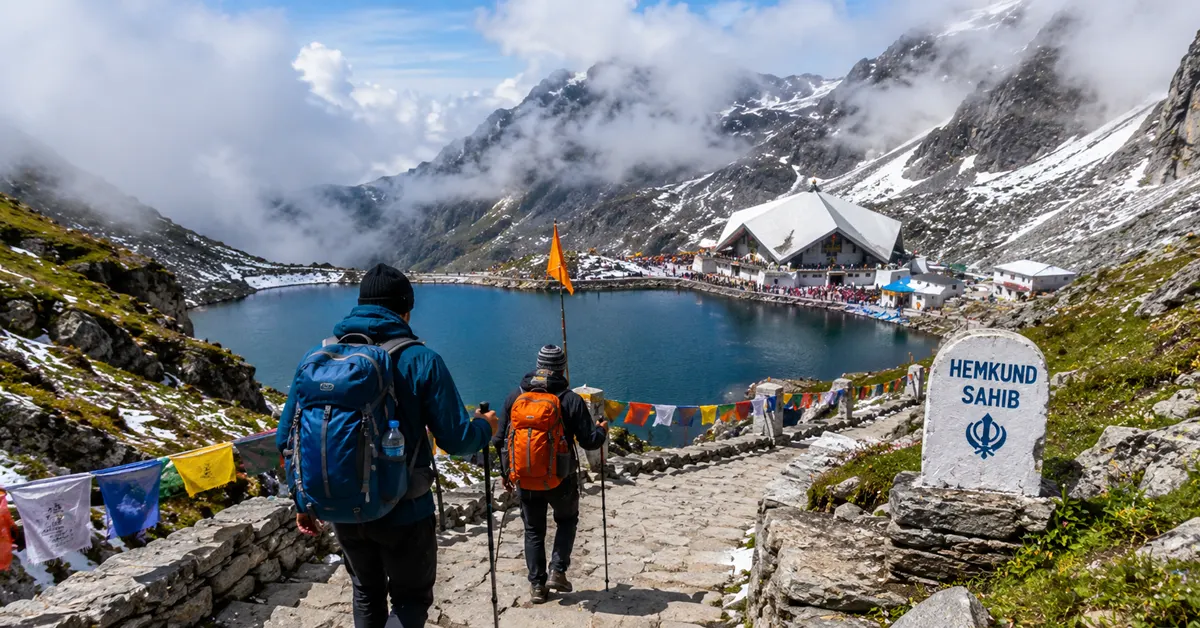
A Hemkund Sahib trip is not an ordinary mountain holiday. It is a journey that combines faith, endurance, dramatic Himalayan scenery and a sense of quiet that is difficult to find anywhere else. Located high in the Garhwal Himalayas of Uttarakhand, Gurudwara Shri Hemkund Sahib stands beside a glacial lake surrounded by steep mountain slopes and snow-covered peaks.
For pilgrims, the destination has deep spiritual importance. For trekkers, reaching the shrine is a demanding high-altitude experience. And for travellers who simply appreciate the Himalayas, the landscape around Hemkund Sahib can be unforgettable.
The journey becomes even more interesting because Hemkund Sahib is reached through Ghangaria, a small mountain settlement that also serves as the base for the famous Valley of Flowers trek. This makes it possible to combine spirituality and Himalayan exploration in one trip.
The shrine is situated at an altitude of more than 15,000 feet, and the final approach involves a steep climb from Ghangaria. The official Chamoli district tourism information describes the final six-kilometre approach as a substantial ascent of about 1,100 metres. There is no accommodation at Hemkund Sahib itself, so pilgrims must return to Ghangaria after the visit.
The 2026 pilgrimage season is particularly important for anyone planning a current trip. The portals of Hemkund Sahib opened on 23 May 2026, following the ceremonial departure of the first pilgrimage group from Rishikesh on 20 May. The current season is expected to continue until autumn, with the shrine inaccessible after the onset of heavy winter snow.
Destination at a Glance
| Detail | Information |
|---|---|
| Destination | Hemkund Sahib |
| State | Uttarakhand, India |
| District | Chamoli |
| Altitude | Approximately 4,600 metres / over 15,000 feet |
| Ideal trip duration | 5–7 days from Rishikesh/Haridwar |
| Best time to visit | June to September; September is often more comfortable for weather |
| Pilgrimage season | Generally late May to early October |
| Currency | Indian Rupee (₹) |
| Language | Hindi, Garhwali, Punjabi and English |
| Visa requirement | Not applicable for Indian citizens |
| Suitable for | Pilgrims, families, groups, experienced trekkers and spiritual travellers |
| Daily budget | Approximately ₹1,500–₹4,000 per person excluding long-distance travel |
| Main base | Ghangaria |
| Roadhead | Govindghat/Pulna |
| Nearest major airport | Jolly Grant Airport, Dehradun |
| Nearest major railway access | Rishikesh |
| Trek requirement | Yes, unless using permitted transport assistance for portions of the route |
Why Visit Hemkund Sahib?
There are many Himalayan destinations where the scenery is the main attraction. Hemkund Sahib is different because the landscape and spiritual experience are inseparable.
The first reason to visit is the setting itself. The Gurudwara sits beside the sacred Hemkund Lake, surrounded by towering Himalayan terrain. At this altitude, even the appearance of clouds moving across the mountains can feel dramatic.
The second reason is the pilgrimage experience. The route requires physical effort, and that effort becomes part of the journey. Walking alongside other pilgrims, listening to prayers and kirtan, stopping at rest points and gradually climbing towards the shrine creates an experience that is very different from reaching a destination by car.
The third reason is the sense of accomplishment. The final climb from Ghangaria is short in distance compared with many Himalayan treks, but the altitude makes it considerably more demanding.
Finally, Hemkund Sahib can be combined with nearby attractions, particularly the Valley of Flowers, making it possible to plan a broader Himalayan itinerary rather than visiting the shrine in isolation.
The Religious and Cultural Importance of Hemkund Sahib
Hemkund Sahib is one of the most revered Sikh pilgrimage destinations in the Himalayas.
The name Hemkund is associated with the surrounding high-altitude lake, while the shrine’s spiritual importance comes from Sikh tradition and the historical accounts associated with Guru Gobind Singh Ji.
The location is also significant because of its extraordinary natural setting. The Gurudwara stands beside a lake enclosed by mountains, creating a powerful combination of natural beauty and religious atmosphere.
For visitors who are not Sikh, the experience can still be deeply meaningful. The important thing is to approach the site respectfully, understand that this is an active place of worship rather than simply a tourist attraction, and follow the instructions of the Gurudwara authorities.
Visitors should also remember that the shrine is located in an extremely high-altitude environment. The spiritual experience should not be separated from the physical realities of reaching the destination.
Hemkund Sahib Altitude and Trek Difficulty
One of the biggest mistakes first-time visitors make is looking only at the distance.
The altitude matters far more.
Hemkund Sahib is located at roughly 4,600 metres above sea level. Different official and travel references give slightly different figures, generally around 4,300–4,600 metres, depending on the measurement used. The Chamoli district administration describes the shrine as being above 15,000 feet.
The standard route involves:
Govindghat → Pulna → Ghangaria → Hemkund Sahib
The road journey takes you to Govindghat. From there, vehicles generally continue to Pulna, after which the trek towards Ghangaria begins.
The Pulna–Ghangaria section is a long mountain walk. After reaching Ghangaria and resting, the final climb to Hemkund Sahib is approximately six kilometres.
This last section is considerably steeper than the earlier approach.
How difficult is the Hemkund Sahib trek?
For a reasonably fit traveller who regularly walks or exercises, the trek can be manageable with adequate preparation.
However, it should not be treated as an easy sightseeing walk.
The combination of:
- High altitude
- Steep ascent
- Cold weather
- Reduced oxygen availability
- Rain and slippery sections
- Long walking hours
can make the journey challenging.
A traveller who is comfortable walking 5–10 kilometres at low altitude should still avoid assuming that the same performance will automatically apply at 4,000+ metres.
The sensible approach is to maintain a slow and steady pace, take breaks and avoid racing other pilgrims.
Best Time to Visit Hemkund Sahib
The best time for a Hemkund Sahib trip is generally from June through September, when the pilgrimage route is operational.
The exact opening and closing dates can vary according to snow conditions and administrative decisions. In 2026, the shrine opened to devotees on 23 May.
June
June is one of the most attractive months for travellers who want relatively better road and trekking conditions.
Snow may still be visible around the higher sections, particularly early in the season. The weather can be cold, especially during the early morning climb.
July
July brings the Himalayan monsoon.
The lower sections of the route can become wet, and rain can make the trail slippery. However, the surrounding landscape becomes exceptionally green.
If you travel in July, waterproof clothing and a proper rain cover are essential.
August
August can be beautiful but unpredictable.
Rain, clouds and occasional poor visibility can affect the journey. At the same time, the Valley of Flowers region is particularly attractive during the monsoon flowering season.
Travellers combining Hemkund Sahib with Valley of Flowers often consider July and August especially rewarding from a scenery perspective.
September
September is often an excellent compromise.
The monsoon begins to weaken, skies can become clearer and the mountain landscape becomes easier to appreciate. Temperatures, however, remain cold at high altitude.
For travellers who have some flexibility, early or mid-September can be a very good choice.
October
October is not a month I would recommend for casually planning a Hemkund Sahib pilgrimage without checking the current official schedule.
The pilgrimage season normally ends around early October, and winter weather begins to become a serious consideration. One current 2026 travel reference lists 10 October as the expected closing date, but travellers should always confirm the official schedule before travelling.
Hemkund Sahib Weather
Weather at Hemkund Sahib can change surprisingly quickly.
At an altitude of more than 15,000 feet, conditions at the shrine are very different from those in Rishikesh or even Govindghat.
During the open season, daytime conditions can sometimes feel comfortable when the sun is out, but temperatures can fall quickly when clouds arrive.
July and August are wetter because of the monsoon, while September generally provides more stable conditions.
A current travel-weather reference gives typical summer temperatures around the low teens Celsius at the shrine, with rain becoming more prominent in July and August.
For practical planning, assume that you may experience:
- Cold mornings
- Strong mountain winds
- Sudden rain
- Cloud and fog
- Very low temperatures near the lake
- Slippery trekking conditions
- Rapid changes in visibility
Never plan your trek around the assumption that the weather forecast will remain unchanged throughout the day.
2026 Hemkund Sahib Yatra Registration
Registration is an important part of planning the pilgrimage.
The Uttarakhand government’s official travel portal states that online registration for Char Dham and Hemkund Sahib Yatra is available and that pilgrims should complete the registration process before beginning their journey. Vehicle registration is also required under the state’s travel arrangements.
The basic process involves creating a journey, entering the relevant travel dates and pilgrim details, and carrying the generated registration documentation.
Do not leave registration until the last moment
Even if you have travelled to Uttarakhand before, do not assume that the rules will remain identical every year.
Registration systems, verification procedures, route restrictions and capacity management can change according to weather and administrative conditions.
For the 2026 season, registration is already operational, so travellers should complete the process before setting out.
How to Reach Hemkund Sahib
There is no direct road to the shrine.
The journey has three broad stages:
Reach Rishikesh/Haridwar → Travel by road to Govindghat → Trek through Pulna and Ghangaria → Climb to Hemkund Sahib
This is why the trip requires more planning than a conventional hill-station holiday.
By Air
The nearest major airport is Jolly Grant Airport in Dehradun.
From the airport, travellers need to continue by road towards Rishikesh and then onwards through the Garhwal region.
The Chamoli district administration places the airport roughly 268 km from the Hemkund Sahib area, although the exact road distance varies depending on the endpoint and route used.
A private taxi from Dehradun airport can be convenient for families and groups but will significantly increase the overall budget.
By Train
For most travellers from Delhi and northern India, Rishikesh is the most practical railway access point.
Haridwar and Dehradun also have railway connectivity and can work depending on where you are travelling from.
From Rishikesh, the journey continues by road.
A useful strategy is to arrive in Rishikesh a day before beginning the long mountain drive. This reduces the pressure of trying to complete the entire journey in one stretch.
By Road
The road route from Rishikesh passes through the mountain corridor towards Joshimath and Govindghat.
The drive is scenic but long.
Expect winding roads, mountain traffic, occasional roadwork and weather-related delays.
The official Chamoli district information identifies Govindghat as the main access point for the Hemkund Sahib route.
For a comfortable trip, avoid scheduling an important onward connection immediately after your expected arrival in Govindghat.
Mountain travel requires a buffer.
Govindghat: The Gateway to Hemkund Sahib
Govind Ghat is where the character of the journey begins to change.
Until Govindghat, you are primarily travelling by road. From here onward, the mountains become the central part of the experience.
The settlement has accommodation, food options, transport services and access to the pilgrimage route.
Gurudwara Sahib Sri Gobind Ghat is an important stop for pilgrims and provides a peaceful place to prepare for the journey.
Google’s current listing gives the Gurudwara a 4.8/5 rating from approximately 950 reviews, while Govindghat itself is currently listed around 4.7/5 from approximately 675 reviews. These figures can change as new reviews are added.
For a first-time traveller, spending one night around Govindghat is often a better choice than trying to rush directly towards Ghangaria after a long road journey.
Pulna: Where the Trek Really Begins
The road continues beyond Govindghat towards Pulna.
Pulna is effectively the practical starting point for the walking route to Ghangaria.
Local transport services connect Govindghat and Pulna, allowing pilgrims to save a portion of the road-to-trail journey.
From Pulna, the route gradually climbs through Himalayan terrain towards Ghangaria.
This is the point where you should stop thinking about the trip in terms of kilometres alone.
Your walking speed, fitness, weather and load on your back will determine how long the journey actually takes.
Registered pony, porter, kandi and dandi services are also available on sections of the route. Current published rate information lists, for example, approximately ₹1,900–₹2,500 for a pony/mule from Pulna to Ghangaria depending on the permitted weight category, while the Ghangaria–Hemkund Sahib round trip is currently listed around ₹2,500–₹3,100 for a pony/mule, subject to applicable route and administrative charges. These rates can be revised, so travellers should confirm the current authorised rate at the booking counter.
Ghangaria: The Base for Hemkund Sahib
Ghangaria is the most important overnight base for the final stage of the journey.
It is also where the Hemkund Sahib pilgrimage route and Valley of Flowers trekking experience come together.
Gurudwara Sahib Sri Gobind Dham is an important place for pilgrims staying in the area.
The village has hotels, guesthouses, camps, restaurants and basic traveller facilities during the pilgrimage and trekking season.
Do not expect a conventional hill station.
Ghangaria exists primarily because of the pilgrimage and trekking routes. Accommodation is generally functional rather than luxurious, although the standard of individual properties varies.
This is also the place where travellers should rest properly before attempting the final Hemkund Sahib climb.
Hemkund Sahib: What the Final Day Looks Like
The final day should begin early.
The route from Ghangaria to Hemkund Sahib is only about six kilometres, but it is a steep high-altitude climb. The official Chamoli district information notes the roughly 1,100-metre elevation gain over this final section.
The most sensible strategy is not to chase a particular arrival time.
Walk slowly.
Drink water regularly.
Take short breaks.
Watch your breathing.
Keep warm clothing accessible rather than buried inside your backpack.
Once you reach the shrine, spend time absorbing the atmosphere rather than immediately thinking about the return journey.
There are no overnight sleeping arrangements at Hemkund Sahib, so pilgrims must descend towards Ghangaria after the visit. The district administration specifically advises completing the visit and returning because overnight accommodation is not available at the shrine.
The descent may sound easy compared with the climb, but tired legs combined with steep terrain can make it surprisingly demanding.
Hemkund Sahib Travel Cost: A Preliminary Budget
The total cost depends heavily on your starting city, transport choice, accommodation category and whether you trek on foot or use pony/helicopter services.
For a traveller starting from Rishikesh, a reasonable initial planning range is:
| Travel Style | Approximate Budget |
| Budget solo | ₹7,000–₹12,000 |
| Comfortable solo | ₹12,000–₹18,000 |
| Couple | ₹18,000–₹28,000 |
| Family of four | ₹30,000–₹45,000 |
| Small group | ₹8,000–₹14,000 per person |
These are broad planning estimates and exclude flights to Uttarakhand.
A helicopter option is available on the Govindghat–Ghangaria sector, but it does not eliminate the final trek to Hemkund Sahib. A currently published 2026 fare for the Govindghat–Ghangaria round trip is approximately ₹5,914 including GST, with the remaining approximately six-kilometre Ghangaria–Hemkund section completed on foot or by permitted local assistance.
For most travellers, trekking on foot is the more economical option and also provides a more complete experience of the route.
Complete Hemkund Sahib Trip Itinerary
A well-planned Hemkund Sahib trip should allow enough time for the long mountain drive, proper acclimatization at Ghangaria, the steep climb to Hemkund Sahib and, if desired, a separate day for the Valley of Flowers.
For most travellers starting from Rishikesh, 6 days is a comfortable itinerary. If you are starting from Delhi, Mumbai, Bengaluru or another distant city, add one extra day for reaching Rishikesh and returning.
The itinerary below assumes a road journey from Rishikesh and trekking on foot.
Day 1: Rishikesh to Govindghat
Approximate distance: 275–300 km
Travel time: 9–11 hours
Transport: Private taxi, shared taxi or bus
Approximate transport cost: ₹700–₹1,500 per person by shared transport; ₹7,000–₹10,000 for a private vehicle
Daily budget: ₹1,500–₹3,000 per person
Suggested stay: Govindghat
Meals: Breakfast near Devprayag/Srinagar; lunch around Rudraprayag or Karnaprayag; dinner in Govindghat
The first day is primarily a road journey.
Leave Rishikesh early, preferably around 5:30–6:30 in the morning. This gives you some margin for traffic, road repairs, weather delays and breaks.
The road follows the Alaknanda valley through some of the most beautiful parts of Garhwal. Depending on your route and stops, you may pass places such as Devprayag, Srinagar, Rudraprayag, Karnaprayag, Chamoli and Joshimath.
The journey is long, so avoid trying to cover too many sightseeing spots.
The objective of Day 1 is simple: reach Govindghat comfortably and rest.
The Chamoli district administration identifies Govindghat as the main access point for the Hemkund Sahib route. Its current information gives the road distance from Rishikesh as approximately 275 km in one section, while another route description gives a longer road distance depending on the endpoint used.
Morning
Leave Rishikesh early.
Have breakfast somewhere along the route rather than carrying a very heavy meal. Mountain roads can make overeating uncomfortable.
Afternoon
Continue towards Joshimath and Govindghat.
Take a proper lunch break and keep yourself hydrated.
Evening
Reach Govindghat, check into your accommodation and keep your luggage organized for the trek.
This is also a good time to confirm local transport for the next morning and check your registration documents.
Do not stay awake late. The following day involves a substantial walk.
Day 2: Govindghat to Ghangaria
Approximate road distance: 4–5 km to Pulna
Trek distance: Approximately 13 km from the trekking starting point to Ghangaria
Travel time: 6–9 hours including breaks
Transport: Local vehicle + trek
Approximate transport cost: ₹50–₹150 for the short Govindghat–Pulna transfer, depending on local rates
Trek assistance: Pony, porter, kandi or palki available subject to current arrangements
Daily budget: ₹1,500–₹3,500 per person
Suggested stay: Ghangaria
Meals: Gurudwara langar and local vegetarian restaurants
This is the day when your Himalayan journey really begins.
After breakfast, travel from Govindghat towards Pulna. The walking route to Ghangaria begins from this area.
The official Chamoli district website currently describes the route to Ghangaria as approximately 13 km and says that the path is reasonably well maintained.
Start walking as early as possible.
The trail follows the mountain valley and gradually climbs. You will encounter bridges, waterfalls, forest sections, rest points and numerous pilgrims.
There is no prize for reaching Ghangaria first.
Walk at a pace that allows you to maintain steady breathing.
Morning
Have an early breakfast.
Keep your rain jacket, water bottle, medicines, sunscreen and snacks somewhere easily accessible.
Start towards Pulna and begin the trek.
Afternoon
Take a proper lunch break along the trail.
Do not wait until you are exhausted before stopping.
The mountain route has small food and refreshment points during the active season, although availability can vary.
Evening
Reach Ghangaria.
Check into your hotel or guesthouse and have an early dinner.
This evening is particularly important because tomorrow involves the steep climb to Hemkund Sahib.
Keep your daypack light.
Ghangaria Attraction: Gurudwara Sahib Sri Gobind Dham
| Detail | Information |
|---|---|
| Location | Ghangaria, Chamoli, Uttarakhand |
| Google Rating | Around 4.7–4.8/5 on current Google-linked listings |
| Reviews | Several hundred reviews across current listings |
| Entry Fee | No entry fee |
| Timings | Generally accessible during pilgrimage season; exact operational timings can vary |
| Recommended duration | 30–60 minutes |
| Best time | Evening or early morning |
| How to reach | Walking route from Pulna |
| Transport cost | Included in the trek; local assistance available |
| Practical tip | Use the evening to rest rather than spending hours walking around Ghangaria |
Ghangaria is much more than a place to sleep.
For pilgrims, the local Gurudwara provides a spiritual environment and a sense of community. The atmosphere changes considerably in the evening when trekkers and pilgrims return from the day’s journey.
The Gurudwara also represents an important part of the infrastructure that makes this demanding pilgrimage possible.
The Chamoli administration confirms that another Gurudwara is available at Ghangaria and that hotels and tent accommodation are also available during the season.
Is it worth visiting?
Yes.
Even if you are staying in a private hotel, spending some peaceful time at the Gurudwara can make the journey more meaningful.
Day 3: Ghangaria to Hemkund Sahib and Back
Trek distance: Approximately 12 km round trip
Ascent: Approximately 1,100 metres
Walking time: Around 6–9 hours depending on fitness and breaks
Transport: Trekking, pony, palki or other permitted assistance
Approximate pony cost: Check current authorized rates locally
Daily budget: ₹1,000–₹2,500 excluding pony/palki
Suggested stay: Ghangaria
Meals: Breakfast before departure; langar/food at the shrine area; dinner in Ghangaria
This is the most important day of the entire itinerary.
Wake up early.
Do not underestimate the route simply because it is approximately six kilometres each way.
The official district information states that the climb from Ghangaria to Hemkund Sahib covers about six kilometres and gains roughly 1,100 metres in elevation.
That is a substantial ascent.
Morning: Begin the climb
Have a light but nutritious breakfast.
Carry:
- Water
- Electrolytes
- Rain protection
- Warm layer
- Sunglasses
- Sunscreen
- Small snacks
- Required personal medication
- Phone/camera
- Identification and registration details
Begin slowly.
The first part of the trail can feel manageable, but the gradient becomes increasingly noticeable.
As you climb higher, breathing may become more difficult.
Do not compare your pace with other trekkers.
Midway through the climb
Take short breaks.
The route has places where you can stop, drink water and regain your breath.
Recent visitor accounts from 2026 also describe frequent rest and refreshment points along the route, although facilities can vary by season and weather.
Reaching Hemkund Sahib
The final approach is one of the most memorable parts of the journey.
The landscape changes as you approach the high-altitude lake.
The Gurudwara appears beside the water, surrounded by steep mountain slopes.
After such a demanding climb, the first sight of the shrine can be an emotional moment even for visitors who are travelling primarily for the Himalayan experience.
Attraction: Gurudwara Shri Hemkund Sahib
| Detail | Information |
| Location | Hemkund Sahib, Chamoli, Uttarakhand |
| Altitude | More than 15,000 feet / approximately 4,600 metres |
| Google Rating | Around 5/5 on current Google-linked review aggregations |
| Reviews | Thousands across major online listings |
| Entry Fee | No entry fee |
| Opening period | Seasonal; inaccessible during winter due to snow |
| Daily visit timing | Pilgrims should follow current on-site instructions and return within the permitted time |
| Recommended duration | 1–2 hours |
| Best time | Early morning to early afternoon |
| How to reach | Approximately 6 km uphill trek from Ghangaria |
| Approximate transport cost | Trek is free; pony/palki charges vary |
| Practical tip | Start early and allow sufficient time for the return descent |
Hemkund Sahib is the heart of the journey.
The shrine stands beside the high-altitude Hemkund Lake, creating an extraordinary setting where the religious and natural landscapes become one.
The district administration describes the site as being above 15,000 feet and notes that the lake and shrine become inaccessible because of snow during the winter months.
The lake is surrounded by high Himalayan peaks, and the weather can change quickly.
Visitors should enter respectfully, cover their heads as appropriate, follow Gurudwara etiquette and avoid treating the place merely as a photography location.
The langar is another important part of the experience.
The idea of sharing food without discrimination reflects the central Sikh values of seva and community.
Why is Hemkund Sahib famous?
Its significance comes from several layers.
First is its importance in Sikh tradition and its association with Guru Gobind Singh Ji.
Second is its extraordinary altitude and location beside the sacred lake.
Third is the pilgrimage itself.
Thousands of people undertake a difficult mountain journey every year because reaching the shrine is itself regarded as an act of devotion.
Is Hemkund Sahib worth visiting?
For pilgrims, the answer is naturally yes.
For non-Sikh travellers and trekkers, it is also worth considering if they are physically prepared for the altitude.
However, someone who simply wants an easy mountain holiday should not choose Hemkund Sahib without understanding the physical demands.
A Practical Strategy for the Hemkund Sahib Trek
A good strategy is:
Start early → Walk slowly → Rest regularly → Reach the shrine → Spend meaningful time there → Begin descent without unnecessary delay
The official district administration specifically advises visitors to leave Hemkund Sahib by around 2 PM because there are no overnight sleeping arrangements at the shrine and pilgrims need enough time to return safely.
This is one of the most important practical points in the entire trip.
Do not allow photography, long breaks or conversations to push your return too late.
Mountain weather can deteriorate quickly, and the descent becomes more tiring after several hours at high altitude.
Day 4: Ghangaria and Valley of Flowers
Distance: Approximately 8–10 km depending on how far you explore
Travel time: 5–7 hours
Transport: Trek
Approximate transport cost: ₹0 for walking
Entry/permit: Current Valley of Flowers charges and registration requirements should be confirmed locally before departure
Daily budget: ₹1,000–₹2,500
Suggested stay: Ghangaria
Meals: Breakfast and packed lunch; dinner in Ghangaria
If your main objective is only Hemkund Sahib, you can skip this day and begin your return journey.
But if you have come this far, adding the Valley of Flowers can make the trip substantially more rewarding.
The Valley of Flowers is located in the same broader trekking region and is accessed from Ghangaria.
The experience is completely different from Hemkund Sahib.
Hemkund is about altitude, spirituality, steep climbing and the lake.
The Valley of Flowers is about alpine meadows, seasonal flowers, streams, waterfalls and Himalayan scenery.
Morning
Start after breakfast.
The Valley of Flowers route involves another trek, so wear the same type of footwear you used for Hemkund Sahib.
Afternoon
Spend time exploring the valley according to the permitted route and current conditions.
Avoid stepping off designated trails simply to photograph flowers.
This is a fragile Himalayan ecosystem.
Evening
Return to Ghangaria.
Have an early dinner and prepare your luggage for the following morning.
Attraction: Valley of Flowers
| Detail | Information |
| Location | Nanda Devi National Park region, Chamoli |
| Google Rating | Around 4.8/5 on current visitor listings |
| Reviews | Thousands across major travel platforms |
| Entry Fee | Seasonal entry charges apply; verify current rate locally |
| Opening period | Seasonal, generally during summer and monsoon |
| Recommended duration | 5–7 hours |
| Best time | July–August for peak flowering; September for clearer weather |
| How to reach | Trek from Ghangaria |
| Approximate transport cost | Walking route; pony restrictions may apply |
| Practical tip | Carry rain protection and do not pick flowers |
The Valley of Flowers is famous for its seasonal alpine flora.
The landscape can look completely different depending on the week you visit.
In early season, some areas may still show snow.
During peak flowering, the meadows can become filled with colour.
Later in the season, the landscape gradually changes again.
This is why travellers should not expect the same scenery from every photograph they see online.
Is it worth adding to a Hemkund Sahib trip?
Absolutely, provided you have sufficient time and physical energy.
If your trip is only five days, prioritize Hemkund Sahib.
If you have six or seven days, the Valley of Flowers is an excellent addition.
Day 5: Ghangaria to Govindghat and Joshimath
Trek: Approximately 13 km to Pulna
Road transfer: Pulna to Govindghat
Total travel time: 6–9 hours
Transport: Trek + local vehicle
Approximate transport cost: ₹50–₹150 for the short transfer, depending on local rates
Daily budget: ₹1,500–₹3,000
Suggested stay: Joshimath or Govindghat
After completing Hemkund Sahib, and optionally the Valley of Flowers, begin the return journey.
The descent from Ghangaria to Pulna is much easier than the climb for most travellers, but tired legs can make it surprisingly uncomfortable.
Do not rush downhill.
Knee and ankle injuries are common when people descend too quickly.
Morning
Have breakfast and start walking.
Keep your rain jacket accessible because mountain weather can change even during the return journey.
Afternoon
Reach Pulna and take local transport towards Govindghat.
Continue to Joshimath if you want better accommodation and a more comfortable evening.
Evening
Rest.
If you stayed in Govindghat, you can also use the evening to visit the local Gurudwara and prepare for the following day’s drive.
Day 6: Joshimath/Govindghat to Rishikesh
Distance: Approximately 250–300 km depending on starting point
Travel time: 8–11 hours
Transport: Private taxi, shared taxi or bus
Approximate transport cost: ₹700–₹1,500 per person by shared transport
Private vehicle: Approximately ₹7,000–₹10,000 depending on vehicle and route
Daily budget: ₹1,500–₹3,000
Start early.
This is another long mountain-road day.
Avoid scheduling a flight from Dehradun on the same evening unless you have a substantial buffer.
Mountain road journeys are not as predictable as highway travel in the plains.
A landslide, traffic jam, road repair or heavy rainfall can add several hours.
If your flight is important, staying one night in Rishikesh or Dehradun before flying is much safer.
Day-Wise Budget Summary
| Day | Approximate Cost Per Person |
| Day 1: Rishikesh–Govindghat | ₹1,500–₹3,000 |
| Day 2: Govindghat–Ghangaria | ₹1,500–₹3,500 |
| Day 3: Hemkund Sahib | ₹1,000–₹2,500 |
| Day 4: Valley of Flowers | ₹1,000–₹2,500 |
| Day 5: Ghangaria–Joshimath/Govindghat | ₹1,500–₹3,000 |
| Day 6: Return to Rishikesh | ₹1,500–₹3,000 |
For a budget traveller using shared transportation and basic accommodation, a six-day trip from Rishikesh can often be planned around ₹9,000–₹15,000 per person, excluding personal shopping and optional pony, palki or helicopter services.
A more comfortable trip can easily reach ₹15,000–₹25,000 per person.
Where to Stay During a Hemkund Sahib Trip
Accommodation changes significantly between the plains and the high mountain villages.
Budget
For budget travellers, the most practical choices are:
- Gurudwara accommodation where available
- Basic guesthouses
- Simple lodges in Govindghat
- Budget hotels in Ghangaria
Expect basic rooms rather than luxury.
Hot water may be limited, electricity can be inconsistent and Wi-Fi should not be treated as guaranteed.
Mid-Range
In Govindghat and Joshimath, travellers can find more comfortable hotels with private bathrooms, better bedding and restaurant facilities.
In Ghangaria, mid-range generally means a clean, reasonably comfortable seasonal hotel rather than a conventional three-star city property.
A realistic seasonal range is approximately:
₹1,500–₹3,500 per room in Govindghat/Ghangaria
During busy pilgrimage and Valley of Flowers periods, rates can increase substantially.
Recent 2026 traveller discussions indicate that accommodation in Ghangaria can become difficult to secure during busy periods, particularly for travellers looking for private rooms rather than basic or tent accommodation.
Luxury
Do not travel to Hemkund Sahib expecting a luxury-hotel experience in Ghangaria.
For travellers who want better comfort, the sensible approach is to stay in better hotels in Joshimath before and after the trek.
Approximate range:
₹4,000–₹8,000+ per room
Prices depend heavily on the season.
Food During the Hemkund Sahib Journey
Food on this route is primarily simple, vegetarian and designed for pilgrims and trekkers.
You should not expect a sophisticated culinary scene.
What to Eat
Common options include:
- Dal
- Rice
- Roti
- Sabzi
- Rajma
- Chole
- Khichdi
- Paratha
- Maggi
- Tea
- Coffee
- Pakora
- Simple snacks
The langar at Gurudwaras is an important part of the journey and is open to pilgrims irrespective of background, subject to the arrangements of the particular Gurudwara.
Vegetarian Food
Vegetarians will have no difficulty on this route.
In fact, vegetarian food dominates the pilgrimage corridor.
For a trek at high altitude, simple food is often preferable to very oily or heavy meals.
What to Eat Before the Hemkund Trek
The best breakfast is something familiar and easily digestible.
Good choices include:
- Light paratha with curd
- Poha
- Oats
- Bananas
- Toast
- Eggs where available
- Tea or coffee
- Simple dal/rice if you prefer an early substantial meal
Avoid experimenting with unfamiliar food on the morning of the trek.
A stomach problem at 4,000 metres is not something you want to deal with.
Pony, Palki and Porter Services
Not everyone should attempt the entire route carrying a heavy backpack.
Pony, porter, kandi and palki services are available on the pilgrimage route, subject to local regulations and weather conditions.
The exact rates can change, so use authorized booking points rather than accepting the first price quoted by an individual.
For elderly travellers or people who find the altitude difficult, these services can make the journey more manageable.
However, using a pony does not remove the effects of altitude.
You can still experience breathlessness, headache, dizziness or fatigue.
Should You Use a Helicopter?
Helicopter services can reduce the walking required between Govindghat and Ghangaria.
They can be useful for:
- Elderly travellers
- Families with limited trekking experience
- Travellers with very limited time
- People who cannot comfortably complete the longer lower-altitude trek
But there is an important limitation.
A helicopter does not take you directly to Hemkund Sahib.
The final high-altitude approach from Ghangaria still has to be dealt with according to current operational rules.
A current published 2026 reference lists a Govindghat–Ghangaria helicopter round-trip fare of about ₹5,914 including GST, but fares, weight restrictions, weather cancellations and operating schedules can change.
Therefore, never build your entire itinerary around a helicopter flight without checking the current operating status.
Internet and Mobile Connectivity
Mobile connectivity is available in parts of the route but should not be treated as continuous.
Connectivity becomes weaker as you move deeper into the mountains.
In Ghangaria, network and internet availability can vary considerably.
Before beginning the trek:
- Download offline maps
- Save hotel phone numbers
- Screenshot important booking details
- Keep emergency contacts offline
- Carry a power bank
- Avoid relying entirely on mobile internet
A phone with 100% battery is much more useful than a phone with excellent network but 10% battery.
Practical Travel Tip: Keep Cash
Carry enough cash for the mountain section.
Digital payments are increasingly common in Uttarakhand, but connectivity and electricity can affect transactions.
You should ideally carry:
₹3,000–₹5,000 in cash per person for the trek section, depending on your accommodation and transport arrangements.
Keep some smaller denominations for tea, snacks, local transport and tips.
Safety During the Hemkund Sahib Trek
The biggest safety issue is altitude.
Do not ignore symptoms simply because everyone else is continuing.
Watch for:
- Severe headache
- Unusual breathlessness
- Persistent dizziness
- Nausea
- Confusion
- Extreme weakness
- Difficulty walking normally
If symptoms become serious or worsen, inform companions and local authorities immediately and descend according to medical advice.
Do not try to prove your fitness at altitude.
The mountain will still be there.
A Better Way to Plan the Journey
If you have never travelled to a high-altitude Himalayan destination, the smartest approach is to divide the journey into stages.
Rishikesh: Start relaxed.
Govindghat: Prepare.
Ghangaria: Rest and acclimatize.
Hemkund Sahib: Start early and climb slowly.
Ghangaria: Recover.
Rishikesh: Return with a buffer.
This approach is much more enjoyable than trying to compress everything into the shortest possible schedule.
Recommended Hotels and Accommodation
Accommodation on a Hemkund Sahib trip is very different from staying at a conventional tourist destination. Govindghat and Ghangaria are seasonal pilgrimage bases, so the emphasis is on convenience, cleanliness and location rather than luxury.
The best strategy is to choose your accommodation according to the stage of the journey.
Budget Accommodation
Budget travellers can consider:
- Gurudwara accommodation where available
- Basic guesthouses
- Simple lodges
- Seasonal camps
- Economy hotels in Govindghat and Ghangaria
Expect approximately ₹700–₹1,500 per person for basic accommodation, although prices can rise during busy pilgrimage and Valley of Flowers periods.
Ghangaria has particularly limited accommodation capacity, and recent 2026 traveller experiences indicate that rooms can become difficult to secure during peak periods. Some travellers have reported finding tent accommodation around ₹1,250 per person per day including food during the 2026 season.
Mid-Range Accommodation
A comfortable private room in Govindghat, Joshimath or Ghangaria can generally be budgeted at around:
₹1,500–₹3,500 per room per night
In Ghangaria, the term “mid-range” should be interpreted relatively. You may get a clean room, private bathroom and basic hot-water facilities, but you should not expect the facilities of a conventional city hotel.
Advance booking is particularly useful during July and August.
Luxury Accommodation
There are no true luxury resorts at Hemkund Sahib or Ghangaria.
Travellers who want more comfort should consider staying in Joshimath before or after the trek.
A better hotel in Joshimath may cost approximately:
₹4,000–₹8,000+ per room
The price depends heavily on season, room category and availability.
Best Area to Stay
| Location | Best For |
|---|---|
| Govindghat | First night, pilgrims, budget travellers |
| Ghangaria | Hemkund Sahib and Valley of Flowers |
| Joshimath | Better hotels, families and comfortable stays |
| Rishikesh | Before or after the mountain journey |
Ghangaria remains the most practical base because both Hemkund Sahib and Valley of Flowers are accessed from here. Current accommodation information also confirms that Govindghat and Ghangaria are the principal lodging points for the pilgrimage route.
Must-Try Food During the Trip
Do not come to Hemkund Sahib expecting a destination built around food tourism.
The food is simple, filling and primarily vegetarian.
That is actually an advantage during a strenuous trek.
Foods Worth Trying
Rajma Rice
A simple plate of rajma and rice can be exactly what you need after several hours of mountain travel.
Dal and Roti
A reliable option for lunch or dinner.
Khichdi
Khichdi is especially useful during the trek because it is warm, filling and relatively easy to digest.
Aloo Paratha
A popular breakfast option before beginning a long day.
Maggi
Maggi and tea have almost become part of the Himalayan trekking culture. It is easy to find at many mountain stops during the active season.
Pakoras and Tea
On a rainy afternoon, hot tea with pakoras can be particularly satisfying.
Kadha Prashad
At the Gurudwara, visitors may receive kadha prashad as part of the religious experience.
Langar
Langar is not simply a meal to tick off your itinerary.
It represents the principle of community service and equality that is central to Sikh tradition.
Visitors should accept it respectfully and follow the local arrangements.
Vegetarian Food at Hemkund Sahib
Vegetarians will find the route particularly convenient.
The pilgrimage infrastructure is predominantly vegetarian, and travellers generally have access to:
- Dal
- Rice
- Roti
- Sabzi
- Khichdi
- Paratha
- Tea
- Snacks
- Langar
If you have specific dietary requirements, carry a few personal snacks because the range of food becomes narrower as you move higher.
Shopping Guide: What to Buy
Hemkund Sahib is not a shopping destination in the conventional sense.
Still, there are a few meaningful things you can purchase during the journey.
What to Buy
Religious Souvenirs
Visitors may find:
- Small religious souvenirs
- Prayer-related items
- Khanda symbols
- Scarves
- Books
- Photographs
- Souvenir mementos
Purchase religious items respectfully rather than treating them as generic souvenirs.
Local Woollens
In the wider Garhwal region, you can find:
- Woollen caps
- Shawls
- Socks
- Gloves
- Handmade winter accessories
These can also be useful during the trip.
Himalayan Products
Depending on the location and season, local markets may offer:
- Herbal products
- Local spices
- Dry fruits
- Honey
- Handcrafted items
Always check packaging and authenticity when purchasing food products.
Where to Shop
The most practical places for shopping are:
Joshimath → Govindghat → Rishikesh
Ghangaria has small seasonal shops, but prices may be higher because everything has to reach the village through a difficult mountain supply chain.
Do not expect large markets in Ghangaria.
Bargaining Tips
Bargaining should be reasonable.
It makes sense for souvenirs and some locally sold products, but aggressively negotiating over a small amount with someone working in a difficult mountain environment is unnecessary.
For fixed-price food, transportation or authorized pilgrimage services, follow the current official or locally displayed rates.
Hidden Experiences Around a Hemkund Sahib Trip
The best parts of the journey are not always the places marked on a map.
Early Morning in Ghangaria
Wake up before the village becomes busy.
The combination of cold mountain air, quiet surroundings and distant peaks can be more memorable than a crowded sightseeing stop.
The Route Between Pulna and Ghangaria
Do not spend the entire trek looking down at your feet.
Stop occasionally and look back.
The valley opens up in different ways as you gain elevation.
Govindghat Gurudwara
Spend some quiet time here before beginning the trek.
It provides a natural transition from the road journey to the pilgrimage.
The Changing Himalayan Weather
Clouds can roll through the mountains incredibly quickly.
A clear landscape can disappear into mist within minutes and then reappear again.
This is one reason why carrying proper rain and warm-weather protection is so important.
Common Tourist Mistakes
Mistake 1: Treating Hemkund Sahib Like a Normal Hill Station
It is not.
The altitude is serious and the final climb is demanding.
Mistake 2: Starting Too Late
Starting late can create unnecessary pressure during the return journey.
Begin the Hemkund climb early.
Mistake 3: Carrying a Huge Backpack
You do not need your entire suitcase on the trek.
Leave unnecessary luggage at your hotel or an authorized storage facility.
Recent travellers have specifically recommended avoiding a large backpack on the Pulna–Ghangaria section because the steep route makes carrying excess weight tiring.
Mistake 4: Ignoring the Weather
A sunny morning does not guarantee a sunny afternoon.
Carry rain protection every day.
Mistake 5: Wearing New Shoes
Never start a demanding Himalayan trek in brand-new footwear.
Blisters can turn an otherwise enjoyable journey into a painful experience.
Mistake 6: Planning a Tight Flight Connection
Never assume that your mountain taxi will arrive at a fixed time.
Keep a buffer before your flight.
Mistake 7: Overestimating Fitness
Being fit at sea level does not automatically mean you are acclimatized to 4,000+ metres.
Mistake 8: Forgetting Cash
Digital payments are useful but cannot be your only payment method.
Money-Saving Tips for Hemkund Sahib
A Hemkund Sahib trip does not have to be expensive.
Travel in a Small Group
A group of four to six people can significantly reduce the per-person cost of a private taxi from Rishikesh.
Use Shared Transport
Shared jeeps and buses are cheaper than private taxis.
They may take longer and offer less flexibility, but they can reduce the road-travel budget substantially.
Walk Instead of Hiring a Pony
If you are physically capable, trekking on foot is the cheapest option and gives you the fullest experience of the route.
Carry Snacks
Buy a few snacks before reaching the higher mountain sections.
This reduces the need to repeatedly purchase small items at higher prices.
Stay at Gurudwara Accommodation Where Available
Where accommodation is available and appropriate for your travel plans, Gurudwara facilities can substantially reduce lodging expenses.
However, do not assume a room will always be available, particularly during peak pilgrimage periods.
Travel Outside Peak Weekends
If your schedule is flexible, weekdays can sometimes be easier for accommodation and transportation.
Packing Checklist for a Hemkund Sahib Trip
Packing correctly matters more here than packing stylishly.
Clothing
Carry:
- Thermal innerwear
- Full-sleeve T-shirts
- Fleece jacket
- Warm jacket
- Waterproof jacket
- Trekking trousers
- Woollen socks
- Gloves
- Warm cap
- Extra undergarments
Layering is better than carrying one extremely heavy jacket.
Footwear
Carry:
- Good trekking shoes
- Extra socks
- Comfortable footwear for the hotel
Your trekking shoes should already be broken in.
Rain Protection
Carry:
- Rain jacket
- Backpack rain cover
- Waterproof pouches
- Small umbrella if useful
A backpack rain cover is particularly important.
Personal Items
Carry:
- Sunglasses
- Sunscreen
- Lip balm
- Water bottle
- Electrolytes
- Personal medication
- Basic first-aid supplies
- Hand sanitizer
- Tissue paper
- Wet wipes
- Power bank
- Charging cable
- Identification documents
Trekking Accessories
Useful additions include:
- Walking stick
- Small daypack
- Headlamp
- Reusable water bottle
- Energy bars
- Dry fruits
You do not need expensive professional trekking equipment for a standard Hemkund Sahib pilgrimage, but good footwear and weather protection are worth spending money on.
Photography Tips
Hemkund Sahib is extremely photogenic, but photography should always come second to the sanctity of the pilgrimage site.
Best Photography Opportunities
Ghangaria
Early morning and late afternoon provide soft light on the surrounding mountains.
Trek Route
The trail offers excellent views of the valley, bridges, waterfalls and changing vegetation.
Hemkund Lake
The lake and surrounding mountains create the defining landscape of the destination.
Gurudwara Exterior
Photograph from appropriate areas without interfering with worshippers.
Clouds and Mountain Light
Do not become frustrated if clouds obscure the mountains.
Sometimes the brief moments when the peaks emerge from mist produce better photographs than a completely clear sky.
Photography Etiquette
Avoid:
- Using flash where it is inappropriate
- Photographing worshippers without consent
- Blocking pathways
- Climbing onto religious structures
- Using drones where prohibited
- Creating staged social-media poses in sensitive religious spaces
A photograph should never interfere with someone else’s prayer.
Local Etiquette at Hemkund Sahib
Visitors should approach Hemkund Sahib with respect regardless of their religious background.
Cover Your Head
Head covering is part of Gurudwara etiquette.
Carry a suitable scarf or use the head coverings provided where available.
Remove Shoes Where Required
Follow instructions at the entrance.
Maintain Cleanliness
Do not throw wrappers, bottles or other waste on the trail.
Respect Langar
Eat respectfully and avoid wasting food.
Dress Sensibly
Wear modest, comfortable clothing appropriate for a religious site and cold mountain weather.
Follow Instructions
If Gurudwara staff or local authorities ask visitors to move, wait, descend or avoid a particular area, cooperate immediately.
Weather and crowd-management decisions are made for safety.
Safety Tips for Families
Families can visit Hemkund Sahib, but the trip requires more planning than a conventional holiday.
Children should not be pushed into the trek simply because adults in the group are comfortable.
The altitude, cold and steep climb can be challenging.
Recent visitor experiences have also cautioned against assuming that young children will automatically cope well with the high-altitude section.
For families:
- Keep children warm
- Carry sufficient water
- Take frequent breaks
- Avoid overpacking
- Monitor them continuously
- Start early
- Do not force them to continue if they feel unwell
Advice for Senior Citizens
Senior travellers should evaluate the trip based on fitness rather than age alone.
A physically active 65-year-old may cope better than an unfit 40-year-old.
Nevertheless, the high altitude makes medical planning particularly important.
Consider:
- Discussing the trip with your doctor beforehand
- Carrying prescribed medicines
- Avoiding rushed schedules
- Using authorized pony/palki assistance if appropriate
- Allowing extra rest
- Avoiding the trek during poor weather
Anyone with a serious medical concern should seek professional medical advice before planning a high-altitude pilgrimage.
Hemkund Sahib Trip for Solo Travellers
Solo travel is possible, but there is little reason to remain completely isolated.
The route is busy during the pilgrimage season, and you will encounter other pilgrims throughout the journey.
Still, share your itinerary with someone at home.
Keep your phone charged.
Carry offline copies of your documents.
Avoid taking unnecessary shortcuts.
Most importantly, do not allow the presence of other trekkers to pressure you into walking faster than your body can comfortably manage.
Local SIM and Internet
If you are travelling from another part of India, there is generally no special SIM requirement because this is domestic travel.
However, mountain connectivity can be inconsistent.
A useful setup is:
Primary SIM + power bank + offline maps + saved hotel numbers
Do not depend on continuous mobile data in Ghangaria or on the trekking route.
Emergency Preparedness
Before leaving Rishikesh, save:
- Hotel contact details
- Driver’s number
- Travel companions’ numbers
- Registration details
- Emergency contacts
- Insurance details if applicable
Keep your identity documents safely stored.
It is also sensible to maintain a small emergency cash reserve separately from your main wallet.
Is Hemkund Sahib Safe?
For the majority of properly prepared travellers visiting during the authorized pilgrimage season, the route can be undertaken safely with sensible planning.
The bigger risks are environmental rather than conventional tourist-crime risks.
These include:
- Altitude
- Heavy rain
- Landslides
- Slippery trails
- Cold
- Sudden weather changes
- Exhaustion
The road journey can also be disrupted by mountain conditions.
Recent traveller reports from the region continue to mention roadblocks and weather-related delays, reinforcing why a flexible itinerary is important.
How Many Days Are Enough for Hemkund Sahib?
For someone starting from Rishikesh:
5 days: Possible if Hemkund Sahib is the only major objective.
6 days: Best balance for most travellers.
7 days: Recommended if combining Hemkund Sahib and Valley of Flowers without rushing.
8+ days: Useful if you want additional sightseeing around Joshimath, Badrinath or Auli.
For first-time visitors, I would recommend 6–7 days.
The extra day is worth more than trying to save a few hours each day.
Hemkund Sahib and Valley of Flowers Together
This is one of the best combinations in Uttarakhand.
Both journeys use Ghangaria as their base, but they offer very different experiences.
| Hemkund Sahib | Valley of Flowers |
| Spiritual pilgrimage | Nature and trekking experience |
| High-altitude lake | Alpine flower meadows |
| Steep final ascent | Longer valley exploration |
| Gurudwara and langar | Himalayan flora and landscapes |
| Best approached early | Best explored according to weather and permit rules |
If you have enough time and fitness, combining both makes much more sense than making two separate trips.
Can Hemkund Sahib Be Covered in One Day from Govindghat?
Technically, determined and very fit trekkers may attempt an extremely long day, but it is not the itinerary I recommend.
The more sensible plan is:
Govindghat → Ghangaria → overnight → Hemkund Sahib → Ghangaria → overnight
This gives your body time to adjust and reduces unnecessary pressure.
The pilgrimage should be experienced rather than raced.
Frequently Asked Questions
1. What is the best time for a Hemkund Sahib trip?
June to September is generally the most practical period within the pilgrimage season. September can be particularly attractive because monsoon conditions often begin easing. Exact opening and closing dates vary each year.
2. How difficult is the Hemkund Sahib trek?
The final trek from Ghangaria to Hemkund Sahib is approximately six kilometres one way and involves a substantial elevation gain. The altitude makes it considerably harder than the distance suggests.
3. Can children visit Hemkund Sahib?
Yes, but parents should carefully consider the child’s fitness, age, altitude tolerance and weather conditions. The final high-altitude section can be demanding.
4. Can senior citizens visit Hemkund Sahib?
Yes, provided they are medically and physically capable. Pony, palki and other authorized assistance can be considered, but altitude remains a factor even when walking is reduced.
5. Is there accommodation at Hemkund Sahib?
No conventional overnight accommodation should be assumed at the shrine. Ghangaria is the main overnight base, and pilgrims should plan to return there after visiting Hemkund Sahib.
6. Is there food on the Hemkund Sahib route?
Yes. During the pilgrimage season, food and refreshment facilities are available along the route, along with langar facilities associated with the Gurudwaras. Availability can vary according to weather and operational conditions.
7. Do I need to register for Hemkund Sahib Yatra?
Yes. Travellers should complete the current Uttarakhand Yatra registration process before beginning the pilgrimage and carry the required registration details.
8. Can I visit Hemkund Sahib and Valley of Flowers together?
Yes. Ghangaria serves as the base for both experiences, making the combination particularly convenient. Allow at least one additional day if you want to explore the Valley of Flowers without rushing.
Suggested 7-Day Hemkund Sahib and Valley of Flowers Plan
If you have enough time, this is the itinerary I would choose.
Day 1: Rishikesh to Govindghat
Day 2: Govindghat/Pulna to Ghangaria
Day 3: Hemkund Sahib trek and return to Ghangaria
Day 4: Valley of Flowers trek
Day 5: Ghangaria to Govindghat/Joshimath
Day 6: Joshimath sightseeing or buffer day
Day 7: Joshimath to Rishikesh
The buffer day is particularly valuable during monsoon because road conditions can change.
Final Hemkund Sahib Trip Budget
For a traveller beginning in Rishikesh, the following is a practical planning range:
| Traveller Type | Approximate Total Budget |
| Solo budget traveller | ₹9,000–₹15,000 |
| Solo comfortable traveller | ₹15,000–₹22,000 |
| Couple | ₹18,000–₹30,000 |
| Family of four | ₹30,000–₹45,000 |
| Small group | ₹10,000–₹18,000 per person |
These figures are approximate and assume normal road travel, basic-to-comfortable accommodation and walking the trek.
Flights, premium hotels, private taxis for the entire journey, helicopter services, pony/palki services, shopping and personal expenses can increase the final cost considerably.
Final Verdict: Is a Hemkund Sahib Trip Worth It?
A Hemkund Sahib trip is worth it if you understand what you are signing up for.
This is not a holiday where the destination does all the work for you.
You have to earn the view.
You have to walk.
You have to deal with changing weather.
You have to respect the altitude.
And you have to accept that mountain travel rarely follows a perfectly predictable timetable.
But that is also what makes the experience special.
The journey begins with the long road from Rishikesh through the Garhwal Himalayas. Govindghat marks the transition from road travel to pilgrimage. Pulna begins the walking journey. Ghangaria becomes your base and your place to rest before the most demanding part.
Then comes the final climb.
Six kilometres may sound modest on paper, but at this altitude every kilometre feels different.
When the landscape finally opens towards Hemkund Lake and the Gurudwara appears beside the mountains, the effort begins to make sense.
For pilgrims, it is a deeply spiritual experience.
For trekkers, it is a demanding Himalayan achievement.
For photographers, it offers extraordinary landscapes.
For families and first-time visitors, it provides an opportunity to experience one of Uttarakhand’s most remarkable high-altitude destinations, provided the journey is planned responsibly.
If you have an extra day, add the Valley of Flowers.
If you are travelling with elderly family members, slow the itinerary down.
If you are travelling on a budget, use shared transportation and walk the trail.
And regardless of how you travel, leave room for weather delays.
The best Hemkund Sahib itinerary is not necessarily the shortest one. It is the one that gives you enough time to enjoy the journey without turning the pilgrimage into a race.
Important Travel Disclaimer
Travel information changes frequently. Pilgrimage opening and closing dates, registration requirements, road conditions, transportation schedules, helicopter operations, pony and porter charges, accommodation prices, entry fees, weather conditions and local rules may change without prior notice.
Prices mentioned in this guide are approximate planning figures and should not be treated as fixed quotations. Weather can cause road closures, trekking restrictions or transportation cancellations, particularly during the monsoon season.
Travellers should verify the latest official information, current registration requirements, weather forecast, road conditions, accommodation availability and applicable charges before beginning their journey.
Visitors should also follow all instructions issued by local authorities and Gurudwara management during the pilgrimage.